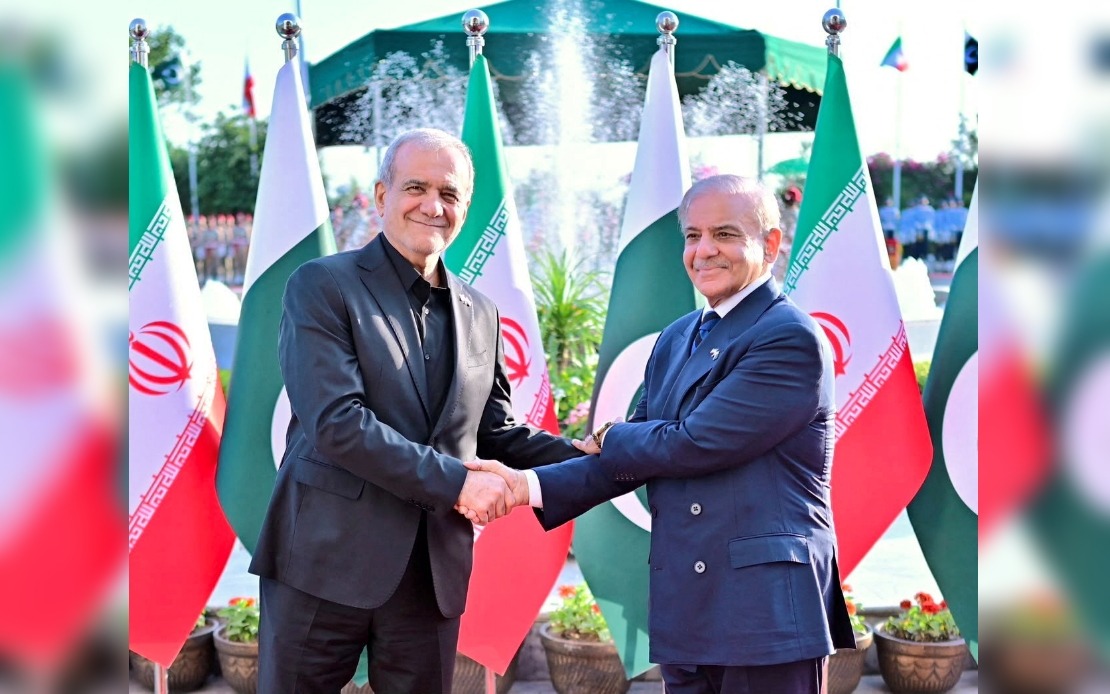
Pakistan and Iran have signalled their intention to resurrect the Islamabad-Tehran-Istanbul freight train corridor, a vital regional transport artery that collapsed after three years of intermittent operation. The revival effort emerged from high-level talks in Islamabad on Wednesday between Pakistan's Railway Minister Muhammad Hanif Abbasi and Iranian Interior Minister Eskandar Momeni, with both nations recognizing the strategic importance of restoring seamless rail connectivity across their shared border.
The ITI service, which carries containerised cargo linking South Asia with Turkey and beyond to European markets, previously operated for a decade before closing. A brief resurrection in December 2021 gave way to fresh suspension in 2022, thwarted by cascading logistical complications and operational bottlenecks that neither nation could quickly resolve. The interruption represents a costly setback for regional trade architecture at a time when alternative transport corridors through the Middle East face mounting geopolitical uncertainty.
According to the Pakistani government's official statement, both delegations concurred that reopening the ITI corridor would substantially magnify bilateral commerce between Islamabad, Tehran and Istanbul while simultaneously strengthening Pakistan's trade linkages with Central Asian republics, Russia and European partners. For Pakistan particularly, such a corridor addresses a longstanding strategic gap: landlocked access to major markets without reliance on single-nation transit routes vulnerable to political fluctuation.
The restoration initiative hinges on parallel infrastructure modernisation programmes underway on both sides of the border. Pakistan has embarked on a comprehensive upgrade of its Main Line-3 railway, the critical domestic network serving Sindh and Balochistan provinces and functioning as the primary rail gateway connecting Pakistan to Iranian territory. Construction is anticipated to commence within the current fiscal year, with completion targeted for December 2029, representing a multi-year investment in standardising track gauge and improving operational capacity.
Iran meanwhile is racing to complete modernisation of the Zahedan–Mirjaveh railway corridor within roughly one month, according to statements attributed to Minister Momeni. The Iranian official simultaneously pressed Pakistan to accelerate completion of its standard-gauge rail line from Mirjaveh to Taftan in Balochistan, a cross-border segment essential for uninterrupted train operations. This construction-dependent sequencing reveals the mutual vulnerability built into the corridor: neither nation can achieve meaningful cargo flows until both upgrade their respective segments to compatible specifications.
For Malaysian and Southeast Asian observers, the ITI corridor's resurrection carries broader implications for alternative trade routes. As tensions simmer in the South China Sea and concerns mount regarding chokepoint dependencies through the Strait of Malacca, diversified overland pathways linking Asia's supply networks to European consumers gain heightened strategic value. Pakistan's position as a bridge between South and Central Asia, combined with Iran's gateway role to the Caucasus and Russia, creates a potential counterweight to maritime-dominated trade flows.
The freight service also reflects deeper patterns of regional integration despite geopolitical headwinds. Pakistan and Iran have historically navigated complex bilateral relations rooted in sectarian and strategic tensions, yet economic complementarities repeatedly drive cooperation. The railway corridor exemplifies pragmatic partnership where both parties recognise that improved connectivity generates mutual prosperity independent of political temperature fluctuations.
However, the corridor's resurrection faces substantial hurdles beyond engineering timelines. Sanctions regimes affecting Iran complicate financing and procurement for railway modernisation, whilst Pakistan's own fiscal constraints limit rapid capital deployment. Operational issues that triggered the 2022 suspension—including customs coordination, security protocols, and maintenance standards—remain unresolved structural challenges requiring institutional strengthening alongside physical infrastructure upgrading.
The timing of this renewal initiative also reflects shifting geopolitical alignments. With China's Belt and Road Initiative increasingly emphasising Continental Asian connectivity and Russia seeking alternative trade corridors following Western sanctions, the ITI route gains renewed strategic prominence. Pakistan particularly views the corridor as essential for its China-Pakistan Economic Corridor objectives, enabling Chinese manufacturers to reach European markets via Central Asian hubs rather than exclusively through maritime routes.
Successful implementation would meaningfully alter regional trade patterns. Container volumes transiting the ITI corridor could substantially reduce shipping times and costs compared to conventional maritime routes from South Asia to Europe, potentially capturing significant market share in sectors requiring speed-sensitive logistics. For Malaysian exporters and importers, a functioning ITI service would create alternative options for accessing Central Asian and European markets, diversifying dependency on traditional Southeast Asian transit infrastructure.
The infrastructure investments announced during the Abbasi-Momeni discussions signal genuine commitment extending beyond rhetorical endorsement. Pakistan's December 2029 deadline for Main Line-3 completion and Iran's near-term Zahedan–Mirjaveh modernisation schedule suggest concrete timelines rather than indefinite aspiration. These projects require sustained political support across both governments and protection from implementation delays typical of regional infrastructure initiatives.
Regional analysts view the corridor's potential restoration as indicating broader acceptance of infrastructure-led connectivity despite occasional diplomatic tensions. Turkey's participation as the corridor's western terminus further broadens the initiative's scope, linking Turkey's ambitions to deepen Central Asian engagement with Pakistan and Iran's overlapping economic interests. The framework thus represents more than bilateral rail cooperation; it embodies an emerging consensus that physical infrastructure transcends temporary political friction.

