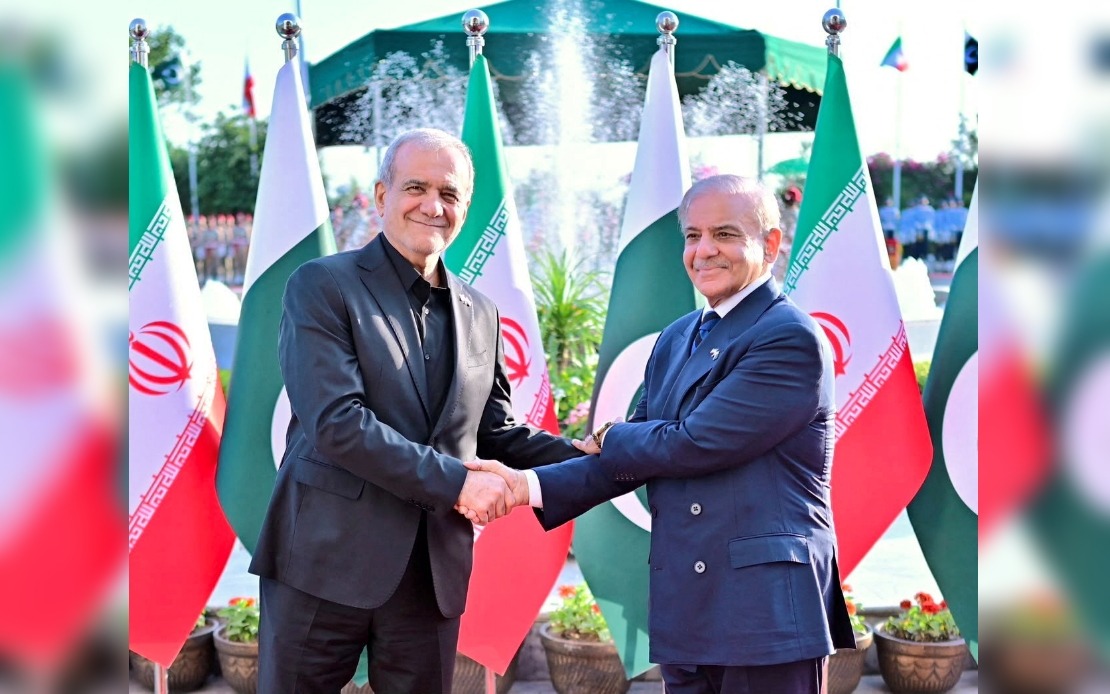
Pakistan's Prime Minister Shehbaz Sharif has firmly backed Iran's continued possession of ballistic missiles, marking a significant diplomatic position as tensions persist in the wider Middle East. Speaking during talks with Iranian President Masoud Pezeshkian in Islamabad on Tuesday, Sharif emphasized that Tehran's missile programme remained entirely separate from the US-Iran peace framework that Pakistan had helped negotiate earlier this month.
The timing of Sharif's remarks reflects broader geopolitical complexities in the region. His defence of Iran's defensive capabilities centres on a crucial distinction: the June 17 memorandum of understanding between Washington and Tehran deliberately excluded any discussion of ballistic missiles, leaving the issue unaddressed in the agreement itself. Sharif made this point repeatedly, noting that missile systems were never formally debated during the negotiations that led to the accord. This framing allows Pakistan to maintain its intermediary role while simultaneously supporting its neighbour's security concerns, a delicate balance that underscores Islamabad's strategic interests in regional stability.
Sharif's argument against double standards carries particular weight given the proliferation of ballistic missile programmes among various nations. He explicitly rejected the notion that some countries should retain such weapons while Iran—despite its strategic vulnerabilities—should surrender them. The Pakistani leader's position echoes a frustration long voiced by Iranian officials who view their missile capabilities as fundamental to deterrence, especially following the February 28 attacks by Israeli and American forces that Tehran regards as existential threats to its security infrastructure.
Pakistan's mediation efforts in the US-Iran dispute represent a diplomatic achievement for Islamabad, particularly given its traditional alignment with the United States. The country facilitated an initial temporary ceasefire in April before brokering the recent memorandum of understanding. These initiatives have required considerable diplomatic finesse, and Sharif publicly acknowledged the contributions of Deputy Prime Minister and Foreign Minister Ishaq Dar alongside Pakistan's military leadership, including Chief of Army Staff Field Marshal Syed Asim Munir. The Prime Minister expressed gratitude to Iranian leadership for trusting Pakistan's mediation capacity, framing the relationship as one rooted in Islamic brotherhood and shared regional interests.
However, Sharif also identified significant obstacles to consolidating peace. He referenced what he termed "spoilers" operating globally, individuals and interests determined to undermine any US-Iran rapprochement. This characterization implicitly acknowledges that powerful actors oppose improved relations between Washington and Tehran, a reality that could threaten the fragile ceasefire arrangements Pakistan has helped establish. Israel, according to Sharif's assessment, has emerged as the primary impediment to sustainable peace in West Asia, with ongoing military operations in Lebanon and the occupied Palestinian territories creating humanitarian crises that destabilize the entire region.
Recent statements from United States President Donald Trump have provided unexpected diplomatic cover for Iran's missile programme. Trump acknowledged on June 17 in Paris that if other nations possess ballistic missiles, it would be inequitable to deny Iran similar capabilities. This remarkable concession from the American president—coming directly on the day the memorandum was signed—effectively neutralizes potential future objections to Iran's defensive arsenal, at least within the current US administration's framework. Such statements, though perhaps casually offered, carry significant weight in international diplomatic discourse and essentially validate the position that Pakistan and Iran now jointly espouse.
Iranian President Pezeshkian, addressing a joint press conference with Sharif, presented Iran's missile capabilities as non-negotiable components of national sovereignty. His characterization proved stark: without these defensive systems, he argued, Iran would face the same devastating fate that has befallen Gaza at Israeli hands. This rhetoric, though provocative to Western ears, resonates deeply with Iran's domestic political audience and reflects genuine security anxieties stemming from decades of external military pressure. Pezeshkian's statements underscore that from Tehran's perspective, missiles represent existential insurance rather than aggressive weaponry, a framing that Pakistan has now officially adopted as its own diplomatic position.
The ceremonial aspects of Pezeshkian's visit underscored the importance Pakistan attaches to the relationship. The Iranian president's aircraft received an escort of six Pakistani Air Force fighter jets upon arrival in Islamabad, a gesture typically reserved for high-level state visits involving close strategic partners. He was received by Prime Minister Sharif, President Asif Ali Zardari, and honoured with a 21-gun salute, ceremonial protocols that publicly demonstrated Pakistan's commitment to strengthening bilateral ties. These formalities matter considerably in diplomatic contexts, signalling to both domestic audiences and international observers the depth of the relationship and the priority assigned to Iranian affairs within Pakistan's foreign policy hierarchy.
For Malaysian and Southeast Asian observers, Pakistan's stance carries implications beyond bilateral Pakistan-Iran relations. The region's balancing act between major powers—navigating between American strategic interests and the legitimate security concerns of regional players—mirrors challenges that Southeast Asian nations themselves confront. Pakistan's articulation of support for Iran while maintaining ties with the United States demonstrates one approach to managing competing interests without explicitly choosing sides, though critics might argue such positions ultimately prove untenable when pressures intensify. The success or failure of Pakistan's mediation efforts will influence how other non-aligned nations approach similar diplomatic challenges in coming months.
Looking forward, Pakistan's public backing of Iran's missile programme may complicate its relationship with the United States, despite having brokered the current ceasefire. American policymakers, particularly within the State Department and Pentagon, maintain reservations about Iranian missile capabilities regardless of presidential-level statements suggesting otherwise. Pakistan's explicit defence of these systems positions Islamabad closer to Tehran than some observers might expect for a nation that receives substantial American military and financial assistance. This stance reflects either confidence in Pakistan's strategic importance to American interests—making the partnership resilient enough to withstand disagreements—or a calculated assertion that regional stability matters more than alignment with distant powers on every issue.
The broader Middle Eastern context further complicates Pakistan's position. While supporting Iran's security interests, Pakistan simultaneously maintains complex relationships with Gulf Arab states, particularly Saudi Arabia, that view Iranian military capabilities with alarm. Pakistan's balancing act requires convincing Riyadh and other Gulf allies that its Iran policy reflects regional pragmatism rather than ideological alignment. Whether Pakistan can successfully navigate these competing demands will test the durability of the diplomatic frameworks currently being constructed around US-Iran relations and broader West Asian security arrangements.