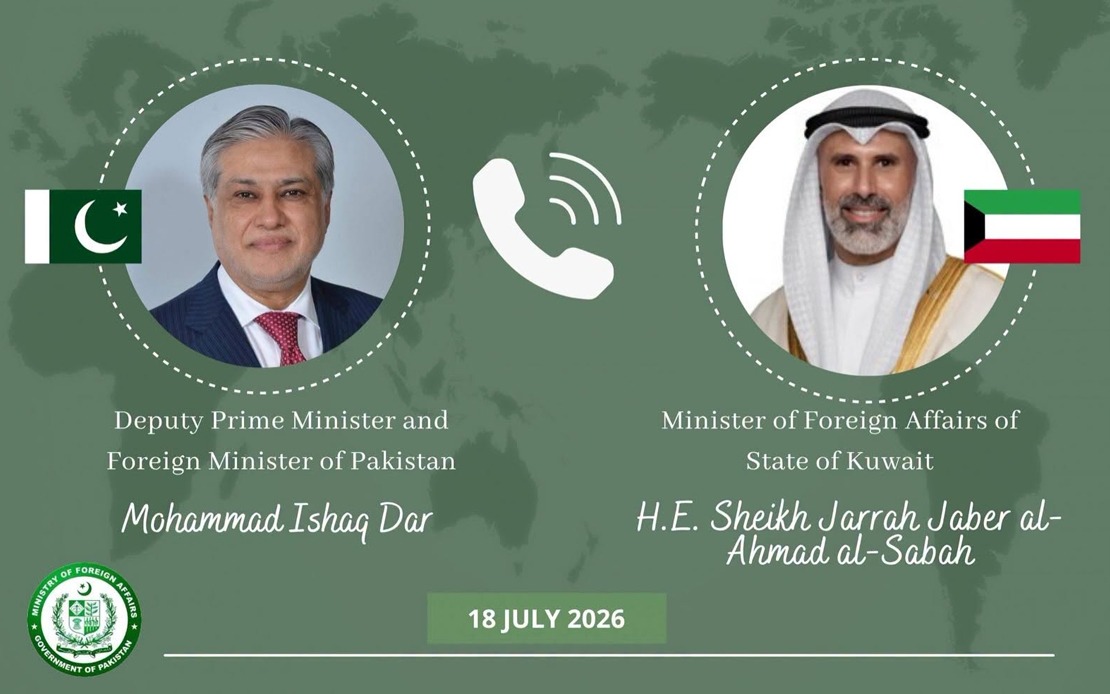
Pakistan and Kuwait have thrown their diplomatic weight behind urgent appeals for calm as military tensions between Iran and the United States show dangerous signs of spiralling beyond their bilateral confines. The two countries issued their joint concern following a high-level phone conversation between Pakistan's Deputy Prime Minister and Foreign Minister Ishaq Dar and Kuwait's Foreign Minister Sheikh Jarrah Jaber Al Ahmad Al Sabah, reflecting growing anxiety among regional players about the trajectory of renewed hostilities in West Asia.
Kuwait, positioned at the crossroads of Gulf geopolitics, articulated particularly acute concerns regarding direct threats to its own territory and critical infrastructure. The Gulf state reported that Iranian strikes had damaged another of its power generation and water desalination facilities, marking the second consecutive day of such attacks. These infrastructure strikes carry serious implications for civilian welfare in Kuwait, a nation already grappling with extreme summer heat and heavy reliance on desalination systems for freshwater supplies. The escalating pattern suggests that regional powers are now targeting economic and civilian facilities rather than confining operations to purely military assets, a troubling escalation.
At the heart of diplomatic efforts lies the Islamabad Memorandum of Understanding, a ceasefire framework signed between Iran and the United States on June 17. This agreement represented a significant attempt to arrest the cycle of tit-for-tat military strikes that has characterised their relationship. Kuwait specifically appealed for complete implementation of the Islamabad MoU, signalling that the agreement's commitments are deteriorating or at risk of collapse. The fact that renewed fighting has erupted so soon after the pact was inked underscores the fragility of arrangements aimed at containing great power competition in a region of immense strategic importance.
Pakistan's position as a major South Asian power lends weight to calls for restraint and adherence to agreed frameworks. Deputy Prime Minister Dar explicitly emphasised the critical importance of preserving ceasefire obligations and avoiding actions that could deepen the crisis. His statement stressed that all parties must prioritise de-escalation as an immediate necessity, recognising that further military escalation threatens not only bilateral Iran-US relations but also the stability of the wider Middle East and South Asia corridor.
The sovereignty and territorial integrity of all states in the region formed another cornerstone of Pakistan's messaging. This language carries particular resonance in a region where territorial disputes and cross-border interventions remain contentious issues. By invoking these principles, Pakistan sought to establish a baseline for responsible state behaviour and to remind all actors that unilateral military action, however justified in their eyes, sets dangerous precedents for regional conduct.
The military dimension of the current crisis has intensified markedly, with United States Central Command conducting extensive strikes against Iranian infrastructure targets. In response, Iran has issued warnings that it will launch comparable attacks against American-allied nations in the region, creating a clear escalatory spiral. This tit-for-tat dynamic risks spinning beyond the control of either side, particularly as third parties like Kuwait find themselves caught in the crossfire.
Iranian actions to close the Strait of Hormuz to shipping represent an unprecedented assertion of economic leverage. This vital waterway carries roughly one-third of global maritime petroleum traffic, making any disruption to transit a matter of global economic concern. A sustained closure would disrupt energy supplies to markets worldwide, including Southeast Asian economies heavily dependent on stable oil prices and reliable energy imports. The blockade threat underscores how West Asian instability can rapidly become a global economic problem.
The United States naval blockade imposed on Iran constitutes a parallel economic weapon, tightening already harsh sanctions regimes. These overlapping economic pressures create incentives for both sides to demonstrate resolve through military action, even as such demonstrations push the region further from stable equilibrium. For Pakistan, which maintains complex relationships with both Iran and Western powers, navigating this environment requires careful balancing.
The broader implications for Southeast Asia warrant consideration. Malaysia and other regional economies depend substantially on Middle Eastern oil and gas supplies, and any sustained disruption threatens inflation and economic slowdown. Additionally, sectarian tensions that Iran-US conflict exacerbates can affect Muslim-majority Southeast Asian nations with diverse religious compositions. The Strait of Hormuz chokepoint directly impacts regional shipping routes and trading patterns that Malaysian commerce relies upon.
Malaysia and other Association of Southeast Asian Nations members have consistently advocated for peaceful resolution of regional disputes and respect for international law. The Pakistan-Kuwait diplomatic intervention reflects similar principles, positioning de-escalation as a regional public good rather than merely a bilateral preference. This approach aligns with Southeast Asian nations' long-standing preference for conflict resolution through dialogue and respect for sovereignty.
The effectiveness of Pakistan and Kuwait's intervention depends largely on whether their messages gain traction with decision-makers in Tehran and Washington. Both countries command respect in their respective regional spheres, yet neither possesses overwhelming leverage over the superpowers engaged in confrontation. Kuwait's direct exposure to Iranian military action, however, lends practical urgency to its demands for restraint.
Looking forward, the challenge lies in revitalising the Islamabad MoU before it becomes merely a historical footnote to a period of great power competition in West Asia. Whether the ceasefire framework can be salvaged depends on both Iran and the United States demonstrating willingness to prioritise stability over demonstrating strength. For nations like Pakistan, Kuwait, and by extension the broader Southeast Asian region, the stakes involve far more than regional pride—they encompass economic security, energy stability, and the fundamental principle that military conflict should give way to negotiated settlement.

