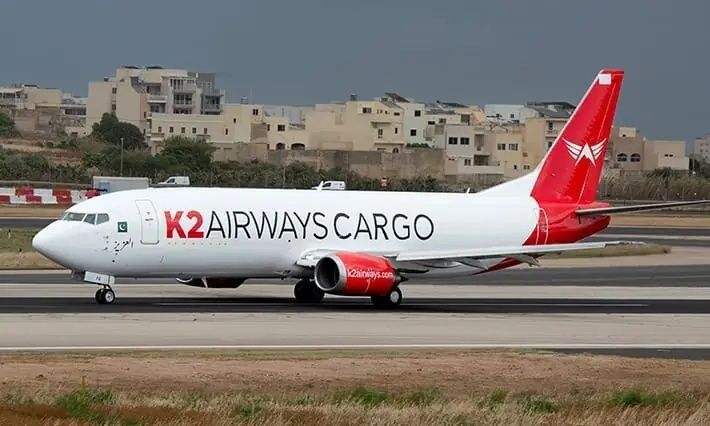
Pakistan mounted an intensive search and rescue operation on Wednesday following the disappearance of a K2 Airways Boeing 737-400 cargo aircraft over the Arabian Sea. Prime Minister Shehbaz Sharif confirmed that the plane, which was carrying five crew members on a flight from the United Arab Emirates to Karachi, had crashed into the sea. The declaration marked a grim turning point in efforts to locate the missing aircraft, which had vanished from radar contact the previous evening after reporting technical difficulties to authorities.
The aircraft was in its final approach to Karachi International Airport when things went catastrophically wrong late Tuesday. According to the Pakistan Airports Authority, radar operators observed the plane exhibiting alarming behaviour—it suddenly began descending at a rapid rate while simultaneously changing direction sharply. This combination of unusual flight characteristics prompted controllers to note a navigation system malfunction in the aircraft's transmissions, the last meaningful communication received before contact was permanently lost. The plane disappeared from radar screens approximately 155 nautical miles west of Karachi, placing the incident well out into the Arabian Sea.
Flightradar24, the international flight-tracking service that monitors thousands of aircraft globally, pieced together a troubling sequence of events from the preliminary data it had captured. The plane first experienced a significant loss of altitude, suggesting a descent that the crew may have initiated in response to the reported navigational problems. However, the aircraft then climbed again, raising questions about whether pilots were attempting recovery or manoeuvring to address the underlying issue. This momentary recovery proved illusory—the plane then entered a second, far more severe descent that was described as both sudden and dramatic in its intensity, ultimately leading to its disappearance from all tracking systems.
The response from Pakistan's civilian and military authorities reflected the gravity of the situation. Prime Minister Sharif issued a statement expressing deep sorrow over what he termed a tragic incident, pledging the full resources of the nation's civil aviation authorities, navy and air force to intensive search and rescue operations. The statement extended formal condolences to the families of the five crew members who were on board. Navy and merchant vessels were already mobilised for the search effort, working in coordination with military aircraft deployed from Pakistani bases to scour the designated search zone over the Arabian Sea.
K2 Airways, the operator of the missing aircraft, is a privately owned Pakistani cargo carrier that conducts both scheduled and charter operations across domestic and international routes. The company serves the growing demand for air freight services in the region, operating cargo aircraft that transport goods throughout South Asia and beyond. The Boeing 737-400 that went missing had a lengthy operational history stretching back more than two decades. Originally manufactured in 1999, the aircraft initially flew for Soviet and later Russian carrier Aeroflot before being transferred to Indonesian national carrier Garuda Indonesia, where it served passenger routes. The plane was subsequently converted from passenger to all-cargo configuration in 2012, extending its commercial life through conversion to freight operations.
Pakistan's aviation sector has struggled with a safety record marked by significant incidents over the past decade, creating a backdrop of concern surrounding such disappearances. The nation has experienced several major aviation disasters that claimed numerous lives, with the southern metropolis of Karachi itself being the site of previous deadly crashes. This history prompted international regulatory scrutiny—the European Union imposed a four-year airspace ban on Pakistan International Airlines, the nation's flagship carrier, citing concerns over safety protocols and licensing standards. Though the European Union lifted that ban in 2024 following improvements in Pakistan's aviation oversight, the historical context underscores the sensitivity surrounding aviation incidents in the country.
The circumstances surrounding the K2 Airways disappearance raise technical questions that aviation investigators will need to examine thoroughly. Navigation system failures alone do not typically result in catastrophic aircraft loss, as modern commercial aircraft are equipped with redundant systems and trained crews possess procedures for managing such malfunctions. The erratic altitude changes detected by flight tracking systems—descent, partial recovery, then final dramatic descent—suggest either a more complex technical cascading failure or possible loss of crew control. The investigation that follows will need to recover flight data recorders, if they can be located in the deep waters of the Arabian Sea, to determine what sequence of events culminated in the loss of the aircraft.
For Malaysia and other Southeast Asian nations sharing maritime boundaries and aviation infrastructure with Pakistan, the incident carries relevance beyond the immediate tragedy. The region's growth in air cargo operations, driven by e-commerce expansion and regional trade intensification, has increased traffic through these corridors. Pakistan's position as a transit point for flights connecting the Middle East to South Asia means incidents affecting Pakistani aviation can have ripple effects throughout neighbouring countries' airspace management and emergency response protocols. The search operation itself demonstrates the importance of international maritime coordination in the Arabian Sea, a body of water through which significant shipping and aviation traffic passes.

