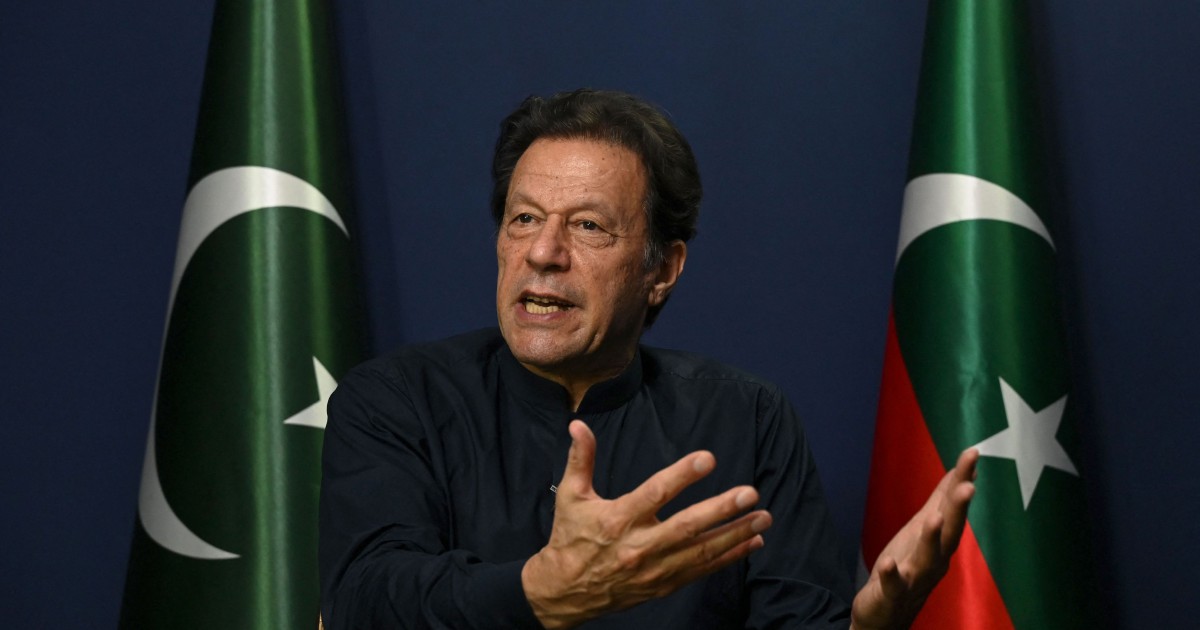
Pakistan's Supreme Court delivered a significant ruling on Tuesday requiring that former Prime Minister Imran Khan be relocated from jail to hospital care, according to his political party Pakistan Tehreek-e-Insaf (PTI). The court decision marks a substantial development in a matter that has generated considerable tension within Pakistani political circles and drawn international scrutiny regarding the health and welfare of the detained leader.
The PTI party and Imran Khan's family members have long advocated for his hospital transfer, citing mounting health complications that they argued could not be adequately addressed within the prison environment. Their sustained campaign to secure better medical attention represents one of the most visible aspects of the broader political turmoil surrounding Khan's detention and legal proceedings. The Supreme Court's intervention effectively endorses the validity of these health-related concerns, providing judicial backing to what had previously been a contested demand within Pakistan's fractious political landscape.
Imran Khan's trajectory from cricket legend to Prime Minister to defendant reflects the volatile nature of Pakistani politics, where institutional rivalries, military influence, and elite factional struggles frequently determine the fates of prominent political figures. His detention has polarized the nation, with supporters viewing his imprisonment as politically motivated persecution by rival power centres, while critics argue he faces legitimate legal accountability for various allegations. The court's decision to authorize hospital transfer suggests the judiciary is responding to substantive evidence regarding his health status rather than purely political considerations.
The Pakistan Tehreek-e-Insaf party has consistently maintained that the conditions of Imran Khan's incarceration have deteriorated his physical wellbeing, with party officials and family representatives publicizing his medical problems to domestic and international audiences. These health allegations have become a central rallying point for PTI activists and sympathizers, who view them as symptomatic of a broader pattern of institutional abuse and political victimization. The Supreme Court's ruling provides legal validation for their concerns and may significantly impact public perception of his detention.
From a regional perspective, the situation involving Imran Khan carries implications for how South Asian democracies handle political opposition and institutional accountability. Pakistan's judiciary has increasingly found itself navigating between pressures from competing power centres, including the military establishment, civilian government, and political parties. The hospital transfer order demonstrates the court's willingness to assert independence on matters of individual welfare, even when broader political sensitivities surround the detainee.
The practical implications of the Supreme Court's decision remain subject to implementation details that authorities will need to clarify. Hospital admission standards, security arrangements during treatment, visitor access protocols, and the duration of the transfer all represent logistical questions requiring coordination between judicial, medical, and security institutions. The efficacy of the ruling ultimately depends on how faithfully implementing authorities execute the court's directive and whether genuine medical access becomes available to Imran Khan.
For Malaysian observers, the Imran Khan situation illuminates broader challenges that democracies throughout South and Southeast Asia face when managing the detention of prominent political opponents. The intersection of health rights, judicial authority, political pressure, and security concerns creates complex scenarios where establishing legitimate processes and preventing weaponization of legal systems proves perpetually challenging. Pakistan's experience offers cautionary lessons about how institutional deterioration and political polarization can transform legal systems into instruments of factional struggle rather than impartial arbiters of justice.
The Pakistan Tehreek-e-Insaf party's success in securing this court order may energize the broader opposition movement and provide momentum for additional legal challenges to other aspects of Khan's detention. Political mobilization around his health and welfare issues has proven effective at maintaining public attention and international interest in his case. The hospital transfer decision could catalyze further judicial interventions if health conditions do not demonstrably improve or if new complications emerge during his hospitalization.
International attention to Imran Khan's detention has involved diplomatic representations from multiple countries concerned about due process and human rights standards. The Supreme Court's ruling may somewhat mitigate international criticism by demonstrating judicial responsiveness to humanitarian concerns, though observers monitoring Pakistan's democratic institutions will scrutinize whether the hospital environment genuinely provides the medical care that family members and party officials have advocated. The credibility of Pakistan's judicial system depends significantly on whether courts can manifest meaningful independence despite political pressures surrounding high-profile cases involving powerful political figures.
The broader context of political instability in Pakistan, including tensions between civilian and military institutions, factional rivalries within political parties, and economic distress affecting the general population, provides the backdrop against which Imran Khan's situation must be understood. His detention cannot be isolated from these systemic pressures and competing power centres that have historically shaped Pakistani governance. The Supreme Court's intervention suggests judicial awareness of these realities and perhaps an attempt to demonstrate fairness amid profound institutional stress.
Moving forward, the hospital transfer represents an interim measure rather than a fundamental resolution of the legal and political questions surrounding Imran Khan. His underlying legal cases will continue through the court system, and the trajectory of these proceedings will substantially influence both his personal fate and the broader political trajectory of Pakistan. The Supreme Court's apparent receptiveness to humanitarian arguments may encourage additional litigation strategies focused on procedural fairness and individual welfare protections.

