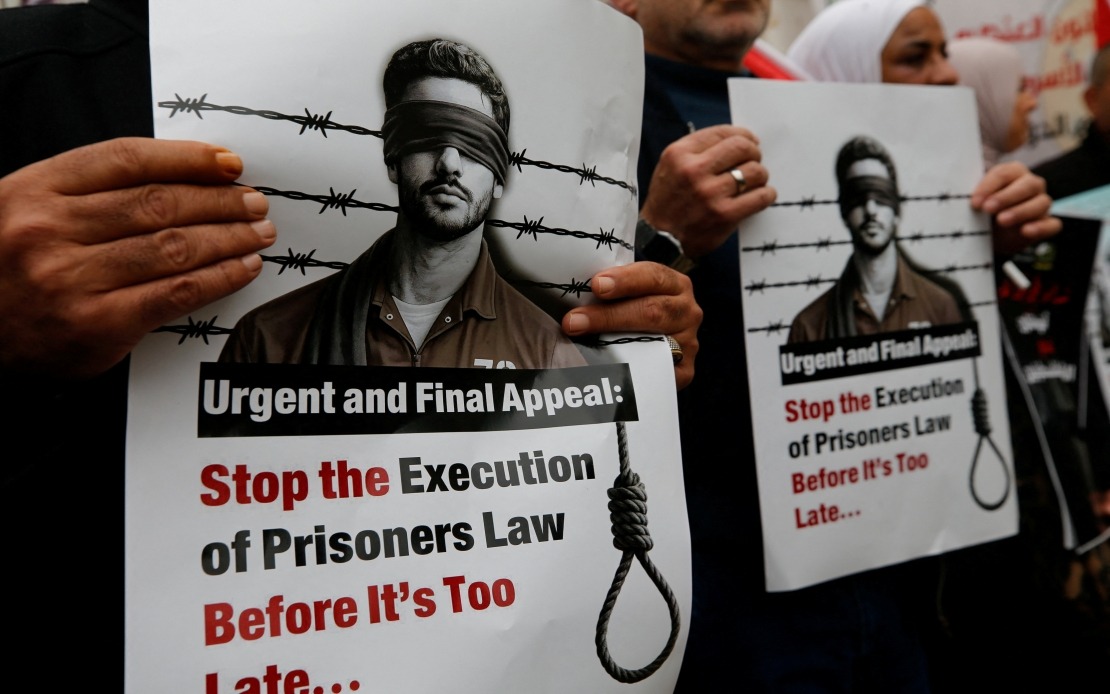
The Palestinian government has formally documented allegations of widespread human rights violations against Palestinian detainees held in Israeli prisons, according to a situation report released by the Prime Minister's Office on June 30. The claim encompasses detention practices spanning several months, with particular emphasis on what Palestinian officials characterise as systematic mistreatment affecting thousands of individuals across multiple detention facilities.
According to the Palestinian authority's latest assessment, more than 3,376 administrative detainees remain incarcerated without being formally charged or brought to trial. This figure excludes approximately 360 Palestinian children documented as also being held in custody. The broader detainee population in the West Bank and occupied Jerusalem totals more than 9,500 individuals, reflecting what Palestinian officials describe as an escalating security situation since the conflict intensified in October 2023.
The allegations contained in the report span numerous categories of alleged abuse. Palestinian institutions documenting prisoner conditions report detainees have experienced beatings, prolonged stress positions, electrocution, sleep deprivation, enforced starvation, and sexual violence. Beyond physical mistreatment, the Palestinian government points to systemic prison conditions it characterises as deliberately inhumane, including inadequate supplies of food and water, intentional disease transmission, and deliberate withholding of essential medical treatment. Three pregnant women currently in detention reportedly face particular hardship, enduring starvation, humiliation, intensive questioning, forced body searches, and deprivation of adequate prenatal healthcare.
The psychological and physical toll on released detainees presents another dimension of the allegations. Palestinian officials indicate that hundreds of individuals discharged from detention suffer severe trauma across physical and psychological dimensions, with some individuals reportedly dying shortly after release as a consequence of the abuse they experienced. This pattern suggests long-term consequences extending beyond the period of incarceration itself.
The situation report situates detention practices within the broader context of the conflict that escalated dramatically in October 2023. Since that date, Palestinian sources document at least 73,054 deaths across Gaza, with approximately 21,638 identified as children. An additional 173,480 individuals bear injury from the conflict. The Palestinian government also reports 11,200 individuals classified as missing. These figures extend beyond detainees to encompass the wider humanitarian impact, including 1,700 health workers killed and 262 journalists and media workers documented as deceased.
Within the West Bank and occupied Jerusalem, Palestinian casualty figures total 1,175 deaths including 246 children, with 12,919 others injured as of late June. During the single week between June 22 and 28, the Palestinian government documented 362 military operations by the Israeli army, 47 shooting incidents excluding airstrikes, and 114 incidents attributed to settler attacks. This frequency suggests an intensifying security situation across Palestinian territories, with implications for civilian populations and detainee populations alike.
For Malaysian and Southeast Asian observers, these allegations carry significance beyond immediate regional considerations. The detention practices described reflect broader questions about due process, judicial oversight, and international humanitarian standards that resonate across Asian democracies grappling with security and civil liberties tensions. Malaysia, with its own experience managing security concerns within a multicultural context, faces international scrutiny on similar issues, making the Palestinian case instructive regarding global standards and expectations.
Despite the focus on detention and conflict-related casualties, the Palestinian Cabinet has simultaneously advanced its governance reform agenda during weekly sessions. President Mahmoud Abbas approved amendments to Value Added Tax legislation, establishing mechanisms to enhance transparency and financial accountability within the Palestinian Authority's administrative structures. These reforms include creating a Higher Council for Public Revenues and modernising financial administration systems to align with international standards, while simultaneously addressing tax evasion and smuggling that undermine revenue collection.
Digital transformation initiatives represent another governance priority articulated by Palestinian leadership. A newly approved General Policy for the Telecommunications and Information Technology Sector spanning 2026 to 2028 aims to accelerate digital service delivery and enhance government digital administration. Complementing this initiative, the Palestinian government endorsed replacement of paper-based health insurance documentation with smart card systems, modernising healthcare delivery infrastructure while improving data security for future digital health service expansions.
These parallel developments—allegations of detention abuses on one trajectory and administrative reforms on another—illustrate the complex dynamics characterising Palestinian governance. While international organisations and human rights bodies scrutinise detention practices and security operations, Palestinian authorities simultaneously attempt to strengthen institutional capacity, revenue collection, and service delivery systems. The contrast suggests internal contradictions within Palestinian institutional development, where governance modernisation proceeds alongside persistent allegations of security-related human rights concerns.
For regional stakeholders and international observers, the Palestinian government's formal documentation of these allegations establishes an official record that carries weight in humanitarian and legal forums. Whether through United Nations mechanisms, International Court of Justice proceedings, or advocacy platforms, such systematic documentation shapes international discourse regarding the conflict and informs policy considerations across democratic nations confronting similar security-civil liberties tradeoffs. The claims demand verification and investigation through independent mechanisms capable of establishing factual accuracy and responsibility.

