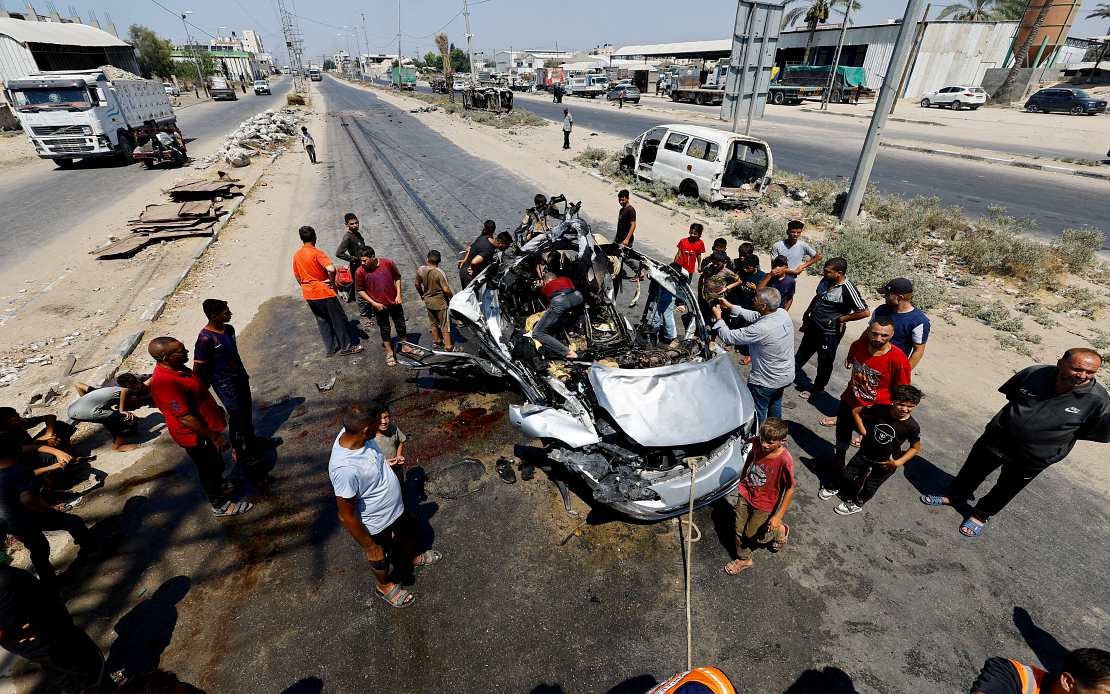
Palestinian presidential spokesperson Nabil Abu Rudeineh has levelled serious accusations against Israel, asserting that the country is persisting with military operations despite formally committing to the second phase of a ceasefire arrangement in Gaza. Speaking to the Palestine News and Information Agency (WAFA) on Monday, Abu Rudeineh characterised the situation as fundamentally contradictory, where signed commitments have failed to translate into genuine cessation of violence on the ground.
The Palestinian leadership's frustration centres on what it views as a gaping disconnect between diplomatic agreements and operational reality. Abu Rudeineh's stark formulation—that the accord amounts to "an agreement on paper and death on the ground"—captures the depth of Palestinian disillusionment with a process that was intended to provide respite from months of intense conflict. Rather than producing the comprehensive end to hostilities that negotiators had promised, the ceasefire framework appears, in Palestinian eyes, to have left the fundamental security situation largely unchanged.
A central Palestinian grievance involves what officials characterise as ongoing strikes against refugee camps and civilian villages across Gaza and the West Bank. These operations, according to Palestinian statements, reflect a deliberate strategy aimed at undermining Palestinian presence in disputed territories and eliminating what the Palestinian leadership calls the refugee question. Such actions, if substantiated, would represent serious violations of the ceasefire's implicit understanding that military operations would cease during the implementation period.
Palestinian officials are particularly concerned about the geographic scope of alleged violations. Beyond Gaza itself, they point to continued military activities in the West Bank, including the contested East Jerusalem area. This broader pattern suggests, in Palestinian interpretation, that the ceasefire is being applied selectively or not at all across the various territories where Israeli and Palestinian forces operate. The distinction matters significantly for regional stability and for civilian populations spread across multiple zones.
Abu Rudeineh's intervention carries significant diplomatic weight, emanating as it does from the Palestinian presidential office rather than lower-level spokespersons. This elevation of complaint indicates serious strain in the ceasefire arrangement and suggests that Palestinian leadership has moved beyond expressions of hope toward public recrimination. The statement represents a deliberate decision to escalate rhetorical pressure, likely aimed at generating international attention and demanding action from external powers.
The Palestinian official has explicitly called upon the international community, particularly the United Nations Security Council, to intervene decisively. This appeal reflects a strategic calculation that unilateral Palestinian action lacks sufficient leverage, and that external pressure—especially through UN mechanisms—represents the most viable pathway toward enforcing ceasefire compliance. The call for "immediate and decisive steps" suggests frustration with what Palestinians perceive as insufficient previous international engagement.
Underscoring Palestinian concerns is the argument that continued Israeli military action operates without meaningful consequences. The concept of "impunity" features prominently in Abu Rudeineh's rhetoric, suggesting that the absence of accountability mechanisms encourages further violations. This assessment touches on a fundamental challenge in Middle Eastern conflict resolution: without credible enforcement mechanisms and genuine consequences for violations, ceasefire agreements often prove ineffective.
For regional observers, particularly in Southeast Asia, the situation illustrates the broader challenge of implementing fragile peace arrangements in deeply contested territories. The gap between formal agreements and practical implementation remains a persistent obstacle to conflict resolution in the Middle East. Malaysian readers, given this nation's substantial Muslim population and historical engagement with Palestinian issues, have particular interest in developments that affect civilian welfare in the region.
The Palestinian leadership's vision for a permanent resolution encompasses several interconnected elements: cessation of what it terms Israeli occupation, dismantling of what it characterises as aggressive military operations, and establishment of an independent Palestinian state with East Jerusalem as its capital. These objectives remain anchored to international frameworks including UN resolutions and the Arab Peace Initiative. Whether the current ceasefire arrangement can create conditions enabling progress toward these longer-term goals remains fundamentally uncertain, particularly if day-to-day violations continue without international enforcement.
The current deadlock reflects deeper structural tensions within the peace process itself. The second phase implementation requires sustained goodwill and mutual compliance from parties whose underlying political objectives remain substantially incompatible. Without mechanisms ensuring both sides honour their commitments, such arrangements face constant pressure from military commanders, political hardliners, and civilian actors seeking advantage within the conflict space.
International responses to Palestinian accusations will likely prove decisive in determining whether this ceasefire endures or deteriorates further. The Security Council's capacity and willingness to impose concrete consequences for violations could fundamentally alter the calculus facing all parties. Current silence or inaction may simply encourage continued operations, while meaningful enforcement could stabilise the situation and create space for genuine negotiations.
The implications extend beyond Palestinian-Israeli dynamics alone. Regional stability, humanitarian access, and the credibility of future international peace mechanisms all depend partly on how this specific ceasefire arrangement unfolds. The coming weeks will reveal whether the second phase becomes a genuine transition toward reduced violence or merely another episode in a protracted cycle of violated agreements and escalating accusations.

