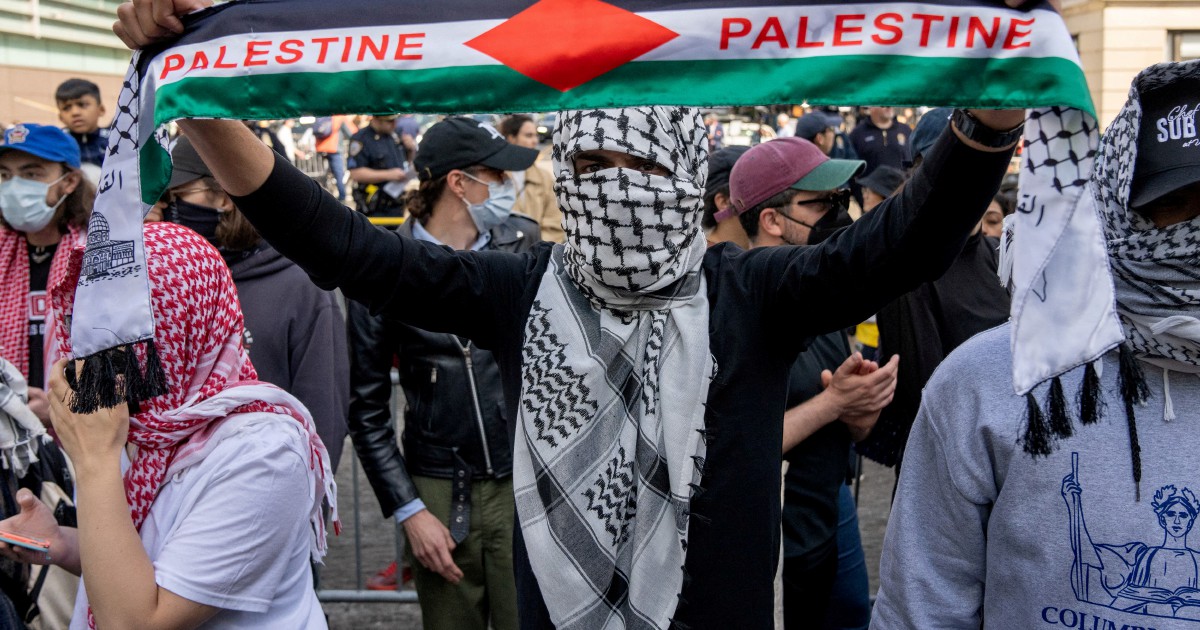
A legal challenge has emerged from within Columbia University's Palestinian community, with current and former students and staff members bringing formal action against the institution in New York courts. The lawsuit centres on allegations that Columbia has engaged in discriminatory treatment targeting Palestinians since the latter half of 2023, a period marked by heightened geopolitical tensions and campus activism around Middle Eastern affairs.
The timing of the complaint reflects a broader moment of campus discord across major American universities. Columbia, situated in New York City and recognised as one of the United States' most prestigious institutions, has become a focal point for debates surrounding institutional responses to student activism and identity-based community concerns. The allegations suggest that institutional policies, enforcement practices, or cultural dynamics may have created an environment perceived as hostile or inequitable for Palestinian members of the university community.
For Southeast Asian observers, this development carries particular resonance. Universities across Malaysia, Singapore, Indonesia, and the region increasingly host international student populations with diverse backgrounds and political identities. Columbia's situation illustrates how higher education institutions globally must navigate competing interests: protecting free speech and academic discourse, maintaining inclusive campus environments, and managing the spillover effects of international conflicts into campus spaces. The legal proceedings may establish precedents for how discrimination claims are evaluated in university settings.
The lawsuit's specificity—identifying discrimination as occurring since late 2023—anchors the claim to a defined temporal window. This period encompasses significant escalation in Middle Eastern events that drew campus attention and activism worldwide. Universities were forced to reckon with student demands for institutional statements, changes to investment policies, and acknowledgment of particular community perspectives. How institutions balanced competing voices during this period now faces judicial scrutiny.
Columbia's response to this lawsuit will likely influence institutional policy conversations elsewhere. The university has faced previous complaints regarding campus climate and student conduct enforcement. The Palestinian community's decision to pursue formal legal remedies suggests that existing grievance mechanisms—whether internal ombudsman offices, diversity committees, or student conduct processes—were perceived as insufficient to address their concerns.
The nature of alleged discrimination remains to be detailed through court documents, but typically such claims encompass multiple dimensions. These may include differential enforcement of conduct codes, barriers to accessing campus resources or facilities, interference with student organisation activities, or administrative responses that disproportionately burden one community. The evidentiary phase will require Columbia to demonstrate either that its policies are applied uniformly or that any differential impact serves legitimate institutional purposes.
Institutional accountability through litigation represents an escalation from campus activism. It signals that affected communities view their interests as requiring external legal validation rather than being addressable through campus governance alone. For Malaysian universities, which generally maintain different student governance structures and regulatory frameworks than American institutions, this case offers lessons about the importance of transparent, accessible complaint processes and equitable policy enforcement across all student communities.
The broader implications extend beyond Columbia's particular circumstances. Universities claiming commitment to diversity and inclusion face increasing scrutiny regarding whether such commitments translate into equitable treatment of all student communities, particularly those whose identities intersect with contested geopolitical issues. The Palestinian community's legal action represents a demand that institutional values align with lived experiences within the campus environment.
Columbia's status as an Ivy League institution—synonymous with academic excellence and influential alumni networks—means that outcomes here will receive attention from peer institutions worldwide. Other universities may face similar complaints or pressure to examine their own policies and practices. The case exemplifies how campuses have become spaces where international conflicts manifest locally and where institutional responses carry genuine consequences for student communities.
The legal process itself will be lengthy, likely involving discovery of institutional documents, testimony from students and staff, and potentially expert analysis of institutional policies and their implementation. The court will ultimately determine whether Columbia's conduct, as alleged, constitutes actionable discrimination under applicable law—a threshold that varies across jurisdictions and legal frameworks.
For the Palestinian community at Columbia specifically, pursuing litigation reflects both frustration with existing channels and confidence that legal systems offer remedies. This strategy places Columbia's leadership in a position where institutional reputation and values are directly contested in public legal proceedings rather than managed through internal processes.
The outcome will matter not only for Columbia but for the broader higher education ecosystem. Institutions increasingly recognise that failure to address community concerns comprehensively risks legal exposure, reputational damage, and erosion of trust among student populations. The case underscores that inclusive campuses require active commitment to fair treatment across all constituencies, particularly those whose identities may be politically contentious in broader society.

