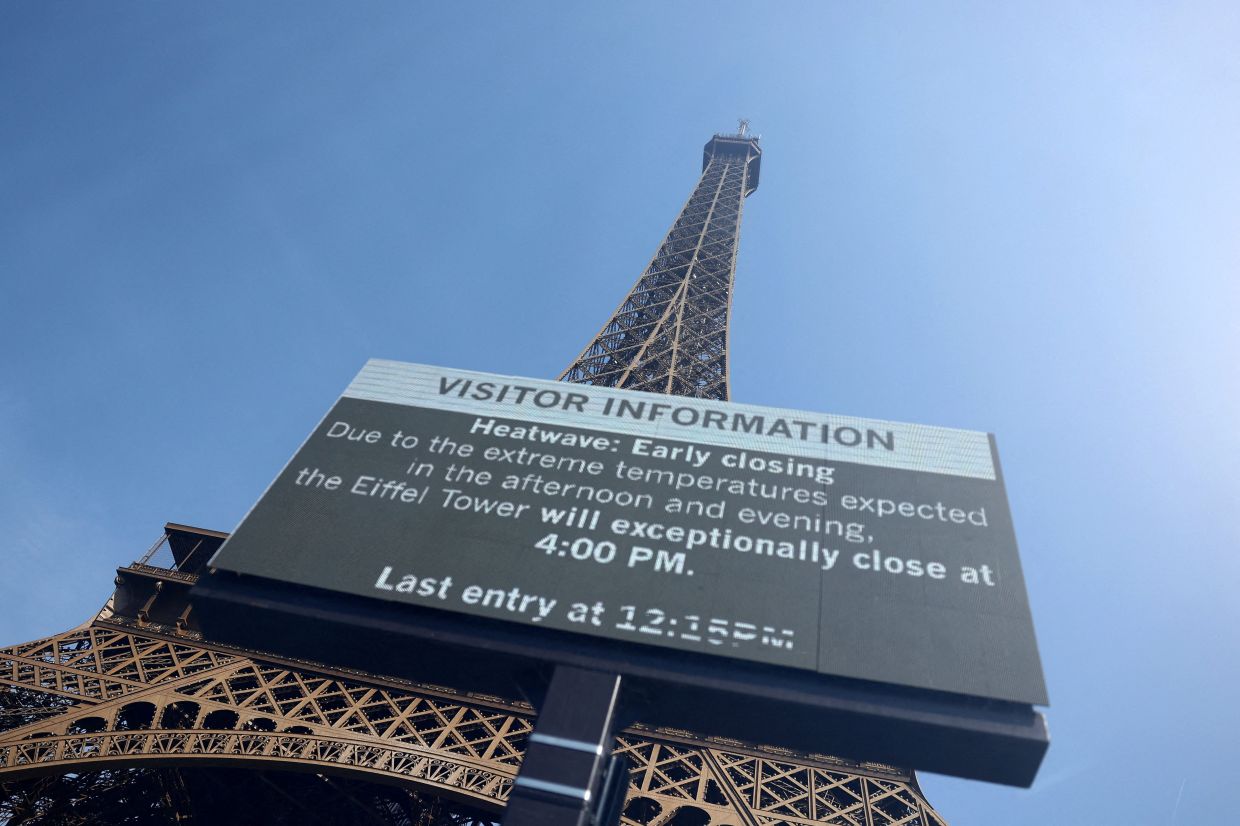
A punishing heatwave sweeping across France has turned the City of Light into an inhospitable destination, forcing major tourist attractions to shut their doors prematurely and leaving thousands of international visitors struggling to salvage their holiday plans. On June 23, France recorded its hottest day since temperature records began in 1947, a milestone that triggered emergency closures at some of the world's most iconic cultural sites and sent tourists seeking refuge in air-conditioned hotels and museum galleries.
The Eiffel Tower, which welcomes approximately seven million visitors annually and typically operates past midnight during peak season, closed at 4pm on the hottest day, with management warning that shortened operating hours would likely continue. The structural engineers of the 324-metre lattice-steel monument determined that the extreme heat posed operational challenges that necessitated the exceptional early closure. This decision struck a particular blow to international guests who had specifically timed their visits to experience the monument's extended evening illumination and panoramic night views—a staple of any Paris tourism experience.
Spanish nurse Maite Blazques from Madrid exemplifies the disruption faced by families who had meticulously planned and saved for their European getaway. Having spent months accumulating funds to bring her six-year-old son to Paris, Blazques found herself forced to completely restructure her itinerary as the extreme temperatures made outdoor activities untenable. The cancellations mounted quickly: the guided walking tour through the historic Marais district was scrapped, the romantic Seine river cruise abandoned, and the traditional ascent of the Eiffel Tower—arguably the centrepiece of any first-time visit to Paris—became impossible. For Blazques and her son, the once-anticipated adventure transformed into a logistics exercise in damage control.
American tourist Tamara Dancer experienced similar disappointment when her scheduled guided tour was abruptly cancelled on the afternoon of June 23. The cancellation, while a necessary safety precaution, left her feeling that the sweltering conditions had fundamentally damaged her vacation experience. Such cancellations cascade through the tourism economy, affecting not only visitors but also the tour operators, hospitality workers, and cultural institutions that depend on reliable summer visitor numbers.
Beyond the high-profile closures, the heatwave transformed the very act of exploring Paris into an endurance test. Tourists equipped themselves with makeshift heat-protection gear—umbrellas, wide-brimmed hats, and portable fans—only to find that walking the city's famous pavements became a battle against radiant heat reflecting from stone and pavement. John Beeler, a 45-year-old American engineer visiting with his wife, captured the misery succinctly: the streets were suffocating, the metro subway unbearable, and even their rental accommodation had become inhabitable without air conditioning. The couple's solution—relocating to a hotel with proper climate control—represents a luxury option unavailable to budget-conscious travellers who had already committed their resources to their bookings.
For those determined to experience Paris despite the heat, alternative activities emerged as survival strategies rather than supplementary options. Drake Winners, a 66-year-old retiree from London, abandoned the traditional Paris experience of exploring by foot—the method through which visitors traditionally discover hidden quarters, local cafés, and the city's organic character. Instead, Winners retreated to the interiors of museums and churches, where temperature control and cultural substance offered refuge from the oppressive outdoor conditions. The Louvre, the world's most visited museum with approximately nine million annual visitors, became not a discretionary cultural enhancement but a necessary haven.
The Louvre's management, however, acknowledged that even its vast interior spaces are insufficiently equipped to handle the climate extremes associated with modern heatwaves. The institution, assembled across centuries by successive French monarchs and presidents, was never designed with extreme weather resilience as a priority. This vulnerability reflects a broader challenge facing Europe's heritage infrastructure: many historic sites lack the modern climate control systems necessary to maintain operational safety and preservation standards during unprecedented temperature extremes. The museum's recent troubles compound this infrastructure vulnerability—a US$100 million jewellery heist, water damage, and ongoing maintenance issues had already strained the institution's resources and operational capacity.
The geographical scope of the crisis extends well beyond Paris. More than half of mainland France remained under the national weather service's highest alert level as of late June, prompting tourism authorities and site operators across the nation to implement emergency protocols. Mont Saint-Michel, the spectacular tidal island monastery in Normandy and one of France's most visited attractions outside the Paris region, issued explicit warnings urging visitors to postpone their visits during the red alert phase. Such warnings, while necessary for public safety, represent a dramatic suspension of normal tourism operations at a scale rarely seen outside pandemic conditions.
This heatwave episode carries implications that extend beyond immediate visitor inconvenience. Climate scientists increasingly warn that extreme weather events like this June heat spike represent the new normal rather than exceptional occurrences. For Southeast Asian travellers planning European holidays, the Paris experience reflects a broader pattern: even the world's most celebrated destinations are becoming vulnerable to climate-induced disruptions. For Malaysia and the region, the incident underscores how climate variability affects global tourism infrastructure and should inform discussions about climate adaptation in our own tourism sector, particularly as Southeast Asia hosts millions of international visitors annually and many regional destinations lack robust climate resilience measures.
The heatwave also highlights economic vulnerabilities in tourism-dependent economies. A single week of extreme heat forced thousands of cancellations, reorganisations, and disappointments with ripple effects through hospitality, transportation, and cultural institutions. As climate patterns shift, destinations worldwide face pressure to invest in infrastructure adaptation—better cooling systems for museums, safer operating procedures for outdoor monuments, and contingency protocols for tourist management during extreme events. Paris, despite its resources and infrastructure advantages, struggled visibly with this challenge, suggesting that less-developed tourism sectors globally may face even greater difficulties navigating climate-driven disruptions in the coming decades.

