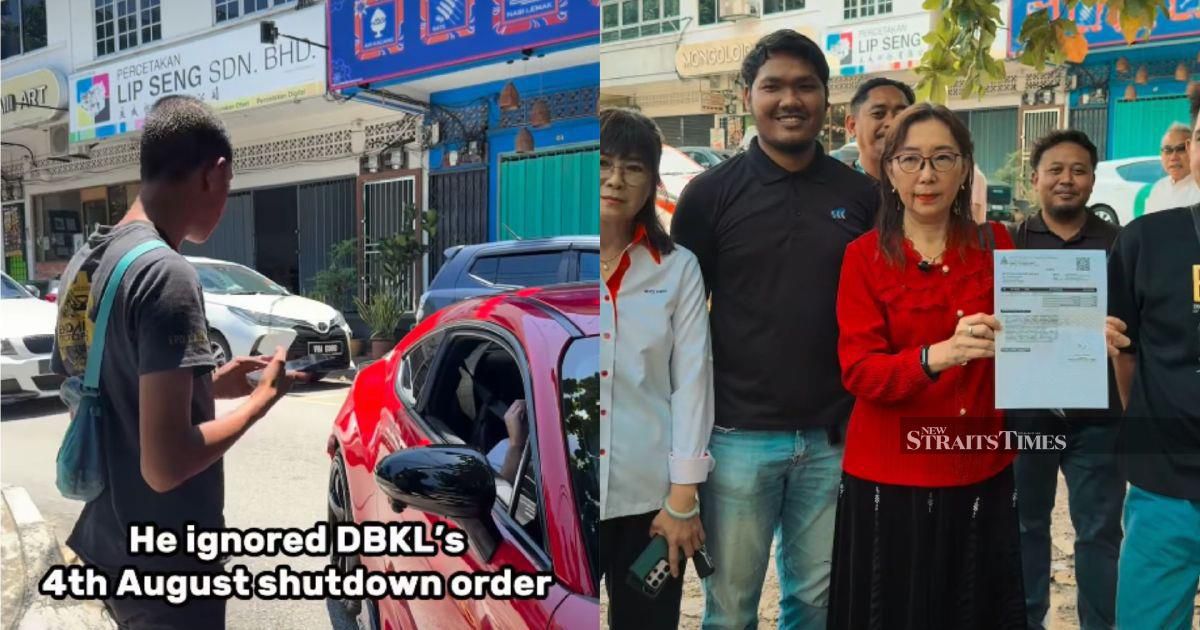
Authorities in Kuala Lumpur arrested an individual accused of running an unauthorised parking collection operation in the Taman OUG residential area, bringing to a close a prolonged enforcement effort against the illegal activity. The suspect was operating along Jalan Hujan, where residents have increasingly complained about the presence of unofficial parking attendants demanding fees from motorists. The arrest came after the individual persistently disregarded multiple notices issued by local authorities, demonstrating a pattern of non-compliance that escalated tensions between enforcement officers and the suspect.
The confrontation that led to the arrest occurred when an officer attempted to address the parking collector's continued violations. During this interaction, the suspect allegedly became aggressive and physically assaulted the officer, an action that elevated the matter beyond simple regulatory non-compliance. The alleged assault precipitated the formal arrest, transforming what might have remained a civil enforcement issue into a criminal matter. This type of escalation highlights the challenges enforcement teams face when dealing with persistent offenders who view regulatory compliance as optional.
Unauthorised parking collection has emerged as a recurring urban problem across Malaysian cities, particularly in residential neighbourhoods and commercial areas. These self-appointed parking attendants operate without licences or official sanction, essentially extracting informal taxes from motorists who often pay under implicit or explicit coercion. The practice creates confusion among vehicle owners regarding legitimate parking fees versus extortion, undermines proper municipal revenue systems, and occasionally generates confrontations when authorities intervene.
Taman OUG, a well-established residential enclave in the Klang Valley, has struggled with this issue as the area experiences mounting traffic pressures. The presence of illegal parking collectors on Jalan Hujan reflects broader challenges facing older suburban neighbourhoods where inadequate official parking infrastructure and weak enforcement mechanisms create opportunities for unauthorised operators. Residents frequently report feeling uncertain about whether they are paying legitimate fees or being victimised by informal extortion rings.
The fact that the individual ignored multiple enforcement notices suggests either a deliberate defiance of authority or confidence that consequences would prove minimal. Either interpretation points to systemic enforcement limitations. When repeated notices fail to produce compliance, stronger intervention becomes necessary. However, officers undertaking these enforcement actions face potential risks, as the alleged assault demonstrates. The physical confrontation underscores why some enforcement personnel view these duties as dangerous, particularly when confronting individuals who have demonstrated willingness to ignore official warnings.
Local authorities have intensified crackdowns on illegal parking collection throughout urban Malaysia, recognising that tolerating such activity enables more pervasive informal economies and erodes municipal governance. The arrest in Taman OUG represents part of broader enforcement efforts to reclaim public spaces and protect legitimate revenue streams. When parking fees are collected officially, funds theoretically support neighbourhood maintenance, security improvements, and traffic management. Illegal collection bypasses these formal systems entirely, benefiting only the individuals involved.
The alleged assault on an enforcement officer carries serious legal implications for the suspect. Beyond charges related to the parking collection offence, assault charges could result in substantial penalties. This dual culpability—both the primary regulatory violation and the secondary violent offence—typically results in more substantial judicial consequences than either charge alone. Courts in Malaysia have shown increasing willingness to impose meaningful sentences for assault against public officers, particularly when such incidents occur during lawful enforcement activities.
The incident also raises questions about officer safety protocols during enforcement operations. Authorities conducting parking-related enforcement increasingly work in pairs or with additional backup, reflecting recognition of potential confrontation risks. Training programmes emphasise de-escalation techniques and awareness of warning signs that an interaction might turn hostile. The Taman OUG arrest, if it leads to conviction and prosecution, will likely inform subsequent enforcement strategies in that neighbourhood and elsewhere.
Residents in Taman OUG have expressed relief at the arrest, viewing it as validation of their complaints and evidence that authorities take such matters seriously. The visibility of enforcement action builds confidence in municipal governance and encourages residents to continue reporting illegal activities. Conversely, failure to address persistent offenders erodes public trust and emboldens others contemplating similar violations.
The broader implications extend beyond Taman OUG to other Malaysian neighbourhoods experiencing comparable problems. Effective management of informal parking economies requires sustained commitment, adequate resources for enforcement personnel, and willingness to pursue prosecutions even when they involve physical confrontation. The arrest demonstrates that determination and follow-through can succeed, though whether this single case will deter other would-be parking collectors or merely displace the problem to adjacent areas remains uncertain. Ultimately, comprehensive solutions demand simultaneous improvements in official parking infrastructure and uncompromising enforcement against unauthorised operators.

