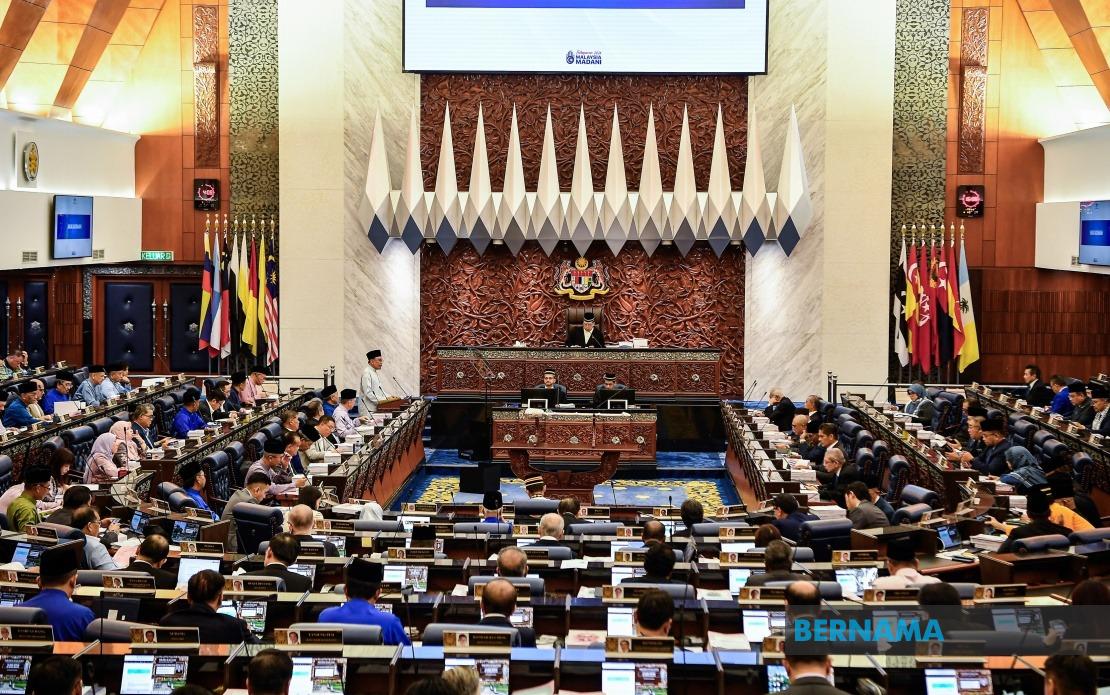
Parliament has endorsed the Malaysian Communications and Multimedia Commission (Amendment) Bill 2026, a legislative refresh designed to equip the country's primary telecom and media regulator with modernised governance structures and expanded financial authority. The measure passed through the lower house on July 15 following debate contributions from 14 members representing both the government and opposition parties, underscoring broad parliamentary consensus on the need to strengthen institutional frameworks within the communications sector.
Deputy Communications Minister Teo Nie Ching, who closed the parliamentary debate, outlined the rationale underpinning the amendments. She noted that ministerial appointment authority over the MCMC chairman and commissioners, established under legislation dating to 1998, remains grounded in established statutory body selection criteria encompassing qualifications, personal integrity, professional experience, and demonstrated leadership capability. This appointment mechanism, she explained, has functioned as the foundational mechanism for executive placement at the regulator for over two decades.
A significant focus of the legislative package centres on conflict-of-interest safeguards affecting the chairman position. The amendment introduces an explicit requirement preventing the chairperson from simultaneously holding membership in any legislative body, whether federal or state. This structural prohibition directly addresses political entanglement concerns by creating formal barriers that circumvent situations where regulatory leadership could become compromised by competing parliamentary obligations or party political alignment.
The bill's most substantive change involves scaling up MCMC's financial threshold for independent contract approvals. The existing ceiling of RM5 million, untouched since 1998, is being raised to RM50 million. Teo situated this increase within the Finance Ministry's Procurement Regulations for Federal Statutory Bodies WP7.5, which permits internally funded federal bodies to greenlight procurements reaching RM499 million. However, the government exercised conservative judgment, selecting RM50 million as an intermediate threshold better calibrated to MCMC's circumstances and risk profile.
The justification for this tenfold expansion reflects the substantive economic shifts affecting procurement across the communications infrastructure sector. Inflation dynamics, the accelerating deployment of sophisticated telecommunications technologies, and rising material and labour costs have combined to inflate project valuations significantly over the quarter-century since the original financial limit was established. Without this adjustment, MCMC would have faced operational constraints inconsistent with realistic contract pricing in contemporary markets, potentially forcing unnecessary escalations to ministerial approval chains for routine infrastructure and technology investments.
Oppositional figures raised probing questions about governance depth during parliamentary consideration. Dr Halimah Ali, a Perikatan Nasional legislator representing Kapar, advocated for transparency mechanisms exceeding the bill's current provisions. She specifically proposed transplanting appointment methodologies employed by the Human Rights Commission of Malaysia (SUHAKAM), which uses competitive selection processes emphasising expertise, professional standing and demonstrated credibility rather than ministerial discretion as the sole determining factor. She additionally urged documentation and parliamentary tabling of all ministerial directives issued to MCMC, creating an audit trail that would expose potential political pressure.
Datuk Mas Ermieyati Samsudin, the Perikatan Nasional member for Masjid Tanah, pressed for expanded oversight mechanisms addressing three discrete areas: the Universal Service Provision (USP) Fund utilised to extend connectivity to underserved communities, the regulator's audit capacity over telecommunications operators, and transparency surrounding ministerial instructions. She proposed periodic parliamentary reporting on USP fund deployment, connecting resource allocation directly to public accountability mechanisms and enabling legislators to scrutinise whether universal service objectives were being achieved.
Dr Richard Rapu, representing Betong under the GPS banner, offered broader institutional perspective. He characterised the amendments as foundational investments in MCMC's institutional robustness, professional standing, and independence posture. In his assessment, the legislative changes position the regulator to navigate digital economy complexities with greater structural autonomy and operational flexibility than previously available, preparing it to address convergence challenges as telecommunications, broadcasting and internet services increasingly intermesh.
These amendments arrive at a critical juncture within Malaysia's communications landscape. The sector faces mounting regulatory complexity as 5G infrastructure proliferates, digital content consumption patterns accelerate, and cybersecurity threats intensify. MCMC must simultaneously manage traditional broadcast licensing, spectrum allocation, consumer protection in digital services, and increasingly, national security dimensions of telecommunications infrastructure. The financial and governance adjustments embedded in the bill acknowledge that regulatory capacity constraints—whether financial thresholds or governance procedures—represent genuine barriers to effective institutional function in this rapidly evolving environment.
The passage of this legislation also reflects broader Southeast Asian trends toward regulator professionalisation and insulation from short-term political manipulation. Neighbouring jurisdictions including Singapore, Thailand and Indonesia have undertaken parallel reforms strengthening telecom regulator independence, recognising that investment certainty and service quality depend partly on regulatory predictability and technical competence shielded from electoral cycle pressures. Malaysia's amendments, while modest by comparison, signal alignment with this regional trajectory toward institutional maturity.
Looking ahead, MCMC's operational capacity will expand materially. The ability to approve RM50 million contracts without ministerial referral should accelerate infrastructure deployment, particularly for undersupplied areas where Universal Service Provision funding bridges commercial viability gaps. Enhanced appointment safeguards theoretically insulate the regulator from political capture, though implementation effectiveness ultimately depends on whether future governments respect the legislative constraints now inscribed. The regulator will face immediate opportunities to demonstrate whether these reforms translate into measurably improved service outcomes and transparent regulatory governance meeting public expectations.

