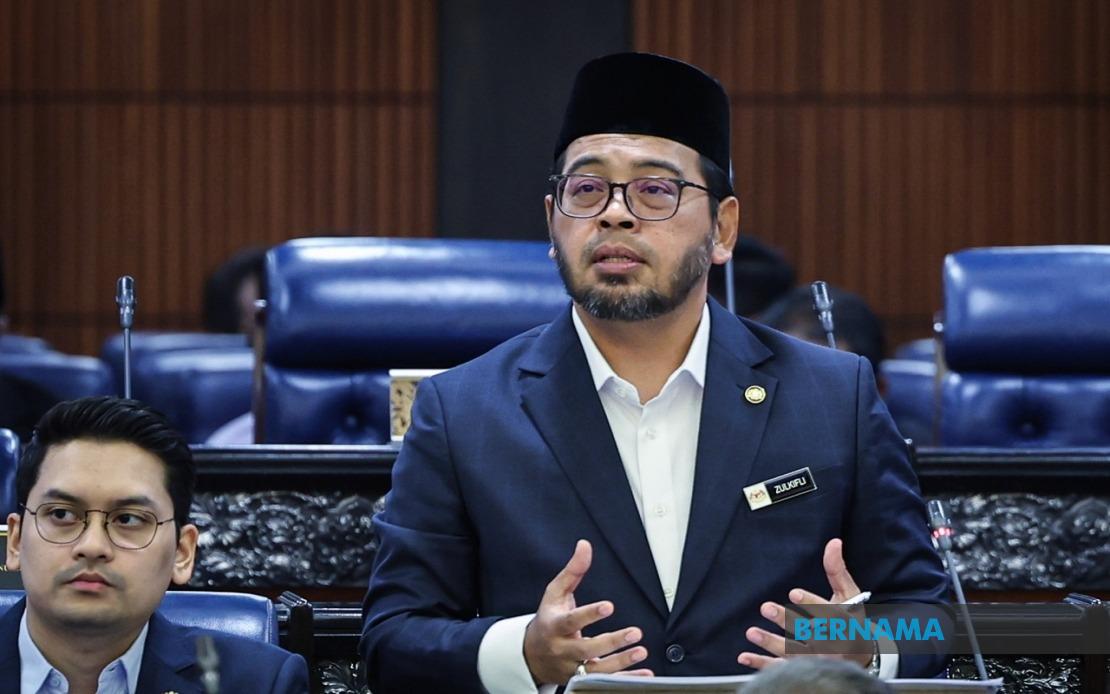
Parliament descended into an intensive examination of Tabung Haji's governance failures on August 11, with lawmakers across the chamber united in demanding systemic overhaul and personal accountability for institutional weaknesses that cost the haj fund nearly RM13 billion. The special Dewan Rakyat sitting lasted more than ten hours as 39 MPs dissected the Royal Commission of Inquiry report, released publicly on July 29, which documented pervasive management deficiencies spanning 2014 to 2020. The proceedings reflected deep concern among legislators that the religious institution entrusted with managing haj savings for more than 10 million Malaysians had become a vehicle for poor investment decisions, governance lapses and insufficient oversight of senior leadership.
The scale of financial deterioration exposed during the debate underscores the magnitude of the institutional crisis that accumulated over six years. Minister of Finance II Datuk Seri Amir Hamzah Azizan revealed that 14 problematic investments resulted in total losses approaching RM13 billion, with seven of these ventures recording complete losses. The government absorbed RM10.2 billion through a 2018 rescue operation involving Urusharta Jamaah Sdn Bhd, transferring toxic assets away from Tabung Haji's books. Additionally, between 2018 and 2025, the institution itself carried RM2.6 billion in impairment charges relating to investments that remained under its management, representing a drawn-out recognition of value destruction that continued long after the RCI review period ended.
One emblematic case that dominated parliamentary discussion concerned Al-Rawda Real Estates Development & Project Management Co Ltd, to which Tabung Haji paid 1.4 billion Saudi riyals—approximately RM1.5 billion—to an intermediary contracted to secure hotel leases in Madinah and Makkah for haj pilgrims. The counterparty failed to honour rental payment obligations to Tabung Haji, compelling the institution to write off the entire RM1 billion investment in 2024. This arrangement exemplifies the investment risks that MPs contend reflected inadequate due diligence, weak contract enforcement mechanisms and unclear accountability chains when deals went awry. The debate highlighted that such catastrophic loss-making occurred despite the existence of internal audit functions and purported governance structures, raising questions about whether those mechanisms functioned independently or were compromised by political or administrative pressure.
Minister in the Prime Minister's Department (Religious Affairs) Dr Zulkifli Hasan employed the parliamentary forum to defend government intervention and reform efforts since 2018, positioning recent stabilisation measures as necessary correctives to institutional decay. He emphasised that recovery initiatives had restored Tabung Haji's financial trajectory, enabled the haj cost to be maintained at RM33,300 across three consecutive seasons from 2024 through 2026, and strengthened governance architecture. However, MPs demanded that these retrospective improvements represent only the opening phase of institutional transformation. Legislators insisted that amendments to the Tabung Haji Act 1995 must be expedited to tighten investment oversight, establish clearer fiduciary responsibilities and reduce opportunities for political interference in operational decisions that should rest on professional merit and risk management disciplines.
The debate crystallised a fundamental challenge confronting government institutions across Southeast Asia: ensuring that systems and institutional structures remain resilient regardless of personnel changes at the top. Dr Zulkifli explicitly articulated this principle, cautioning that institutional strength cannot depend on individual integrity but must be anchored in transparent systems, robust processes, effective controls and enforceable governance frameworks. This framing acknowledges an uncomfortable truth—that Tabung Haji's catastrophic investment losses occurred not because systems did not exist, but because existing systems either lacked independence, contained insufficient checks, were overridden by powerful figures, or failed to generate consequences when violations occurred. Parliament's emphasis on systemic reform rather than individual culpability reflects recognition that personnel will inevitably rotate, but institutional design flaws persist across administrations unless deliberately redesigned.
Parliamentarians specifically demanded that investigations initiated by authorities following the RCI report proceed transparently and reach definitive conclusions about individual misconduct. Several individuals have been detained in connection with alleged bribery, abuse of power and governance violations, Dr Zulkifli confirmed, yet MPs insisted that detention without visible prosecution and public accountability would further erode depositor confidence. The debate revealed that government has established a multi-agency task force to investigate investments at risk of future losses, a preventative measure that acknowledges Tabung Haji's continued exposure to troubled assets and the need for coordinated early warning systems. This task force concept reflects international practice in addressing institutional recovery, establishing cross-functional teams to identify deteriorating investments before losses become insurmountable.
The RCI's 25 recommendations—75 per cent of which Tabung Haji had implemented by July 30—provided the substantive foundation for parliamentary discussion. Yet MPs expressed scepticism about whether implementation timelines were adequate or whether mere procedural compliance would suffice to restore institutional culture and depositor trust. Concerns centred on whether reforms genuinely transferred decision-making authority from political networks to professional management, or whether institutional dependency on government remained structurally intact. This tension between political oversight and professional autonomy characterises governance challenges across Islamic financial institutions throughout the region, where religious significance and government interest intersect at institutions managing substantial Muslim savings.
Deputy Finance Minister's presentation of the government's comprehensive response—investigation, enforcement action, asset recovery and legal-governance strengthening—attempted to project decisive action and long-term commitment to institutional restoration. Yet the debate suggested that legislators remain unconvinced these measures represent permanent solutions rather than temporary stabilisation. Questions about whether those responsible for approving catastrophic investments have faced meaningful personal consequences, whether asset recovery proceeds have materialised, and whether governance amendments will genuinely restrict future misconduct remained incompletely answered by government speakers. The February 2024 parliamentary sitting became a forum for airing these doubts rather than obtaining definitive reassurance.
The decision by several opposition MPs to boycott the sitting attracted substantial criticism, with government members and some crossbench legislators contending that opposition lawmakers had abdicated their constitutional responsibility to scrutinise executive action and represent depositors' interests. Government spokespersons framed the absence as political opportunism—abandoning more than 10 million Tabung Haji depositors to make partisan points. This accusation, regardless of its validity, underscores the political sensitivities surrounding Tabung Haji governance failures, positioning institutional accountability as an arena where all parliamentary factions should demonstrate visible commitment to depositor protection rather than pursuing zero-sum political calculation.
For Malaysian and broader Southeast Asian readers, the Tabung Haji case exemplifies institutional vulnerability when religious significance, government authority and complex investment operations converge without sufficient structural insulation protecting professional judgement from external pressures. The RM13 billion loss reflects systemic breakdown rather than discrete management errors, raising implications for other regional institutions managing religious savings or government-mandated investment mandates. The parliamentary insistence on legal amendment, governance restructuring and investigation transparency represents recognition that institutional recovery requires explicit legal reform rather than voluntary change, establishing precedent for how governments should respond when large-scale institutional failures threaten public confidence in entities managing citizens' savings. Whether parliamentary pressure translates into durable reform or becomes satisfied by cosmetic restructuring will determine whether Tabung Haji emerges as instructive model for institutional recovery or cautionary tale about governmental capacity to genuinely reform compromised institutions.

