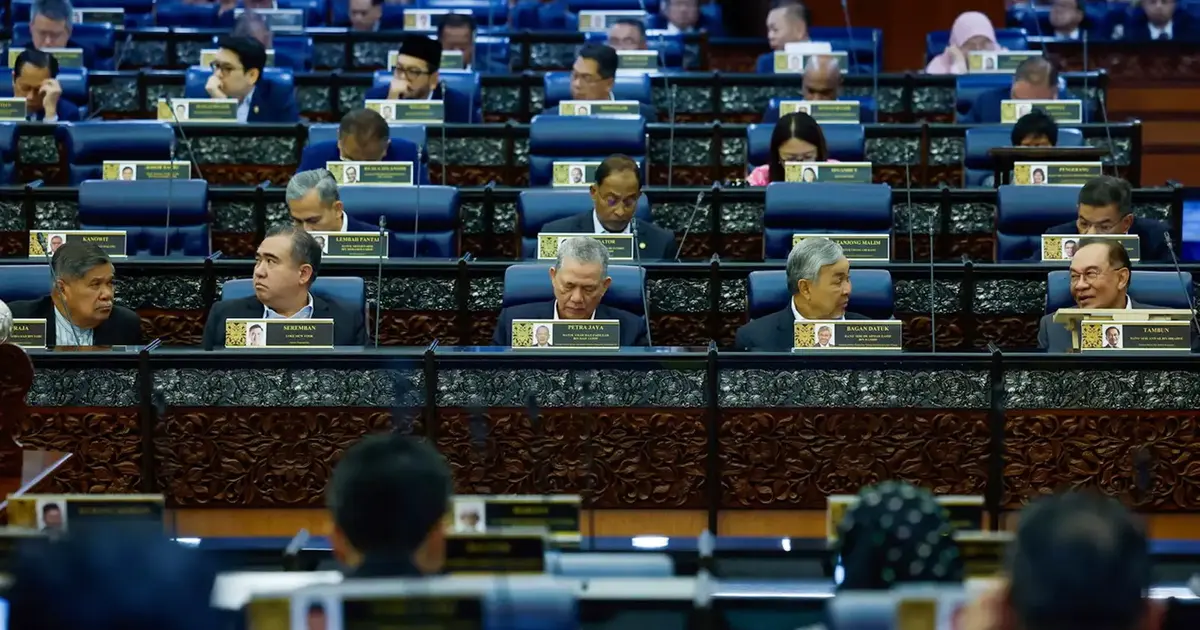
Malaysia's political stability would not be jeopardised if the Democratic Action Party withdraws from ministerial and executive positions while maintaining parliamentary support, according to PKR deputy secretary-general Saifuddin Shafi Muhammad, underscoring the flexibility within the current government coalition structure.
The remarks represent an attempt to reassure investors and political observers concerned about potential instability following recent tensions within the ruling coalition. They also reflect the complex mathematics of Malaysian parliamentary politics, where controlling a simple majority in the Dewan Rakyat remains the primary constitutional requirement for government formation.
Saifuddin's statement addresses a recurring anxiety among analysts and opposition figures who have suggested that any party departure from the executive arm could precipitate a government collapse and forced elections. The PKR official's clarification suggests that the coalition has sufficient buffer and strategic flexibility to accommodate such a transition without triggering the extreme constitutional remedy of parliamentary dissolution.
The distinction between executive participation and legislative support carries profound implications for Malaysian governance. A political party can maintain alignment with government objectives through parliamentary voting without holding cabinet portfolios or key institutional positions. This separation has become increasingly relevant as coalitions become more ideologically diverse and internally contentious.
DAP, as the cabinet's most consistent advocate for institutional reform and anti-corruption measures, occupies a distinctive position within the coalition. Its potential departure from executive roles would reflect persistent disagreements over policy priorities or governance approaches rather than fundamental rejection of the government's survival. The party's decision to maintain parliamentary backing would signal continued commitment to preventing opposition resurgence while preserving leverage over policy implementation.
The coalition's current composition depends on PKR, DAP, Amanah, and various other parties and independent MPs. Precise headcounts in the Dewan Rakyat have remained subject to ongoing scrutiny, with opposition parties and international observers tracking attendance records and voting patterns. Any reconfiguration requires only that the aggregate supporting votes exceed half of occupied parliamentary seats, not absolute majorities.
For Malaysian business circles and foreign investors, such clarity offers some reassurance about medium-term political predictability. Substantial policy reversals and governance disruptions typically follow full government collapses rather than executive reshuffles. The prospect of DAP maintaining the government's legislative majority while exiting ministerial roles would represent a managed adjustment rather than a constitutional crisis.
Differential concerns exist regarding specific policy areas. DAP has prioritised issues including judicial independence, anti-corruption enforcement, and civil service meritocracy. Cabinet withdrawal would limit its direct implementation authority over these objectives, potentially frustrating its political base while allowing coalition partners greater discretionary power in competing areas. The party would retain the nuclear option of legislative withdrawal if governance fundamentally contradicts its public commitments.
Regional observers tracking Malaysian politics have noted that coalition survival depends increasingly on management of ideological contradictions rather than simple numerical sufficiency. The Perikatan Nasional opposition bloc remains organised and prepared to capitalise on any coalition fragmentation. Maintaining a stable government requires not merely formal majority control but operational coherence across executive functions.
Saifuddin's public statement attempts to reframe potential DAP departure as administratively manageable rather than constitutionally catastrophic. This rhetorical positioning serves multiple audiences: reassuring coalition partners that temporary disagreements need not trigger existential threats, signalling to opposition parties that wholesale government collapse remains unlikely, and conveying to international observers that Malaysia's political institutions retain functional stability.
The underlying dynamics reflect the maturation of Malaysian coalition politics beyond the winner-take-all paradigm that characterised earlier administrations. Modern governments must accommodate multiple parties with distinct constituencies and policy preferences, creating inherent tensions between unity and autonomy. The current framework permits reconfiguration around legislative alliances without necessitating electoral upheaval.
Practical implementation of such arrangements carries technical complications. Cabinet reshuffle procedures, ministerial portfolio redistribution, and statutory body appointments would require careful navigation to avoid accusations of partisan advantage. Any transition would face intense scrutiny from opposition MPs seeking to identify procedural irregularities justifying confidence votes.
For Malaysian citizens and civil society, the clarification underscores that political stability does not require permanent executive coalescence. Governments can function effectively with rotating participation, provided legislative foundations remain secure and constitutional procedures are observed. This flexibility potentially enables long-term governance stability by reducing incentives for maximum conflict when coalition partners identify internal disagreements.

