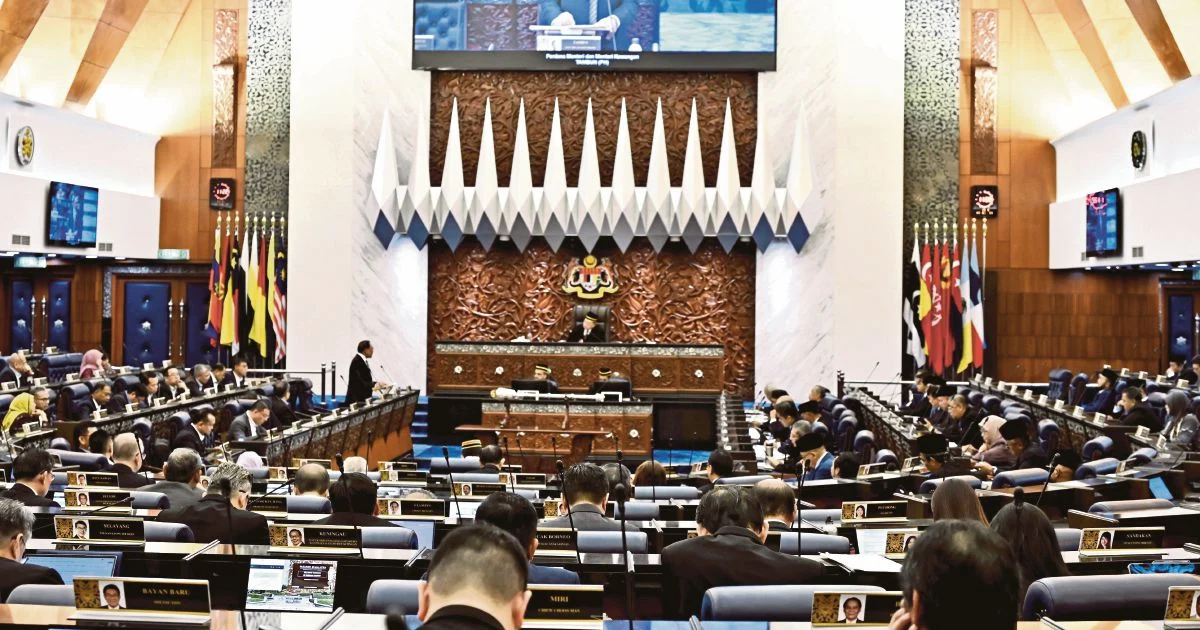
Parliament descended into acrimony within minutes of the new sitting commencing today, as a contentious dispute over the opposition leadership precipitated a sharp confrontation between government-aligned and opposition members of the Dewan Rakyat. The parliamentary decorum that typically governs Malaysia's legislative chamber gave way to pointed accusations and heated rhetoric, signalling deepening fractures within opposition coalition dynamics and government-opposition relations.
Takiyuddin, a prominent figure in the parliamentary arena, became central to the escalating verbal clash as he levelled allegations of bullying behaviour directed at Bersatu by its opposition partner PAS. The accusation struck at the heart of coalition cohesion at a moment when opposition unity appears increasingly fragile. Government backbenchers seized upon the opening to amplify the narrative, weaponising internal opposition divisions to undermine their political adversaries during what observers described as an unusually contentious parliamentary session.
The triggering issue—the procedural status of the opposition leader—reflects deeper structural tensions within Malaysia's political landscape. Questions surrounding opposition leadership authority touch upon fundamental issues of parliamentary legitimacy and coalition governance. When lawmakers cannot agree on basic procedural matters, it signals the absence of consensus on foundational political arrangements, a situation that destabilises parliamentary institutions and complicates legislative business.
The exchange between Takiyuddin and government MPs illuminated the precarious position of opposition coalitions in Malaysia. The opposition has struggled since 2022 to maintain unified messaging and coordinated strategy, hampered by competing political interests and philosophical differences between component parties. Bersatu's position within the opposition has proven particularly contentious, with questions about its ideological alignment and commitment to opposition objectives recurring throughout parliamentary discussions.
PAS, as the dominant Islamist party within the opposition configuration, has wielded considerable influence over coalition direction and priorities. Allegations of bullying behaviour suggest that smaller parties like Bersatu feel marginalized within opposition structures, despite their importance to maintaining coalition arithmetic in the Dewan Rakyat. This dynamic mirrors broader patterns of party dominance observed in Malaysian coalition politics, where larger parties frequently exercise disproportionate control over decision-making processes.
The timing of the eruption—occurring mere moments into a fresh parliamentary session—demonstrates how charged the current political atmosphere remains. Lawmakers appear primed for confrontation, suggesting that underlying grievances have accumulated and now manifest with minimal provocation. The speed with which civility collapsed indicates that parliamentary tensions reflect genuine ideological and strategic divisions rather than merely performative partisan theatre.
From a regional perspective, the deteriorating parliamentary decorum in Malaysia offers instructive lessons about coalition management in Southeast Asian democracies. Successful opposition coalitions require effective mediation mechanisms, clear power-sharing arrangements, and transparent dispute-resolution processes. The apparent absence of such structures within Malaysia's current opposition configuration contributes to public displays of disharmony that further erode voter confidence in political institutions.
The government's apparent strategy of exploiting opposition divisions through parliamentary amplification represents a recognisable political tactic in Malaysian politics. By highlighting internal opposition conflicts, government MPs shift focus from executive performance toward opposition dysfunction. However, such tactics carry reputational costs, as they contribute to broader parliamentary debasement and democratic degradation that ultimately affects all stakeholders in the political system.
Takiyuddin's role as the parliamentary voice articulating grievances against PAS signals potential realignment possibilities within opposition politics. Should smaller opposition parties increasingly perceive themselves as marginalised within existing coalition structures, they may pursue alternative political arrangements or individual parliamentary strategies. This fragmentation could reshape the opposition's capacity to present unified alternatives to government policies and hold the executive accountable.
The procedural question underlying the dispute—concerning opposition leader recognition and authority—carries constitutional implications for parliamentary governance. Ambiguity surrounding leadership status creates uncertainty about which opposition figure possesses legitimate standing to raise parliamentary business, introduce motions, or negotiate with the Speaker. Resolving such constitutional matters requires cross-party cooperation and institutional consensus that appears presently unavailable.
Moving forward, the parliamentary incident serves as a diagnostic indicator of broader coalition health. Opposition parties will require intensive negotiations to clarify power-sharing arrangements, establish grievance procedures, and reaffirm coalition objectives. Without such interventions, parliamentary eruptions will likely recur with increasing frequency, further diminishing the legislative chamber's capacity to conduct substantive policy deliberation and oversight functions that characterise effective democracies.
The incident also raises questions about Speaker responsibility in maintaining parliamentary decorum. Whether the Speaker intervened to restore order, and how effectively such interventions occur, will shape future parliamentary conduct. Strong institutional oversight from the Speaker's office can prevent escalation, whilst permissive approaches may encourage additional confrontational episodes that undermine parliamentary legitimacy and public respect for democratic institutions.