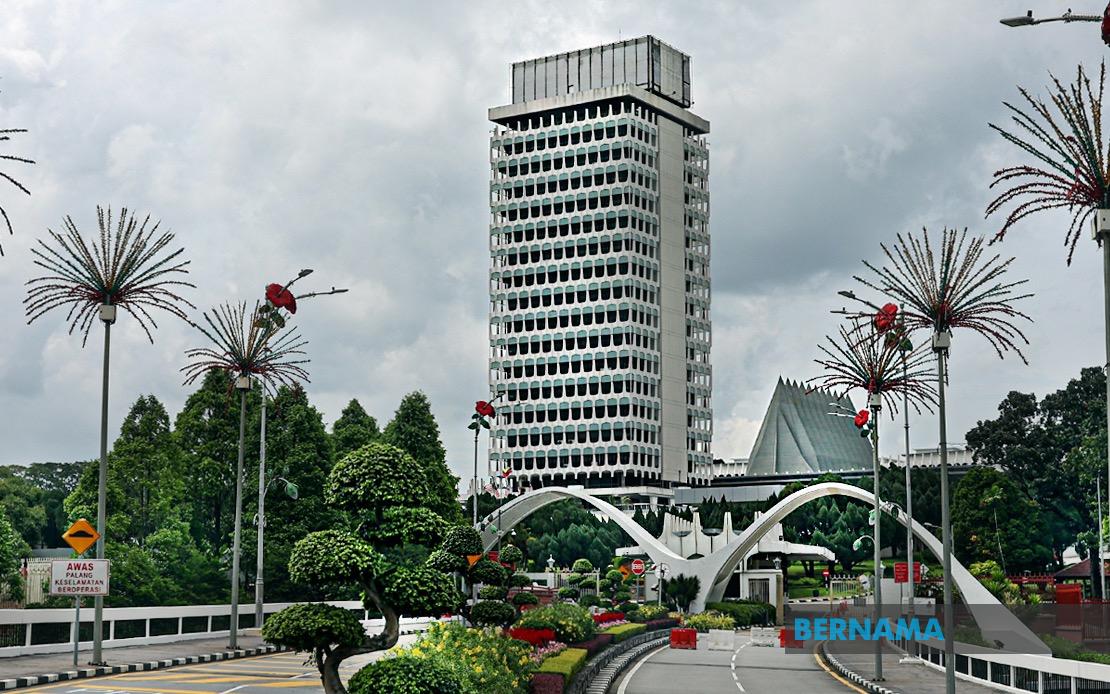
Lawmakers in the Dewan Rakyat are directing attention towards two critical matters: reshaping the governance framework of the country's human rights body and tackling the persistent disconnect between headline inflation statistics and the economic reality experienced by ordinary Malaysians. These priorities underline mounting parliamentary pressure on the government to address institutional capacity and cost-of-living challenges that have become increasingly visible in public discourse.
Teresa Kok Suh Sim from the Pakatan Harapan coalition representing Seputeh will pose a direct question to the Prime Minister about the feasibility of amending the Human Rights Commission of Malaysia Act 1999. Her inquiry focuses on whether regulatory changes could allow SUHAKAM to develop self-sustaining revenue streams through educational initiatives, including training programmes and professional courses. The underlying premise reflects frustration with the commission's current budgetary constraints, which force it to rely almost entirely on annual government allocations rather than leveraging its expertise to generate income independently. This structural dependency has long been identified as a potential limitation on institutional autonomy, particularly when the commission faces situations requiring independence from executive influence.
The proposed revenue diversification strategy represents a broader trend among Malaysian statutory bodies seeking greater operational flexibility. By monetising its accumulated knowledge in human rights advocacy, compliance frameworks, and institutional ethics, SUHAKAM could theoretically reduce its reliance on parliamentary budgets while expanding training capacity across both the public and private sectors. For Malaysia's international standing on human rights governance, demonstrating institutional self-sufficiency carries symbolic weight beyond mere financial accounting, signalling confidence in the commission's technical competence and relevance to corporate and civil society sectors.
Parallel to institutional concerns, parliamentarians are grappling with a more visceral issue affecting voters across all constituencies: the yawning gap between official inflation measurements and household experiences of rising costs. Mohd Syahir Che Sulaiman from Perikatan Nasional's Bachok division is directing this question to the Economy Minister, demanding clarity on how government economists reconcile published inflation rates with the conspicuous squeeze on purchasing power that families report at supermarkets and petrol stations. This tension has become a defining feature of Malaysia's economic narrative, where statistical stability at the macro level masks deteriorating conditions at the household level.
The inflation-versus-cost-of-living paradox reflects methodological differences in how these metrics are calculated and which basket of goods they prioritise. Official inflation figures, typically measured through the Consumer Price Index, may not adequately capture the disproportionate impact of rising prices in categories most essential to lower-income households—namely food, transportation, and utilities. When these segments inflate faster than discretionary spending, the aggregate inflation figure understates genuine hardship. The questioner's insistence on discussing the discrepancy suggests parliamentary recognition that government messaging on economic performance rings hollow when disconnected from lived experience.
Mohd Syahir's second line of inquiry targets the crucial question of whether economic growth translates into tangible improvements in household purchasing power. This framing acknowledges that gross domestic product expansion, Malaysia's traditional measure of economic success, may not automatically improve ordinary Malaysians' ability to afford food, housing, or education. The question reflects emerging consensus that purely aggregate growth metrics obscure distributive outcomes and may mask scenarios where wealth concentration accelerates even as headline growth remains solid. By pressing for specific indicators linking growth to purchasing power, the questioner is essentially asking whether the government possesses adequate tools to assess inclusive economic performance.
Additional parliamentary business addresses land governance and skills development. V. Ganabatirau from Klang will seek updates on a review of land transfers and use changes affecting flood retention ponds, particularly in Kuala Lumpur, a topic carrying immediate resonance given Malaysia's recurring flooding challenges and the intersection of urban development with environmental management. The inquiry suggests concerns that institutional oversight of critical water infrastructure may have been compromised by land deals or regulatory oversights.
Higher education constitutes another focal point, with Datuk Dr Ku Abd Rahman Ku Ismail from Kubang Pasu questioning the Science, Technology, Engineering and Mathematics enrolment ratio relative to non-STEM disciplines. His question extends to government targets for engineer production across specialisations, reflecting long-standing debate about whether Malaysia's higher education system adequately supplies skilled talent for advanced manufacturing and technology sectors. This concern proves particularly acute given regional competition from Vietnam, Thailand, and Indonesia for knowledge-economy positioning, and the necessity of human capital development to support the National Investment Aspirations framework.
Concurrently, Parliament will undertake second reading of the Cybercrime Bill 2026, legislation that strikes at the intersection of digital security and personal freedoms. The bill's advancement signals government determination to strengthen legal frameworks governing online misconduct, data protection, and digital forensics. For Malaysia, where digital commerce and fintech sectors are expanding rapidly, cybercrime legislation carries implications for investor confidence, consumer protection standards, and the regulatory environment governing technology enterprises. The substance and scope of this bill will reveal whether the government prioritises flexibility in digital innovation or adopts precautionary regulatory approaches.
The Second Meeting of the current parliamentary session extends across sixteen sitting days through July 16, providing extended opportunity for legislators to engage substantively with government ministers. This duration contrasts with periods of more truncated parliamentary calendars and suggests space for detailed examination of policy performance and budgetary allocations. The agenda collectively reveals Parliament's preoccupation with institutional governance, economic distribution, environmental stewardship, human capital development, and digital security—issues that transcend partisan boundaries and reflect genuine constituent concerns across Malaysia's diverse constituencies.

