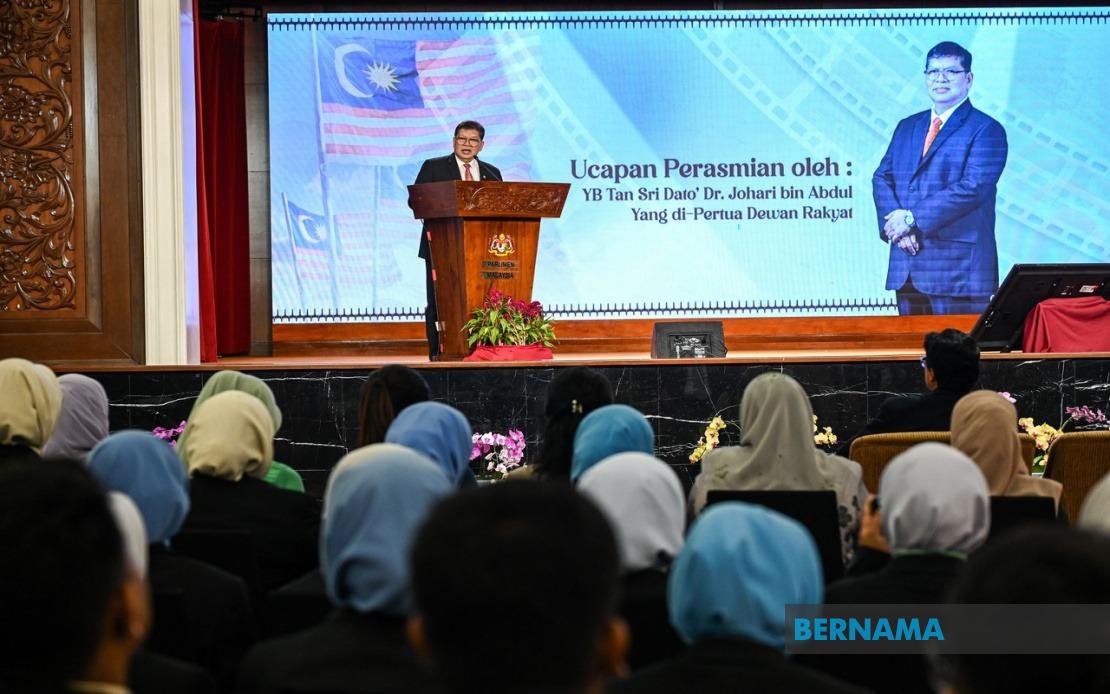
Parliament has released a short film titled "Arkitek Bangsa" (Architects of the Nation) as part of a comprehensive push to cultivate leadership qualities and a deeper sense of patriotism among Malaysia's younger generation. The initiative, unveiled at a special screening at the Parliament Building in Kuala Lumpur on July 16, reflects growing concerns among policymakers about the need to foster a generation capable of stewarding national development effectively.
The production represents more than a standalone cultural project. Officials view it as a strategic component of Parliament's broader engagement with youth, designed to deepen young Malaysians' understanding of their country's democratic institutions and historical foundations. The underlying message centres on encouraging all young citizens to see themselves not as passive observers of national affairs but as active builders capable of shaping their country's future. This reframing of youth participation—from spectatorship to agency—addresses a persistent challenge in governance across Southeast Asia: maintaining generational continuity in national commitment.
Parliament's Deputy Speaker Johari, who presented the initiative, emphasised that leadership is neither an innate quality nor the preserve of a privileged few. Instead, he characterised it as a skill that requires deliberate cultivation through sustained exposure, expert mentorship, and structured training programmes. This perspective carries significant implications for how Malaysia approaches youth development, suggesting that systematic institutional investment in young people represents a cornerstone of national resilience. The framing also challenges conventional hierarchies, implying that leadership capacity exists across demographic and socioeconomic boundaries if given appropriate nurturing.
The "Arkitek Bangsa" film arrives alongside several complementary parliamentary initiatives that collectively form a youth engagement ecosystem. The Parliament School Programme has proven particularly significant in scale, having brought over 1,000 schools to the Parliament Building to introduce students directly to Malaysia's democratic machinery and legislative processes. This hands-on exposure approach recognises that theoretical understanding of governance institutions often fails to inspire genuine commitment; direct experience within parliamentary spaces appears to generate more durable engagement.
Parliament has simultaneously deepened its involvement in the National Service Training Programme (PLKN) through a dedicated select committee structure, extending parliamentary influence over one of Malaysia's most significant youth intervention programmes. The Youth Parliament initiative represents another avenue for institutional engagement, with membership expanding from 100 to 222 representatives and a shift toward proportional representation electoral systems. This expansion signals an intention to broaden representativeness and ensure that youth perspectives reflect Malaysia's demographic diversity more accurately.
Johari's remarks emphasised a temporal dimension often overlooked in public discourse around nation-building. He drew an explicit contrast between the extended timeframes required to construct institutional and social infrastructure and the comparative ease with which such foundations can be undermined. This observation addresses a fundamental anxiety within Southeast Asian governance circles: the fragility of achievements built across generations when generational commitment weakens. By stressing that destruction unfolds far more rapidly than construction, Johari implicitly argued for viewing patriotic education not as optional supplementary content but as essential institutional maintenance.
The intended application of "Arkitek Bangsa" extends beyond Parliament itself. Officials envisage the film functioning as a resource throughout Malaysia's federal bureaucracy, deployed across ministries and government agencies engaged in nation-building efforts. This horizontal distribution approach suggests confidence in the film's messaging while also acknowledging that youth engagement represents a whole-of-government responsibility rather than the exclusive purview of parliamentary institutions. Agencies dealing with education, national service, cultural affairs, and youth development would presumably find the material useful for curriculum integration and programme development.
The film's emphasis on young Malaysians developing pride in their national identity addresses concerns that rapid modernisation and globalisation may have attenuated traditional sources of civic commitment. Officials hope the production will foster renewed appreciation for the sacrifices and contributions of earlier generations who established Malaysia's foundational institutions during independence and the nation-building era. This intergenerational gratitude represents a subtle but important dimension of patriotic sentiment—one that emphasises continuity and interdependence rather than abstract national symbols alone.
The National Film Development Corporation Malaysia (FINAS), which participated in the initiative's development, connects the project to Malaysia's broader cultural sector. This institutional alignment suggests recognition that national values are transmitted through entertainment and cultural production, not solely through formal educational curricula or government pronouncements. The involvement of film development infrastructure indicates that Parliament views popular media as a legitimate and potentially powerful instrument for shaping attitudes toward leadership and national responsibility.
For Malaysian readers and Southeast Asian observers, the "Arkitek Bangsa" initiative represents a distinctive approach to generational renewal. Rather than emphasising constraints or limitations facing young people, the campaign foregrounds agency and potential, implicitly positing that youth represent a primary asset in ensuring Malaysia's continued development. This optimistic framing contrasts sharply with narratives that often emphasise youth disengagement or alienation from political institutions. By positioning young Malaysians as potential architects rather than inheritors, policymakers signal belief in their capacity to address the challenges that will inevitably confront the nation in coming decades.

