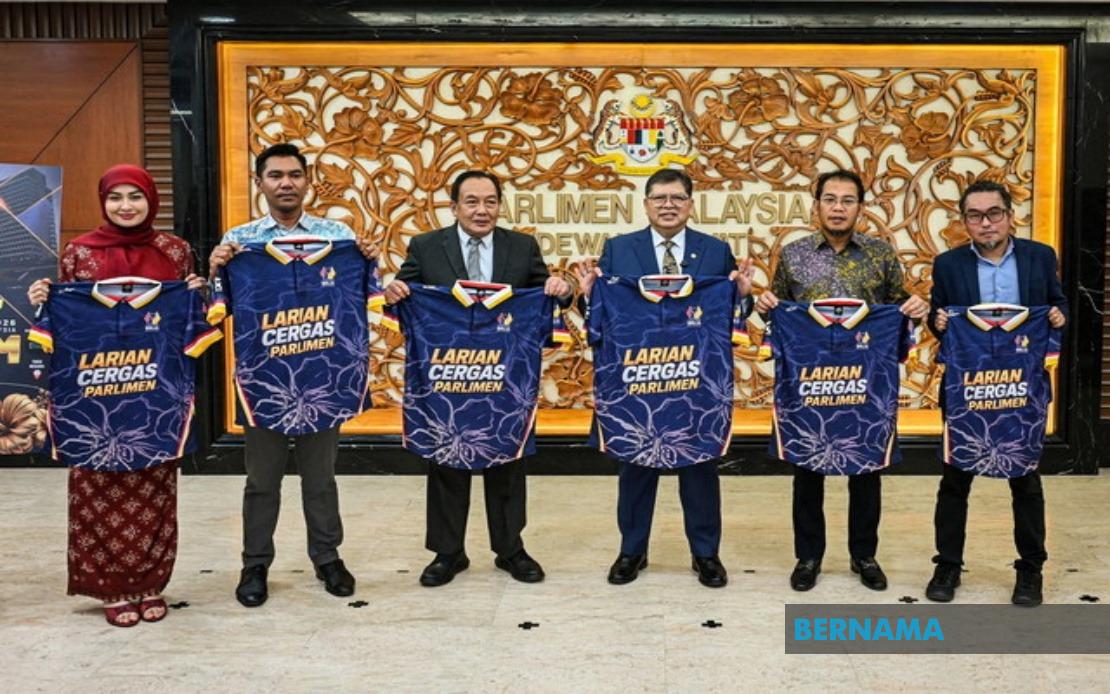
Malaysia's Parliament is taking a deliberate step toward wellness by organising the inaugural 'Larian Cergas Parlimen' fun run on July 25, marking a significant institutional commitment to promoting healthier living standards among elected representatives and the broader public. The event, being coordinated through the Malaysian Youth Parliament (PBMy) secretariat, represents an attempt by the legislative branch to position itself as a champion of public health initiatives rather than remaining confined to the parliamentary chamber. Dewan Rakyat Speaker Tan Sri Datuk Dr Johari Abdul unveiled the programme at Parliament House, signalling that institutional leadership in health promotion extends beyond policy-making to personal demonstration.
The five-kilometre route has been carefully designed to showcase Malaysia's capital, beginning at the Parliament building itself before winding through several of Kuala Lumpur's iconic landmarks including Tugu Negara before returning to the parliamentary complex. This geographical choice transforms a simple fun run into a symbolic journey through the nation's political heart, combining fitness activity with cultural recognition. By anchoring the event physically at Parliament, organisers are deliberately creating a visual association between the legislative institution and wellness advocacy.
Johari articulated a broader rationale for the initiative, emphasising that members of both the Dewan Negara and Dewan Rakyat should position themselves as influencers actively promoting the importance of health maintenance within their own circles and constituencies. This framing recognises that elected representatives occupy privileged platforms from which to shape public attitudes toward wellness, particularly among younger demographics who may view parliamentary members as role models worthy of emulation. The speaker's explicit mention of championing healthy lifestyles specifically among young people suggests awareness that Malaysia's youth face mounting health challenges requiring sustained cultural messaging from respected institutions.
Underlying this programme is an acknowledgment of a troubling trend within Parliament itself. Johari did not shy away from identifying the root problem: lawmakers in recent times have faced deteriorating health conditions attributed directly to the demanding pressures of parliamentary work combined with the adoption of increasingly sedentary and nutritionally poor lifestyle choices. This candid recognition that elected representatives struggle with the same health vulnerabilities affecting the general population paradoxically strengthens the legitimacy of Parliament positioning itself as an advocate for wellness. Rather than positioning legislators as uniquely capable of promoting health to others, Johari's comments suggest lawmakers must first address their own wellbeing before credibly urging constituents to do likewise.
The event remains open to members of the general public, a decision that democratises participation and reflects the programme's ambition to transcend institutional boundaries. By extending invitations beyond parliamentary confines, organisers are creating opportunities for ordinary Malaysians to engage directly with their elected representatives in a non-adversarial, wellness-focused context. This approach potentially humanises lawmakers and creates informal connections that might otherwise be impossible within formal parliamentary settings. The inclusion of public participation also expands the reach of whatever health promotion messaging Parliament intends to communicate through this inaugural event.
Johari expressed optimism that should this debut prove successful, the 'Larian Cergas Parlimen' model could be adapted and replicated across state legislative assemblies nationwide. Such an expansion would represent a significant decentralisation of health promotion initiatives, bringing wellness programmes to every state within Malaysia's federal system. This vision suggests organisers perceive the fun run not merely as a one-off event but as the foundation for a sustainable, nationwide movement embedding physical activity and health consciousness within the annual calendars of legislative institutions at both federal and state levels. Successful replication across state legislatures would create multiple touchpoints where elected representatives at various levels simultaneously champion healthy living.
The timing of the initiative, announced in early July for late-July execution, demonstrates reasonable organisational efficiency while allowing adequate promotional window for registration and public awareness. The relatively compact timeframe between announcement and event suggests this is not a heavily bureaucratic undertaking but rather an agile institutional response to identified wellness concerns. This speed of implementation may also help capture public interest before competing summer activities and holiday periods fully occupy the attention of potential participants.
For Malaysian readers, the initiative carries implications extending beyond mere symbolic gestures. Parliament's investment in health promotion through an experiential event rather than purely legislative mechanisms acknowledges that attitude change often requires participatory engagement rather than top-down directives. The fun run format inherently positions physical activity as accessible, enjoyable, and inclusive rather than elite or exclusionary. This approach aligns with evolving public health thinking that recognises behaviour modification typically requires environmental and cultural support structures alongside individual motivation.
The broader Southeast Asian context further illuminates the significance of this initiative. Many regional governments have identified rising non-communicable disease burdens, including obesity, cardiovascular disease, and lifestyle-related diabetes, as mounting public health challenges. Parliamentary leadership demonstrably embracing fitness activities sends cultural signals that permeate beyond Malaysia's borders, potentially influencing health promotion strategies within other regional legislatures. If successful and replicated, the 'Larian Cergas Parlimen' model could become a template for legislative wellness initiatives across Southeast Asia, contributing to normalisation of active lifestyles within institutional contexts where sedentary behaviour has historically prevailed.

