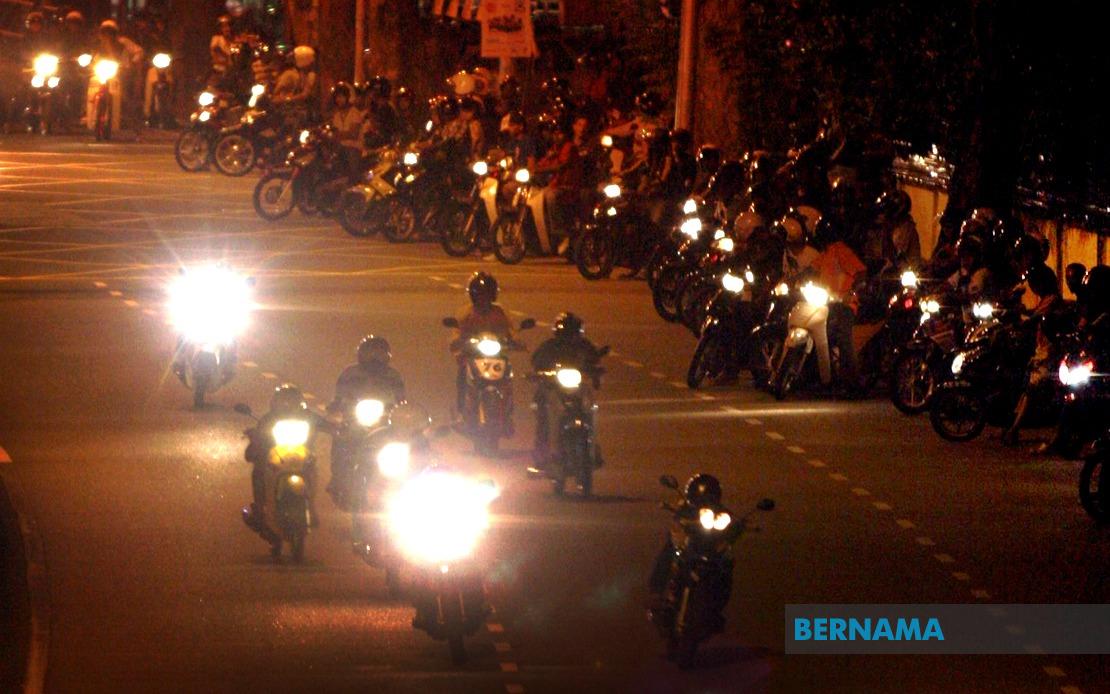
Parliament has intensified its push to curb illegal street racing, with members across the political spectrum proposing a comprehensive suite of enforcement and preventive measures during debate on the Road Transport (Amendment) Act 2026 in the Dewan Rakyat. The legislative discussion, which included participation from 24 government and opposition MPs, revealed growing concern about the persistent menace of unlicensed racing activities and their deadly consequences on Malaysian roads.
Among the most stringent proposals advanced came from Datuk Willie Mongin, who advocated for permanent revocation of driving privileges as a mandatory consequence of illegal street racing convictions. Rather than relying solely on fines and custodial sentences, Mongin argued that stripping offenders of their right to drive indefinitely would demonstrate genuine commitment to tackling the problem. He recommended establishing a minimum financial penalty of RM300,000 coupled with a five-year prison sentence, emphasising that such severity would signal resolve to both perpetrators and the public. This approach reflects international best practice in jurisdictions where lifetime driving bans have proved effective deterrents against high-risk motoring behaviour.
A second pillar of the proposed framework centres on rehabilitation and community accountability. Khairil Nizam Khirudin suggested implementing specialised reform programmes that combine disciplinary training with mandatory community service requirements, moving beyond conventional punishment. The rationale underpinning this approach recognises that many street racers, particularly younger participants, may be responsive to structured intervention that addresses underlying behavioural and social factors driving their participation. Such programmes could address peer pressure, thrill-seeking impulses, and lack of constructive outlets for competitive energy—elements that purely punitive measures cannot effectively resolve.
The debate also highlighted parental accountability mechanisms, with proposals to hold guardians financially and legally responsible for their children's racing activities. This innovation attempts to leverage family-level intervention and supervision as a preventive tool, acknowledging that parents often possess the strongest influence over adolescent decision-making. By creating tangible consequences for parental negligence or failure to monitor, the framework aims to activate informal social controls that complement formal law enforcement.
Workshop regulation emerged as a critical enforcement frontier. Khairil Nizam proposed that the Ministry of Transport collaborate with the Ministry of Domestic Trade and Cost of Living to utilise existing legislative provisions—specifically Section 66 of the Road Transport Act 1987—to establish new regulations targeting workshops engaged in illegal motorcycle modifications. These facilities have become de facto support networks for street racing culture, providing the technical expertise and parts necessary to extract performance from standard vehicles. By disrupting this supply chain, authorities could eliminate enabling infrastructure that currently facilitates participation in illegal activities.
A significant development in parliamentary thinking came from recognition that street racing extends well beyond motorcycles. Wan Razali Wan Nor invoked the tragic Simpang Renggam incident in Johor on June 1, which claimed multiple lives and involved high-performance vehicles. He emphasised that Section 42A provisions covering illegal racing must apply uniformly across all vehicle categories rather than focusing disproportionately on motorcycles. The incident demonstrated that luxury cars and sports vehicles pose equally serious—or arguably more catastrophic—hazards when operated recklessly in uncontrolled street environments, given their superior speed and mass. Extending legislative scope to encompass all motorised vehicles would close regulatory gaps that currently allow certain classes of offenders to operate with relative impunity.
Proposals regarding vehicle confiscation and destruction likewise reflect hardening attitudes. Shaharizukirnain Abd Kadir advocated for mandatory seizure and destruction of motorcycles that have undergone excessive modification, treating these machines as instruments of crime rather than recoverable property. This approach aims to eliminate the economic incentive to invest substantially in customisation for racing purposes, as offenders would face irrevocable loss of expensive modifications alongside criminal sanctions.
The parliamentary debate extended beyond racing to encompass related road safety concerns. Multiple MPs pressed for strengthened enforcement against driving under the influence of alcohol and drugs, urging the government to establish victim compensation mechanisms that ensure drunk drivers bear full financial responsibility for medical costs and ongoing welfare needs. Zahari Kechik and Datuk Seri Dr Ismail Abd Muttalib both highlighted deficiencies in existing provisions governing impaired driving prosecutions, arguing that current penalties inadequately address the scale of harm inflicted on innocent parties. Their proposals would effectively create a no-fault compensation system funded by offender liability, ensuring that accident victims do not bear the financial burden of treatment and rehabilitation resulting from others' reckless behaviour.
The legislative framework under debate in the Dewan Rakyat represents a significant conceptual shift in Malaysian approach to road safety enforcement. Rather than relying exclusively on financial penalties and imprisonment—tools that have demonstrably failed to deter street racing despite their existence for decades—the proposed amendments recognise that effective deterrence requires multifaceted intervention. Combining permanent licence revocation with rehabilitation requirements, parental accountability, workshop regulation, and victim compensation mechanisms creates overlapping disincentives while simultaneously addressing root causes and consequences of illegal racing culture.
For Malaysian drivers and road users, these legislative proposals signal Parliament's recognition that street racing represents not merely a regulatory violation but a serious public safety threat warranting comprehensive intervention. The Simpang Renggam tragedy galvanised political consensus around the need for strengthened enforcement, transcending usual partisan divisions. Implementation will depend on how aggressively the Ministry of Transport pursues these recommendations and whether bureaucratic resources match the political commitment evident in parliamentary discourse. The debate continues as the Dewan Rakyat session extends, with further amendments and refinements likely before the legislation receives final approval.