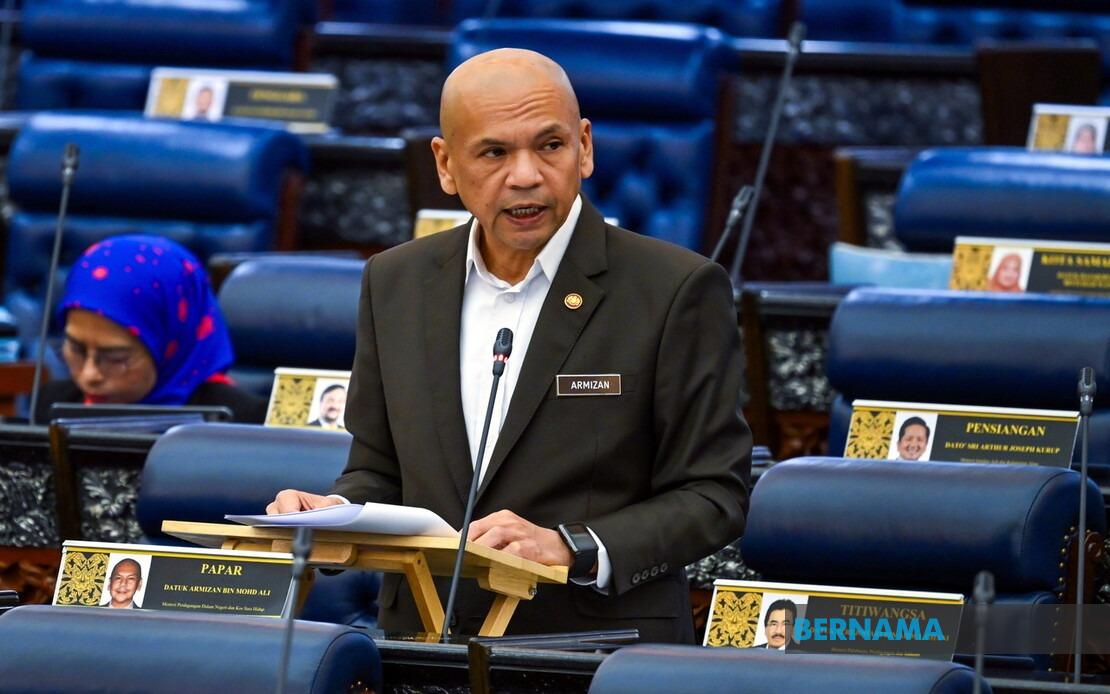
Malaysia's Parliament has given its backing to sweeping reforms that will significantly expand the enforcement authority of the Malaysia Competition Commission, moving the country toward more rigorous regulation of anti-competitive business practices. The Dewan Rakyat passed the Competition Commission (Amendment) Bill 2026 on July 6 through a majority voice vote, marking a watershed moment for the country's competition regulatory framework. The legislation, which encompasses 34 distinct amendments, represents the most substantial overhaul of MyCC's powers in recent years and signals Parliament's commitment to maintaining fair market conditions as the economy becomes increasingly complex and vulnerable to sophisticated cartel schemes.
Domestic Trade and Cost of Living Minister Datuk Armizan Mohd Ali outlined the legislative intent during his winding-up remarks, emphasising that the amendments respond to mounting challenges posed by evolving anticompetitive conduct. He highlighted that the existing Competition Act already criminalises serious offences including price fixing, market allocation among competitors, coordinated production control, collusive bidding practices, and exploitative abuse of market dominance. However, the minister stressed that merely having laws on the books proves insufficient when enforcement agencies lack adequate investigative tools. The new provisions therefore grant MyCC substantially broader authority to demand information from both private enterprises and government agencies when conducting market reviews, addressing a persistent operational constraint that has hampered investigations in the past.
A particularly significant innovation involves the introduction of Section 17A provisions governing the delegation of MyCC's powers and functions, reflecting institutional realities at the regulator. As MyCC's responsibilities expand and its organisational complexity increases, senior leadership cannot personally oversee every investigation, case assessment, or administrative decision. By establishing clear legal frameworks for delegation, the amendments ensure that investigative and enforcement work can proceed efficiently across multiple departments and regional offices without compromising legal authority or creating uncertainty about who possesses which powers. This structural reform acknowledges that modern regulatory capacity depends not merely on individual talent but on properly functioning institutional architecture.
During parliamentary debate, members from both government and opposition benches raised substantive concerns about one particular dimension of the amendments: the proposed expansion of MyCC officers' authority to directly impose financial penalties without necessarily obtaining prior judicial approval. This power expansion carries genuine risks that merit scrutiny. Opposition member Chong Zhemin from Kampar, while supporting the concept of enhanced penalty authority, warned that implementation demands rigorous, transparent guidelines and consistent application. He articulated a core tension in competition law enforcement: penalties must bite hard enough to deter large corporations from treating law violations as merely another business cost, yet the same enforcement mechanism could devastate micro and small enterprises operating with limited legal sophistication.
Chong's observation reflects a reality often overlooked in competition policy discussions. When a large multinational cartel member earns millions in illicit profits from price fixing, a fine of several hundred thousand ringgit constitutes acceptable risk. By contrast, the same penalty could destroy a small business that inadvertently engaged in technically illegal conduct through ignorance rather than deliberate conspiracy. Effective competition law therefore requires sophisticated calibration—harsh enforcement against sophisticated, intentional cartels while offering guidance and lighter penalties for smaller players committing technical violations. The parliamentary debate highlighted this need for regulatory nuance, pushing the government to recognise that blanket penalty authority, without principled guidelines distinguishing between predatory cartels and inadvertent violators, risks generating public backlash and economic disruption rather than genuine market improvement.
Geographical equity in competition enforcement emerged as another significant concern raised during parliamentary proceedings. Three members representing constituencies in Malaysian Borneo—Isnaraissah Munirah Majilis from Warisan-Kota Belud, Datuk Abdul Khalib Abdullah from PN-Rompin, and Datuk Andi Muhammad Suryady Bandy from BN-Kalabakan—advocated for establishing a dedicated MyCC branch in Sabah. This proposal reflects a practical challenge facing Malaysia's competition regulator: maintaining effective enforcement across a geographically dispersed archipelago where distances, transportation costs, and local business networks differ dramatically from Peninsula Malaysia. Competition law violations in the Borneo region, whether involving logging cartels, agricultural product price fixing, or construction bid rigging, often involve local networks that MyCC's Kuala Lumpur-based operations struggle to penetrate effectively. A Sabah-based office would enable faster response to complaints, easier access to local witnesses and documents, and deeper understanding of regional market dynamics—making enforcement more credible and responsive in that critical region.
The passage of this bill reflects growing recognition across Malaysia's political spectrum that competition law enforcement requires modernisation. Government agencies, state-owned enterprises, and even private companies have historically proven reluctant to provide information to competition investigators, either due to confidentiality concerns or bureaucratic inertia. By explicitly extending MyCC's information-gathering authority to market review processes, the amendments break through these informational roadblocks. Market reviews—comprehensive examinations of how entire economic sectors function—require vast quantities of data from multiple stakeholders. Without clear statutory authority to demand this information, MyCC essentially relied on voluntary cooperation, which proved inadequate when companies perceived investigations as threatening to their interests.
For Malaysian businesses and consumers, these amendments carry substantial practical implications. Multinational corporations operating in Malaysia will face significantly enhanced scrutiny of pricing practices, supplier relationships, and competitive bidding. Small and medium enterprises may find themselves subject to investigations where previously MyCC lacked easy access to information. Consumers should theoretically benefit from more vigorous enforcement preventing cartels from artificially inflating prices, though the actual consumer benefit depends entirely on MyCC's implementation quality and prosecutorial judgment. The amendments represent legal capacity; transformation into genuine consumer benefit requires skilled investigators, rigorous analysis, and consistent enforcement—dimensions that remain uncertain.
The bill also signals Malaysia's evolving approach to regulatory federalism. Establishing clear delegation provisions acknowledges that competition enforcement operates at multiple levels—national MyCC headquarters sets policy and handles major cases, while regional and sectoral offices manage localised investigations. This tiered model mirrors international best practices, particularly in federal jurisdictions and regional trade blocs where competition enforcement operates across multiple administrative levels. As ASEAN moves toward greater regional economic integration, Malaysian policymakers appear intent on positioning MyCC as a sophisticated, professionally staffed regulator capable of managing increasingly complex cross-border competition matters while maintaining internal efficiency.
The amendments ultimately reflect a maturing approach to competition policy in Southeast Asia's largest economy. Rather than treating competition law as peripheral economic regulation, Parliament has invested political capital and legislative attention in strengthening enforcement infrastructure. This represents notable progress compared to earlier decades when competition regulation received minimal policy attention. However, the existence of legal authority differs fundamentally from its effective application. MyCC's success in implementing these expanded powers depends on recruiting skilled economists and investigators, establishing transparent enforcement guidelines that balance deterrence against fairness, and maintaining political independence from pressures to selectively enforce the law against disfavoured companies or industries. The amendments provide the legal foundation; building genuine competition culture requires sustained institutional commitment that extends far beyond parliamentary passage.

