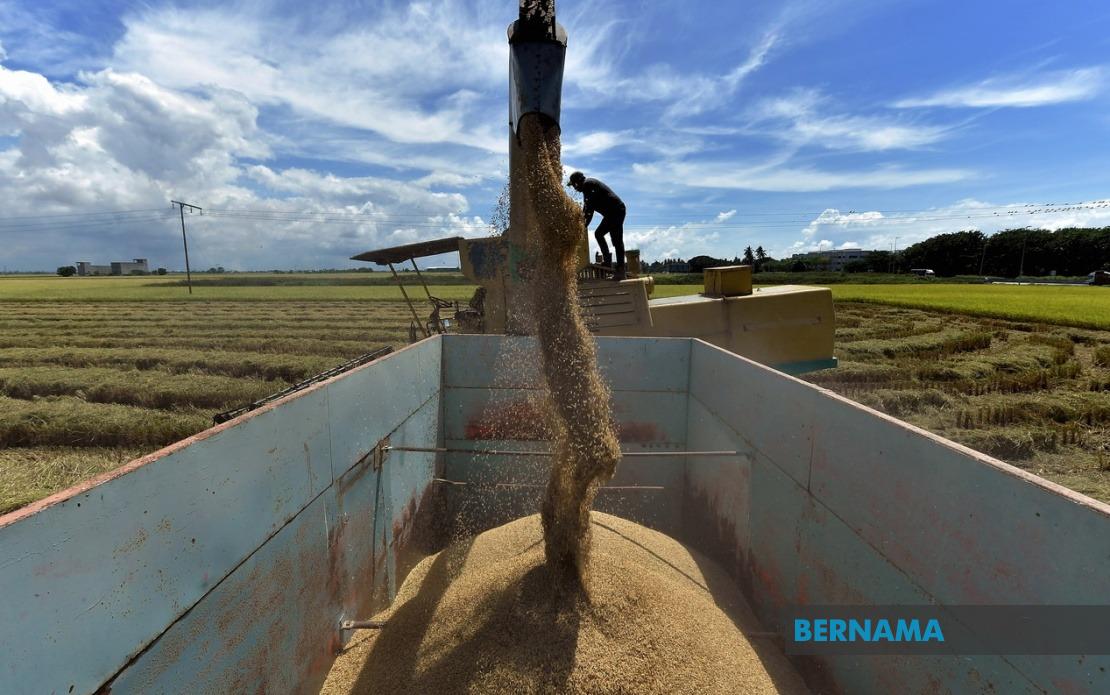
Parliament received the Control of Padi and Rice Act (Amendment) Bill 2026 for its first reading on July 7, marking the beginning of legislative scrutiny over proposed changes designed to fortify government oversight of Malaysia's critical padi and rice sector. The bill, introduced by Agriculture and Food Security Minister Datuk Seri Mohamad Sabu, represents a significant policy shift toward tighter market regulation and stricter enforcement mechanisms. With second and third readings scheduled during the current parliamentary sitting, the legislation is on track for swift progression through the legislative process, signalling government determination to advance these measures without extended delay.
The amendments fundamentally reshape the regulatory framework governing padi and rice trading by introducing punitive measures that dwarf existing penalties. For individual offenders, including corporate directors and officers, maximum fines would surge from RM15,000 to RM250,000 for initial violations, with repeat offences attracting penalties up to RM500,000—a tenfold increase that underscores the government's intent to deter non-compliance. These escalations reflect a hardening stance toward market manipulation and regulatory breaches that officials attribute to protecting consumer interests and ensuring stable grain supplies.
Corporate entities face even more formidable financial consequences under the proposed regime. Maximum fines for companies would climb from RM25,000 to RM500,000 on first conviction, doubling to RM1 million for subsequent breaches. The scale of these penalties signals that authorities view institutional violations as particularly serious threats to the integrity of the padi and rice supply chain. For Malaysia's agricultural sector, already grappling with production pressures and import dependencies, such enforcement escalation may reshape business conduct across grain trading, milling, and distribution networks.
Beyond penalties, the bill grants the director general sweeping new authority to impose maximum and minimum prices for both padi at the farm level and processed rice in commerce, subject to ministerial approval. This mechanism represents a departure from market-driven pricing toward administrative price-setting, a policy instrument increasingly deployed globally during periods of commodity volatility and food security concern. The amendment aligns with the government's broader regulatory strategy of centralising control over grain markets to insulate consumers from price shocks while stabilising farmer incomes.
The legislative foundation for price control expands substantially through amendments to Section 29, which empowers the Minister to prescribe rice grades and corresponding price bands for each grade. This granular approach acknowledges that Malaysian consumers purchase rice across various quality tiers, and that price regulation must account for product differentiation. By calibrating price floors and ceilings according to rice quality, authorities aim to prevent both predatory pricing that harms farmers and monopolistic markups that burden households. The grading system itself becomes an instrument of market governance, with regulatory authority over which grades may be produced and sold.
The bill extends regulatory reach into padi movement and purchasing infrastructure through new ministerial powers to regulate or prohibit padi transfers between jurisdictions or actors, and to license padi purchasers comprehensively. These provisions create checkpoints throughout the supply chain where government intervention can occur, theoretically enabling authorities to track commodity flows and prevent illicit diversion or hoarding. For Malaysia, where regional padi movements between states remain economically significant and smuggling concerns persist, such controls represent an attempt to impose transparency and state oversight over historically fragmented agricultural trading networks.
Regulatory violation thresholds are simultaneously lowered through amendments allowing the Minister to designate specific conduct as offences carrying fines up to RM15,000 or imprisonment up to six months. This delegation of offence-creation power to the executive branch streamlines the process of adapting regulations to market conditions without returning to parliament each time officials seek to prescribe new prohibited behaviours. While such flexibility offers administrative efficiency, it also concentrates discretionary authority in ministerial hands, raising questions about due process and the scope for regulatory overreach.
The bill's transitional provisions ensure that investigations and legal proceedings commenced before the amendments take effect continue under existing legal standards, protecting defendants from retroactive penalty escalation. This carve-out reflects principles of legal fairness but also illustrates the substantial quantum shift the amendments represent, necessitating protection of ongoing cases from dramatically harsher consequences they would face under new law.
For Malaysia's food security landscape, these amendments reflect government anxiety about grain market stability amid global price volatility and climate pressures on domestic production. Malaysia produces only a fraction of its rice consumption, importing substantial volumes from Thailand, Vietnam, and India, making the domestic market vulnerable to external shocks. By fortifying regulatory apparatus and enforcement capacity, authorities signal intent to buffer consumers and domestic producers from international market turbulence. However, the concentration of pricing authority in government hands also introduces risks of politicisation, where price-setting decisions reflect electoral considerations rather than economic efficiency.
The agricultural sector itself faces mixed implications. Farmers may benefit from price floors protecting their incomes during commodity downturns, yet could face restrictions on selling to preferred buyers or moving grain across state lines if regulations become restrictive. Grain traders and millers confront substantially heightened compliance costs and legal exposure, potentially favouring large, well-resourced operators capable of maintaining sophisticated compliance systems over smaller traders. The policy trajectory suggests a consolidation of market power within government-favoured channels.
Regional competitors and trading partners may also scrutinise these amendments, particularly if domestic price controls create artificial market incentives that distort regional grain flows. Thailand and Vietnam, major rice exporters to Malaysia, monitor such regulatory developments closely, as they affect purchasing predictability and market access. The bill thus carries implications extending beyond Malaysia's borders into broader Southeast Asian agricultural trade dynamics.
The fast-tracked parliamentary progression reflects government priority around food security and market control, yet also warrants scrutiny regarding legislative deliberation quality. The compressed timeline for second and third readings during a single sitting affords limited opportunity for detailed committee review, stakeholder consultation, or amendment consideration. This procedural pace, while politically effective for swiftly implementing executive priorities, raises governance questions about the depth of parliamentary scrutiny applied to major regulatory reforms.

