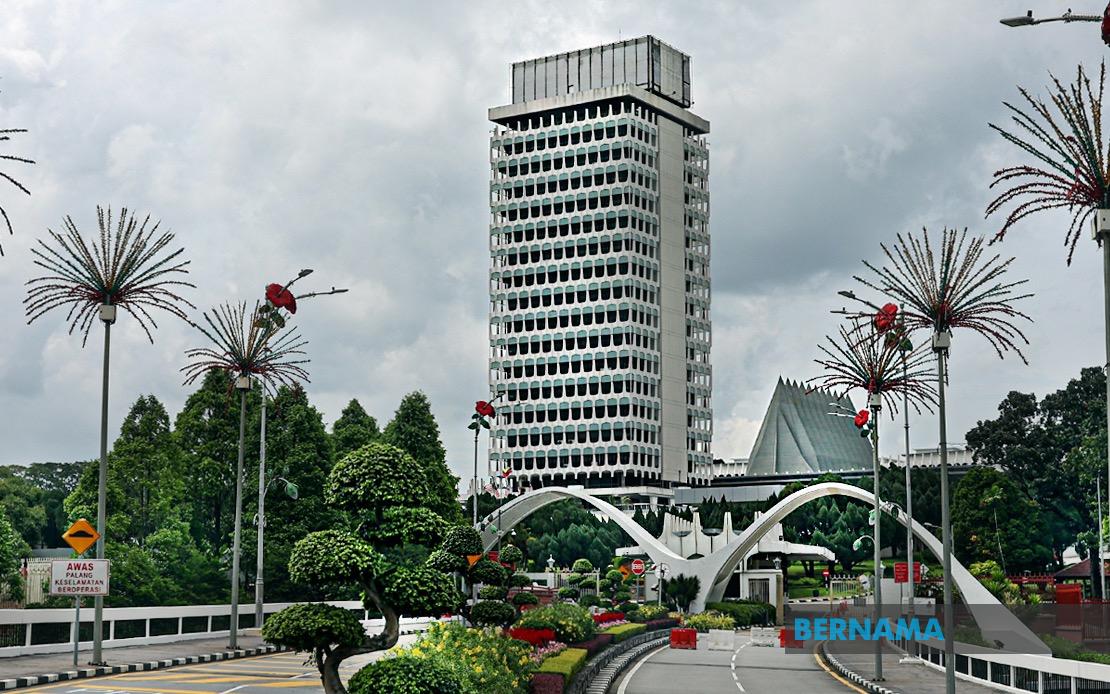
Parliament's agenda for today reflects pressing governance challenges spanning digital regulation, education welfare, and economic resilience. Lawmakers will scrutinise the rollout of the Online Safety Act 2025, a landmark piece of legislation designed to establish clearer guardrails for internet content and platform accountability. The parliamentary sitting brings together diverse concerns that collectively shape Malaysia's digital ecosystem and institutional capacity to manage emerging governance priorities.
At the heart of technical discussion will be the subsidiary instruments underpinning the Online Safety Act 2025. Rodziah Ismail, representing Ampang for Pakatan Harapan, has lodged questions seeking ministerial clarification on ten regulatory tools—including rules and operational guidelines—currently in development. Her inquiry will demand transparency on the regulatory philosophy embedded in each instrument, the substantive provisions they establish, the sectors or activities they govern, and the current implementation timeline. This line of questioning reflects legitimate parliamentary oversight of how broad legislative intent translates into workable administrative machinery. The Online Safety Act represents Malaysia's attempt to balance content moderation, platform responsibility, and user rights in an increasingly contentious digital landscape, making the granular details of implementation crucial to its real-world effectiveness.
The Education Ministry faces parallel scrutiny regarding campus safety and student welfare. Roslan Hashim, a Perikatan Nasional member for Kulim Bandar Baharu, will press for updated information on protective measures across Malaysian schools. His questions touch on physical safety from accidents, the adequacy of anti-bullying protocols, and defence against other environmental threats. School safety remains a perennial concern for parents and educators, particularly given recurring incidents of campus violence, substance misuse, and psychological harm. The parliamentary inquiry signals recognition that assuring secure learning environments requires continuous institutional review and evidence-based policy adjustment. This is especially relevant as schools grapple with post-pandemic normalisation and evolving social pressures on adolescents.
Economic hardship arising from geopolitical instability forms another parliamentary focus. Andi Muhammad Suryady Bandy, a Barisan Nasional representative from Kalabakan, will request concrete measures to support small traders, hawkers, and micro-enterprises struggling under inflation in freight costs and supply chain fractures linked to the protracted West Asia crisis. The question acknowledges how regional conflict propagates economic strain far beyond affected territories, depressing margins for Malaysian hawkers and small retailers dependent on stable import-export flows. Demand for targeted fiscal relief reflects parliamentary recognition that economic vulnerability requires proactive intervention, especially for segments lacking resilience to external shocks.
Transportation infrastructure receives parliamentary attention through an update on the Johor Elevated Autonomous Rapid Transit project. Wee Ka Siong, a senior Barisan Nasional figure representing Ayer Hitam, will request progress information on this elevated transit system. The E-ART initiative represents substantial capital investment in Johor's transport network and carries implications for broader regional connectivity and urban planning. Monitoring such projects through parliamentary questioning ensures accountability and allows lawmakers to track delivery against original timelines and specifications, matters crucial for public confidence in government infrastructure commitments.
Healthcare financing in Sabah emerges as another regional concern. Shahelmey Yahya, representing Putatan for Barisan Nasional, will seek assurances from the Health Minister that fiscal adjustment policies will not undermine the medical supply ecosystem or capital development in Sabah's public health facilities. The question reflects legitimate anxiety that efficiency-driven budgeting measures might inadvertently starve public healthcare of essential resources, particularly in states like Sabah where health infrastructure development remains incomplete and distance compounds service delivery challenges. Parliamentary debate on this matter allows Sabah voices to be registered at the federal level and holds the government accountable for equitable health investment across regions.
Cybersecurity implications of age-gating social media emerge through an independent member's inquiry. Riduan Rubin, representing Tenom, will ask the Home Affairs Minister to detail national cybersecurity risk assessments related to potentially mandating a minimum age of 16 for social media users. This question probes whether such a policy could create new attack vectors, complicate identity verification, or shift underage users toward less regulated platforms. The inquiry reflects sophisticated understanding that well-intentioned protective measures may generate unintended cybersecurity consequences requiring careful threat modelling before implementation.
Road safety policy also warrants parliamentary attention, though specific details remain incomplete in the Order Paper reference to works minister questions. The inclusion of road safety matters alongside digital safety and school security underscores that parliamentary concern encompasses diverse dimensions of public security—from physical infrastructure safety to digital threats to institutional safeguarding. This multi-dimensional approach reflects evolving understanding of security as an integrated governance challenge rather than a narrowly siloed issue.
The parliamentary calendar extends across sixteen sitting days until July 16, providing extended opportunity for substantive debate. Beyond question time, the Competition (Amendment) Bill 2026 faces second reading, signalling legislative attention to marketplace regulation and competitive dynamics. Malaysia's competition framework shapes entrepreneurial opportunity and consumer welfare, making amendments to this statute consequential for the broader business environment and economic structure.
Collectively, this parliamentary agenda reveals governance priorities that bridge immediate service delivery concerns with longer-term structural challenges. Digital regulation, educational welfare, regional economic resilience, infrastructure investment, healthcare equity, and cybersecurity all appear as issues requiring parliamentary oversight and ministerial accountability. The questions lodged by lawmakers spanning coalition and opposition parties indicate cross-party recognition of these priorities, even as specific solutions may prove politically contested. Parliamentary scrutiny of ministerial responses will reveal the government's readiness to tackle emerging governance challenges and its willingness to invest resources and political will in implementing substantive change rather than symbolic gestures.
For Malaysian observers, today's parliamentary sitting offers insight into how contemporary governing challenges are being articulated through formal democratic institutions. The breadth of topics reflects a society grappling with rapid digitalisation, regional instability, structural inequality, and the perpetual tension between security and freedom. How effectively parliamentarians interrogate ministerial responses, and whether ministers provide substantive answers or defensive evasions, will influence public confidence in parliamentary scrutiny as a meaningful check on executive power.

