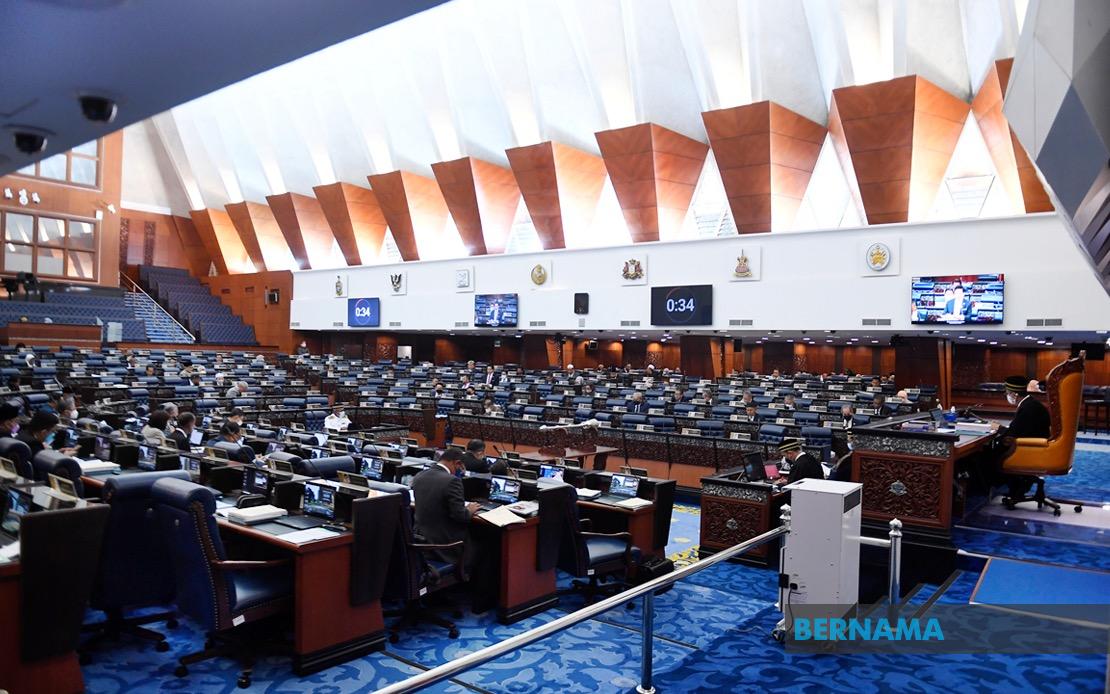
The Dewan Rakyat convened on June 30 with two particularly contentious matters dominating the legislative agenda: persistent grievances about how the Federal Government distributes funds to state administrations, and the enforcement status of electoral restrictions that prohibit announcement of new government projects during campaign periods.
Doris Sophia Brodi, the Sarawak-based member for Sri Aman representing the Gabungan Parti Sarawak, raised the fundamental concern about resource allocation mechanisms. Her question to the Prime Minister highlighted claims that states receiving Federal Government allocations face a structural disadvantage—the sums provided are disproportionately small relative to the revenue these states generate for the national treasury. This issue has long plagued Malaysia's federal structure, particularly affecting states in East Malaysia and those with limited economic bases. Brodi's intervention sought clarity on how the MADANI administration—the current government framework—intends to recalibrate this allocation system to achieve greater equity and responsiveness to state needs.
The second major matter, raised by Shahidan Kassim representing Perikatan Nasional in Arau, focused on enforcement of campaign conduct rules. Specifically, he questioned whether the prohibition on announcing government allocations or new infrastructure projects after nominations close remains an active policy ahead of three imminent state elections in Johor, Melaka and Negeri Sembilan. This restriction exists to prevent incumbent governments from deploying infrastructure announcements as campaign tools that give them unfair electoral advantage. Shahidan pressed the Prime Minister on what specific enforcement mechanisms would safeguard the integrity of these contests, a question reflecting concern that the rules may lack teeth.
For Malaysian observers, the state elections in these three constituencies carry particular significance. Johor, the nation's second-largest state by population and a traditional powerhouse of peninsular politics, Melaka with its historical and symbolic importance, and Negeri Sembilan as a pivotal swing state all represent crucial tests of political sentiment. Any perception that campaign rules are unevenly applied or poorly enforced could delegitimise election results and deepen political polarisation. The Dewan Rakyat's examination of these enforcement mechanisms therefore touches on core democratic principles.
Beyond these headline issues, parliamentarians tabled numerous questions addressing contemporary governance challenges. Ismail Sabri Yaakob, a senior Barisan Nasional figure representing Bera, directed attention to the spreading menace of artificial intelligence-generated disinformation. His query to the Communications Minister sought detailed government strategy for combating deepfakes and manipulated visual content circulating on social media platforms. This concern resonates acutely across Southeast Asia, where digital literacy remains uneven and malicious actors increasingly weaponise sophisticated synthetic media to distort public discourse.
The energy sector emerged as another focal point. Chong Zhemin, speaking for Pakatan Harapan in Kampar, queried the Energy Transition and Water Transformation Minister about whether Malaysia's electricity infrastructure can sustain the explosive demand surge from data centre expansion and artificial intelligence industry growth. This question reflects anxiety among policymakers that rapid digitalisation of the economy could overwhelm existing generation and distribution capacity, particularly if coal-fired plants phase out before alternatives are fully operational. Reliable, abundant power has become a competitive necessity for attracting technology investment.
Social safety-net programmes drew scrutiny as well. Awang Hashim questioned the effectiveness of mySalam, a health insurance scheme targeting the B40 lowest-income households, while Syahredzan Johan examined uptake rates for MADANI Book Vouchers intended to subsidise reading material for students. These queries signal Parliament's concern that flagship welfare initiatives may not be reaching intended beneficiaries or achieving stated objectives, a recurrent problem in Malaysian social policy implementation.
Women's workforce participation occupied another line of questioning. Mumtaz Md Nawi pressed the Human Resources Minister on whether TalentCorp's Career Comeback Programme effectively encourages women to return to employment after career breaks. This reflects broader recognition that Malaysia's female labour force participation lags peer economies, and that removing barriers to re-entry represents a critical lever for boosting human capital utilisation.
Iskandar Dzulkarnain sought practical details about Program Jualan Rahmah MADANI, a subsidised goods initiative designed to ease living costs for ordinary Malaysians. He requested updated implementation statistics across all state constituencies and inquired whether the government would increase sales frequency to amplify the programme's anti-inflation impact. The cost-of-living pressures facing Malaysian households have sharpened political sensitivity around such measures.
Substantive legislation also dominated the sitting. Parliament advanced debate on amendments to the Sexual Offences Against Children Bill 2026, reflecting the government's commitment to strengthening child protection frameworks. Separately, lawmakers considered Dewan Negara amendments to the Employment Insurance System Bill 2025 and examined the Cyber Crime Bill 2026, both addressing modern labour and digital security challenges. The cyber crime legislation particularly matters for Malaysia's digital economy ambitions, establishing legal guardrails against evolving online threats.
Collectively, this parliamentary agenda demonstrates how Malaysian legislators grapple with distributional fairness, democratic integrity, technological disruption, and social resilience simultaneously. The questions reveal anxieties about whether current governance structures and policy frameworks adequately address contemporary pressures: unequal fiscal federalism, electoral ethics, digital-age disinformation, energy constraints, welfare programme reach, labour market inclusion, and cybersecurity. These concerns transcend narrow partisan divides and reflect genuine systemic challenges confronting policymakers across Southeast Asia as the region navigates rapid economic and technological transition.

