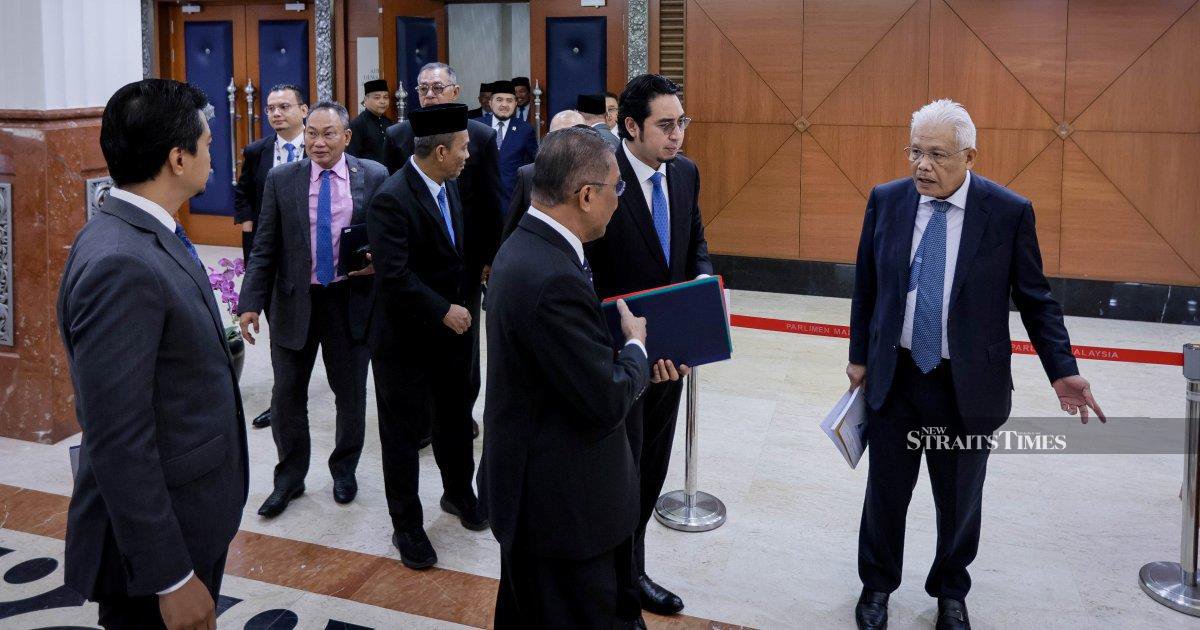
The recent opposition departure from Parliament over the Royal Commission of Inquiry findings on Tabung Haji has once again crystallised a central paradox in Malaysian political life. The walkout—a theatrical but increasingly common form of legislative dissent—exposes how the interpretation of parliamentary protest hinges entirely on which faction deploys it and which faction condemns it. This recurring cycle reveals deeper questions about the nature of legitimate opposition conduct, the boundaries of parliamentary decorum, and whether such tactics ultimately serve democratic purposes or merely gratify partisan audiences.
Parliamentary walkouts occupy an uncomfortable space in democratic procedure. They are technically permitted within the rules of Parliament—members are free to vacate their seats—yet carry an unmistakable performative dimension. When opposition politicians exit the chamber in coordinated fashion, they simultaneously lodge a protest that enters the parliamentary record and manufacture a visual narrative for external consumption. The duality is intentional. The walkout signals both substantive disagreement with proceedings and a conscious withdrawal of legitimacy from those proceedings. In the case of the Tabung Haji RCI report, the opposition sought to communicate rejection of either the inquiry's methodology, its conclusions, or both, while signalling to supporters that the establishment had failed to deliver impartial investigation.
Yet the same tactic, when employed by different political actors, generates dramatically different responses from commentators and rival politicians. A walkout by the government's allies is frequently characterised as principled objection to unwarranted scrutiny or biased procedure. An identical exit by opposition members is routinely dismissed as theatrical posturing, an absence of serious legislative engagement, or disruption of orderly parliamentary function. This selective application of standards reveals how Malaysian political discourse often prioritises partisan loyalty over consistent principle. The question of whether a walkout constitutes legitimate protest becomes negotiable depending on the identity of those walking out.
The Tabung Haji controversy provides instructive context for understanding this dynamic. The fund, which manages pilgrimage savings for Malaysian Muslims, has faced sustained scrutiny over financial management and alleged irregularities. A Royal Commission of Inquiry was established to investigate these concerns. When the RCI report emerged, opposition members viewed its findings or recommendations as inadequate, whether because the inquiry had failed to identify significant wrongdoing or because proposed remedies appeared insufficient. The walkout represented rejection of both the process and the outcome, a simultaneous statement that neither the investigation nor its conclusions commanded opposition confidence.
From one perspective, this walkout embodies legitimate parliamentary function. Opposition members retain the right—indeed, arguably the responsibility—to signal disagreement with government actions, including inquiries they perceive as compromised or inadequate. In parliamentary systems derived from Westminster tradition, opposition dissent serves as a crucial counterweight to executive power. A compliant, silent opposition effectively surrenders oversight capacity. By withdrawing presence and attention, opposition members communicate that certain matters exceed the bounds of acceptable governance, and that the public should recognise this failure.
Yet the counterargument carries weight too. Walkouts disrupt legislative proceedings and prevent opposition members from fully engaging in debate, amendment, and procedural challenge. They substitute symbolic protest for substantive parliamentary work. When opposition figures walk out, they forfeit the platform to interrogate government representatives, propose alternative solutions, or build a detailed public record of their objections. In this reading, walkouts represent a failure of parliamentary discipline and a descent into gestures when serious legislative work remains undone. They may satisfy opposition supporters emotionally but accomplish little of lasting institutional value.
The frequency of walkouts in recent Malaysian parliamentary sessions reflects the escalating polarisation of political discourse. As trust between government and opposition erodes, parliamentary conventions that once restrained such tactics have weakened. Members increasingly view Parliament not as a site for negotiation and persuasion across ideological lines, but as a theatre where performances serve external audiences. This transformation mirrors global trends: parliaments worldwide have witnessed rising walkouts and ceremonial protest as traditional legislative business has become subordinated to media strategy.
For Malaysian readers and observers, the implications extend beyond parliamentary etiquette. Walkouts signal breakdown in the social contracts that permit legislatures to function effectively. When opposition members abandon the chamber, they implicitly acknowledge that the body cannot be trusted to adjudicate their concerns. When government allies dismiss such protests as theatre, they suggest the establishment perceives the opposition as fundamentally illegitimate. These mutual recriminations corrode institutional authority and citizen confidence in Parliament itself.
The Tabung Haji walkout also reflects broader patterns in Malaysian civil society. Public trust in major institutions—government, judiciary, regulatory bodies—has fractured along partisan lines. Citizens now evaluate institutional performance and legitimacy through tribal lenses, accepting evidence that confirms preexisting beliefs while dismissing contradictory findings. A Royal Commission report becomes suspect not through rigorous critique of its methodology but through reflexive partisan rejection. In this environment, walkouts function less as minority statements within Parliament and more as signals of allegiance to polarised constituencies beyond its walls.
Resolving this pattern requires deliberate institutional reform and renewed commitment to parliamentary norms. Opposition parties must develop more effective legislative strategies beyond symbolic exits. Government supporters must demonstrate good faith by accepting that legitimate scrutiny enhances rather than threatens stability. Both coalitions must rebuild the understanding that Parliament serves all citizens only when it functions as a genuinely deliberative body where minority concerns receive serious hearing, not mere performance.
The fundamental challenge confronting Malaysian Parliament is not whether walkouts should occur, but whether the institution can reclaim authority as a site of genuine disagreement and resolution. So long as major political actors treat Parliament primarily as a stage for partisan performance, rather than as an instrument for collective problem-solving, walkouts will continue. They will satisfy no one except those seeking further evidence that the system requires replacement. Restoring parliamentary legitimacy demands that both government and opposition remember that their audience is ultimately the Malaysian public, not their respective bases, and that credibility depends on consistency, not convenience.

