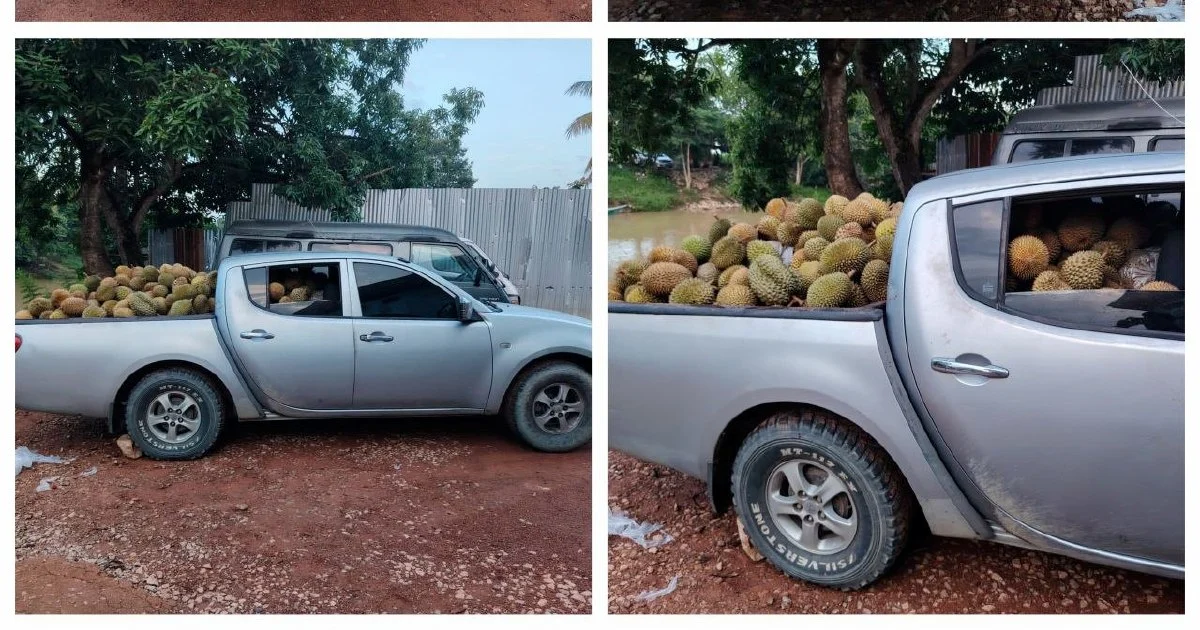
A 22-year-old man learning the hard way about the perils of unscrupulous employers now faces serious legal consequences after being caught with 700 kilograms of suspected smuggled durians during a police operation at Rantau Panjang last night. The young driver, who accepted what he believed was legitimate part-time work, was compensated at merely RM60 to RM70 per day—a sum that barely covers basic living expenses, let alone justifies involvement in an illegal operation that has now derailed his future.
The arrest shines a spotlight on a troubling reality within Malaysia's informal economy: the exploitation of young, desperate workers who accept poorly paid positions without fully understanding their legal implications. Durian trafficking remains one of the more common smuggling operations in the country, particularly along border regions, yet many operators cynically recruit low-wage labourers as expendable frontline workers. These couriers bear the heaviest legal burden whilst those orchestrating the networks often escape immediate detection.
Rantau Panjang, a border town in Kelantan, has long been identified by enforcement agencies as a critical smuggling corridor. Its geographical proximity to Thailand and the porous nature of cross-border movement make it an attractive hub for illicit trade networks. The seizure of such a substantial quantity—700 kilograms represents a significant commercial operation rather than casual trafficking—indicates that organised syndicates continue to exploit this frontier effectively despite heightened customs vigilance.
The durian trade across Southeast Asia involves complex dynamics that go beyond simple black-market activity. Malaysia exports premium durians to Singapore, China, and other affluent markets where the fruit commands premium prices. Smuggled durians typically circumvent licensing requirements, quality inspections, and duty payments, undercutting legitimate traders and depriving the government of tax revenue. However, the operation's profitability evidently flows disproportionately to ringleaders rather than foot soldiers like the arrested driver.
This case exemplifies how smuggling networks operate with a deliberate hierarchy designed to insulate senior members from prosecution. By employing young, often poorly educated couriers paid pittances, syndicates maintain operational flexibility whilst distributing legal risk downward. The 22-year-old's arrest will likely result in charges under customs legislation or the Penal Code, potentially leading to substantial fines or imprisonment—consequences wildly disproportionate to his meagre compensation for a single transaction.
For Malaysian readers, this incident underscores the importance of employment due diligence. Legitimate part-time work rarely involves transporting goods across international borders or requiring cash-in-hand payments for cryptic driving assignments. Young people seeking supplementary income must exercise caution when opportunities seem vague about their nature or compensation seems suspiciously low for the effort involved. Employment legitimacy requires transparency regarding employer identity, task description, and legal compliance.
The broader implications for Malaysia's border security remain consequential. As long as organised crime networks perceive acceptable profit margins from durian smuggling, recruitment efforts will persist. Authorities must balance enhanced interdiction efforts with targeted community outreach warning potential couriers about legal exposure. Many arrests stem from individuals unaware that transporting contraband—even unknowingly—constitutes a serious criminal offence.
Regionally, this case reflects patterns observed throughout Southeast Asia where trafficking of agricultural goods occurs alongside narcotics and counterfeit merchandise. Customs agencies across the Association of Southeast Asian Nations increasingly recognise that disrupting supply chains requires addressing both supply reduction and demand-side factors. As illegal durian trafficking appears entrenched despite enforcement efforts, policymakers in Malaysia and neighbouring countries must evaluate whether current regulatory frameworks adequately address the economic incentives driving these networks.
The young driver now faces uncertain prospects. Beyond immediate legal proceedings, a criminal conviction will restrict future employment opportunities, potentially pushing him toward further marginalisation or recidivism. This underscores how individual criminal cases often reflect systemic failures—inadequate wage standards, limited legitimate employment for young workers, and predatory recruitment tactics by syndicates. Without comprehensive intervention addressing root causes, similar arrests will likely continue.
Authorities have not yet disclosed details regarding the vehicle, intended destination, or whether the operation forms part of a larger investigation into trafficking networks. Such information typically emerges as prosecutions develop. What remains immediately apparent is that a young man's desperation and a criminal outfit's callousness have converged with potentially severe consequences for his future, whilst the network's operators remain at liberty seeking replaceable couriers for their next operation.

