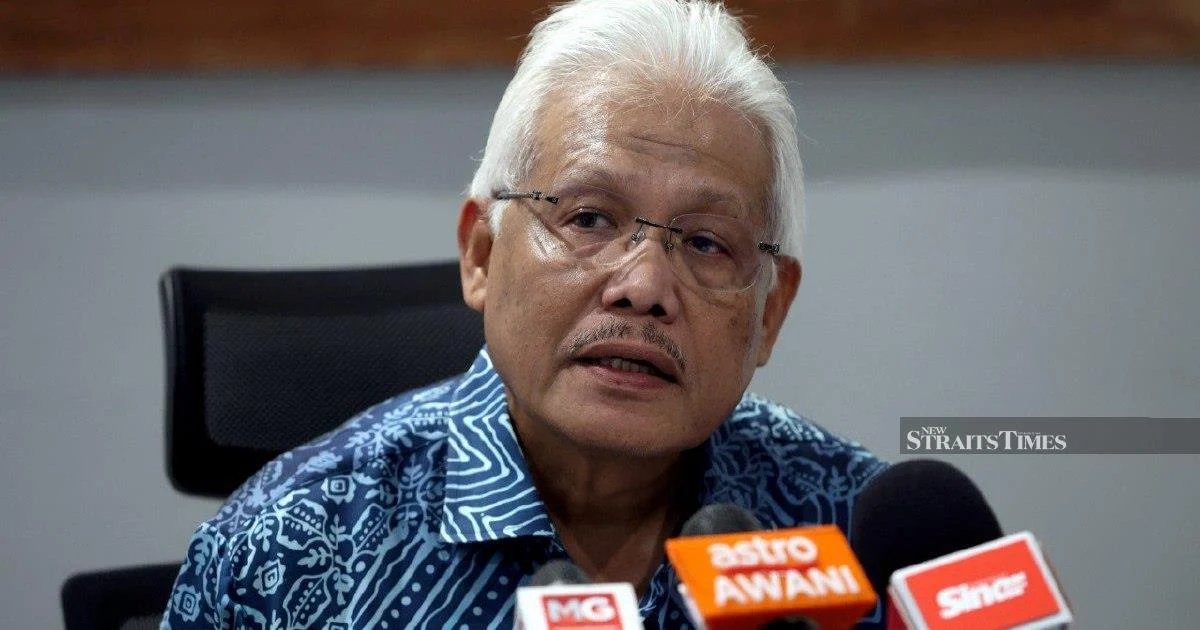
Parti Wawasan Negara has emerged as an unlikely peacemaker between Malaysia's two largest Malay-based political formations, positioning itself as a mediating force capable of mending the fractured relationship between PAS and Umno. The party, which rebranded from its former incarnation as Parti Cinta Malaysia, believes it possesses the political neutrality and moral standing necessary to broker understanding between the rival organisations and restore a semblance of unity within the Malay political landscape.
The overture comes at a moment of considerable tension within Malaysia's ruling coalition, where ideological differences and competing power ambitions have driven deep wedges between PAS's Islamic-nationalist agenda and Umno's more conventional Malay-centric conservatism. These factional struggles have created vacuums of uncertainty that risk fragmenting voter confidence and destabilising the political foundations upon which Malaysia's governance structures rest. For ordinary Malaysians, particularly those in rural constituencies where both parties command significant support, such divisions translate into administrative paralysis and inconsistent policy implementation at state and federal levels.
Peninsular Malaysia's political terrain has become increasingly treacherous since the 2018 general election, when the traditional dominance of Umno and its alliance partners faced an unprecedented challenge. The subsequent realignment that followed, incorporating PAS more formally into governing coalitions, introduced new complexities and competing visions for national direction. Parti Wawasan Negara recognises that sustained hostility between these two pillars of Malay politics creates opportunities for fragmentation and potentially advantages opposition forces seeking to capitalise on disunity.
Hamzah Zainudin's stewardship of Parti Wawasan Negara suggests a strategic calculation about the party's potential influence disproportionate to its current parliamentary representation. By positioning itself as an honest broker capable of facilitating dialogue between intractable opponents, the party could accumulate soft power and demonstrate political maturity. This approach mirrors mediation attempts undertaken by smaller regional parties throughout Southeast Asia, which have occasionally secured outsized influence by maintaining strategic distance from major political competitors whilst remaining open to constructive engagement with all parties.
The concept of strengthening Malay political unity carries multiple interpretations and objectives that merit careful examination. For some constituencies within the Malay community, unity is understood as presentational coherence that prevents external actors from exploiting internal divisions. For others, it represents a more substantive alignment around shared policy objectives and governance principles. Parti Wawasan Negara appears to be advocating for the former, emphasising the costs of visible fracture rather than proposing specific policy harmonisation.
The party's intervention reflects broader anxieties about Malaysia's political stability that extend beyond the immediate concerns of any single formation. When major parties exhibit chronic inability to work together, institutional decay accelerates and public confidence in democratic institutions erodes. Civil service efficiency declines when ministerial priorities become hostage to coalition dynamics. Regulatory frameworks become inconsistently applied when different governmental tiers operate according to incompatible mandates. These systemic consequences affect all Malaysians regardless of their political preferences or ethnic background.
Regionally, Malaysia's internal political cohesion carries implications for Southeast Asian stability writ large. A Malaysia fractured along Malay-Muslim political lines could spill across borders and affect voting patterns among Malaysian diaspora communities in Singapore and Brunei whilst potentially influencing how neighbouring governments calibrate their own diplomatic approaches. ASEAN consensus-building already faces challenges; a destabilised Malaysia would complicate the bloc's already delicate coordination mechanisms.
PAS and Umno command significant overlapping constituencies, particularly in rural and semi-urban Malay-Muslim communities where both parties maintain substantial grassroots machinery. Competition between them for the same voters has occasionally produced violent rhetoric and physical confrontations at local levels. These ground-level antagonisms, though often underreported in national media coverage, create genuine social tensions that corrode community cohesion and make cross-party cooperation on development projects significantly more difficult to execute.
Parti Wawasan Negara's previous identity as Parti Cinta Malaysia carries certain baggage and associations that may complicate its self-appointed mediator role. The rebranding represents an attempt to reset public perception and suggest fresh political direction, though sceptics may view the nomenclatural change as superficial repositioning rather than substantive ideological evolution. Establishing credibility as a neutral party in Malay politics requires demonstrable independence from both PAS and Umno, avoiding appearance of favouritism toward either formation.
The practical mechanics of such mediation remain unclear and potentially fraught with difficulties. PAS and Umno have fundamentally different visions regarding Islam's role in governance, federal-state power distribution, and Malaysia's proper strategic alignments. These are not mere personality clashes susceptible to negotiated compromise; they reflect genuine philosophical divergences rooted in different understandings of Malaysian identity and national purpose. Any credible mediation effort would need to acknowledge these substantive differences rather than papering over them with appeals to abstract unity.
For Parti Wawasan Negara, successfully facilitating even modest improvements in PAS-Umno relations could establish it as an indispensable interlocutor in future coalition negotiations. Malaysian politics has historically rewarded kingmaker parties disproportionately, allowing smaller formations to punch above their weight when major parties require their pivotal votes. By establishing itself as the bridge-builder capable of reducing friction between rivals, Parti Wawasan Negara positions itself for potential influence in future government formation scenarios.
The broader question animating this mediation effort concerns whether Malaysian Malay politics has sufficient shared common ground to accommodate multiple distinct formations without descending into permanent antagonism. Historical precedent suggests that episodic cooperation punctuated by strategic competition remains the likely equilibrium. Parti Wawasan Negara's bridge-building aspiration, however well-intentioned, may prove insufficient to overcome structural incentives pushing PAS and Umno toward electoral competition and ideological differentiation in the pursuit of voter supremacy.

