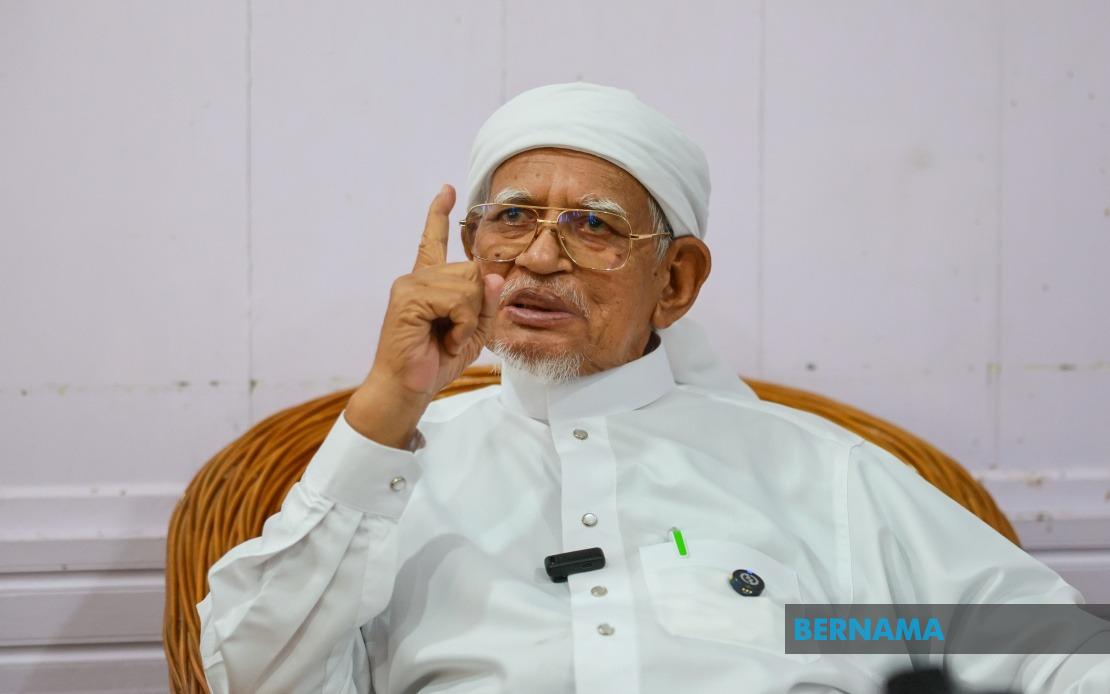
A constitutional row has erupted within Perikatan Nasional over the membership status of Bersatu, with PAS president Tan Sri Abdul Hadi Awang declaring that the party has automatically lost its place in the coalition following its publicly announced intention to establish an alternative political alliance. Speaking after delivering a duha lecture at the Rusila Mosque in Marang on August 7, Hadi suggested that Bersatu's departure from PN requires no formal notification process, as the decision to seek partnerships outside the coalition automatically constitutes an exit from the grouping.
The dispute centres on interpretations of procedural requirements within PN's constitutional framework. Hadi contended that PN has no obligation to issue an official statement to Bersatu regarding its coalition status, reasoning that the act of expressing interest in forming a separate alliance amounts to a unilateral withdrawal from the existing partnership. This position reflects a flexible reading of PN's membership rules, one that treats public declarations of intent as having binding consequences without requiring intervening administrative steps.
Bersatu president Tan Sri Muhyiddin Yassin had earlier signalled the party's intention to construct a new coalition comprising multiple political entities, with the Negeri Sembilan state election serving as a temporal marker for these strategic shifts. This announcement appears to have triggered Hadi's comments, suggesting underlying tensions within PN regarding the coalition's future direction and the commitment levels expected from its component parties. The timing of Muhyiddin's remarks underscores deepening fissures within what has been a fragile political arrangement.
Bersatu secretary-general Datuk Seri Mohamed Azmin Ali has forcefully rejected Hadi's interpretation, presenting a diametrically opposed understanding of PN's constitutional architecture. Azmin emphasised that no automatic membership revocation mechanisms exist within the PN Constitution, and that only formal procedures can govern changes to a party's status within the coalition. This assertion anchors Bersatu's continued legitimacy on the existence of explicit constitutional safeguards against unilateral membership termination.
According to Azmin's reading of the PN Constitution, Clause 7A vests exclusive authority for determining component party membership in the presidential council—a body comprising senior representatives from each constituent party. By this logic, Bersatu's membership can only be altered through a deliberate convening and decision-making process involving this council, not through inferences drawn from public statements or political positioning. Azmin stressed that this council has not yet assembled to address Bersatu's status, implying that until such a formal meeting occurs, Bersatu remains a full member in good standing.
The disagreement reflects broader constitutional tensions common in multi-party coalitions operating across Southeast Asia, where questions of membership enforcement, withdrawal procedures, and dispute resolution mechanisms frequently generate disputes. In Malaysia's context, where coalition politics have become increasingly fragmented and fluid over the past decade, the absence of robust dispute-resolution mechanisms has repeatedly created vacuums filled by competing interpretations of ambiguous constitutional language.
Azmin's position that Hadi lacks authority to unilaterally determine Bersatu's PN status carries significant weight, particularly given that PN's legitimacy as a constitutional arrangement depends on transparent, procedurally sound governance. If individual party leaders could effectively expel members through rhetorical declarations, the coalition would lose any semblance of institutional coherence. Azmin's emphasis on Hadi's absence of "veto power" signals a broader concern about preventing any single party from wielding disproportionate control over membership decisions.
The dispute carries profound implications for PN's stability and future trajectory. If Bersatu successfully maintains its membership despite Muhyiddin's coalition-building efforts, the arrangement could become hollowed out from within, with parties nominally remaining members while pursuing contradictory political strategies. Conversely, if Hadi's interpretation gains acceptance, PN risks establishing a precedent where public statements about alternative coalitions trigger immediate membership loss, creating hair-trigger instability.
Bersatu's announced intention to lodge a formal complaint with the Registrar of Societies introduces a third institutional layer into this dispute, moving the matter beyond internal PN discussions into the realm of formal regulatory oversight. This escalatory step suggests that Bersatu views the disagreement as sufficiently serious to warrant external arbitration, and potentially signals the party's willingness to pursue its constitutional claims through mechanisms outside the PN framework.
For Malaysian political observers, this dispute underscores the fragility of coalition arrangements constructed without clear exit procedures or membership enforcement mechanisms. The Perikatan Nasional, formed initially as a counter-weight to specific political configurations, now faces the challenge of maintaining coherence among parties with divergent strategic interests. The clash between Hadi and Azmin reflects this underlying tension, where formal membership coexists uneasily with substantive political independence.
The constitutional interpretation question at the heart of this dispute will likely influence how PN members calculate their own options going forward. If Bersatu successfully argues that membership cannot be unilaterally revoked, other parties may gain confidence in their ability to pursue independent strategies while nominally remaining within the coalition. This dynamic could either render PN increasingly ineffectual as a political force, or drive formal clarification and strengthening of its constitutional mechanisms. The coming weeks will reveal whether the PN presidential council convenes to resolve these competing claims, or whether the parties continue operating under conditions of constitutional ambiguity.

