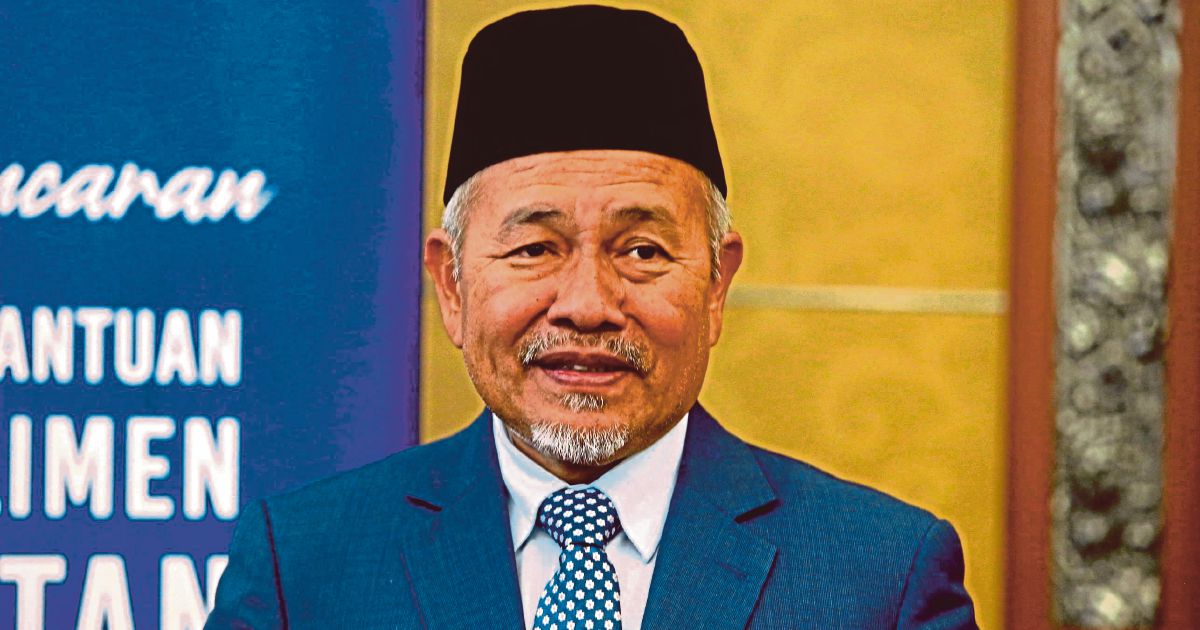
Datuk Seri Tuan Ibrahim Tuan Man, the deputy president of PAS, has publicly commended Umno for what he characterises as a courageous political manoeuvre in pulling its backing from the Negri Sembilan state government. Speaking in Seremban, Tuan Ibrahim framed the development as significant enough to reshape the electoral landscape ahead of state polls, potentially creating new dynamics that would directly engage the voting population.
The withdrawal of Umno's support represents a notable shift in Malaysia's complex coalition politics, where state governments often rely on the combined strength of multiple parties to maintain their parliamentary majorities. In Negri Sembilan, such repositioning by a major component like Umno typically signals either internal disagreement over governance direction or a strategic recalibration of the party's electoral prospects. For PAS, celebrating this move publicly underscores the Islamist party's interest in capitalising on any political uncertainties that might emerge.
The timing of Tuan Ibrahim's remarks carries particular weight given the historical relationship between PAS and Umno. While both parties have competed for Malay-Muslim support, they have also formed coalitions at various junctures. The explicit praise from the PAS deputy suggests that the two parties may be finding common cause on certain political fronts, or at least that PAS sees opportunity in the fluid situation Umno's decision has created in Negri Sembilan.
From an electoral standpoint, Tuan Ibrahim's assertion that the move opens the floor for voters implies that the previous governmental arrangement may have been perceived as lacking sufficient legitimacy or public endorsement. By removing institutional constraints, a fresh election would theoretically allow constituents to directly determine their preferred representatives and governing coalition. This argument resonates with democratic principles, though it also masks the strategic calculations underlying both Umno's withdrawal and PAS's public response.
For Negri Sembilan specifically, the withdrawal of Umno support introduces significant uncertainty regarding who will govern the state and under what programmatic framework. The state has historically been a political bellwether in Malaysia, often reflecting broader national trends. Any governmental instability there could have ripple effects on how other states and the federal administration assess coalition stability and party positioning.
Umno's decision to withdraw backing is particularly noteworthy because the party has long anchored Malaysia's federal and state governments. Such withdrawals are relatively uncommon and typically indicate serious fractures within ruling coalitions or strategic shifts in party leadership calculations. The fact that an opposition-aligned party like PAS would publicly celebrate the move suggests that Umno's action may disadvantage the incumbent administration and create openings for alternative coalitions.
For Malaysian readers and the broader Southeast Asian region, this development illustrates the fluid nature of coalition politics in Malaysia, where party alignments remain contingent and subject to rapid recalibration. The region watches Malaysia as a significant example of multi-party democracy operating within substantial ethnic and religious complexity. Shifts like Umno's withdrawal demonstrate both the system's adaptability and its inherent instability when individual parties prioritise tactical advantage over institutional stability.
Tuan Ibrahim's public remarks also suggest that PAS anticipates electoral opportunities flowing from the Negri Sembilan situation. Whether through direct participation in new elections, strategic alliances with emerging coalitions, or positioning as an alternative to existing power arrangements, PAS appears positioned to benefit from the political fluidity. His emphasis on voters having a renewed opportunity to determine their representatives invokes democratic legitimacy while advancing partisan interests.
The broader context involves Malaysia's recent political history, characterised by shifting coalitions, defections, and frequent governmental reorganisations at both federal and state levels. These dynamics have made political certainty elusive and raised questions internationally about the stability of Malaysia's institutions. The Negri Sembilan situation reflects these broader patterns, where party interests and power calculations frequently override continuity and predictability.
For governance in the state itself, uncertainty about executive authority and legislative support creates practical challenges. Government programmes may face implementation delays, major spending decisions might be deferred, and investor confidence could fluctuate depending on perceptions regarding which coalition is likely to emerge victorious in new elections. The civil service and state agencies must operate amid this ambiguity.
Umno's strategic calculus in withdrawing support likely involves assessments regarding its electoral prospects, relationships with other coalition partners, and its positioning for potentially more advantageous arrangements either at state or federal level. By stepping back from the incumbent government, Umno may be signalling dissatisfaction with its influence or seeking to reposition itself as an independent actor capable of negotiating improved terms in future coalitions.
PAS's enthusiastic endorsement of Umno's move underscores the opportunistic nature of Malaysian politics, where parties celebrate developments that might disadvantage rivals or create electoral openings. The public exchange between the two parties provides insight into their respective strategic thinking and suggests that despite historical competition, they recognise mutual interests in certain political configurations.
Looking forward, the Negri Sembilan situation will likely prove instructive regarding the viability of various coalition permutations and the electoral preferences of Malay-Muslim voters when given direct opportunity to choose. The state's election will be closely analysed for signals about national political trends and the relative strength of different party combinations seeking power in Malaysia.

