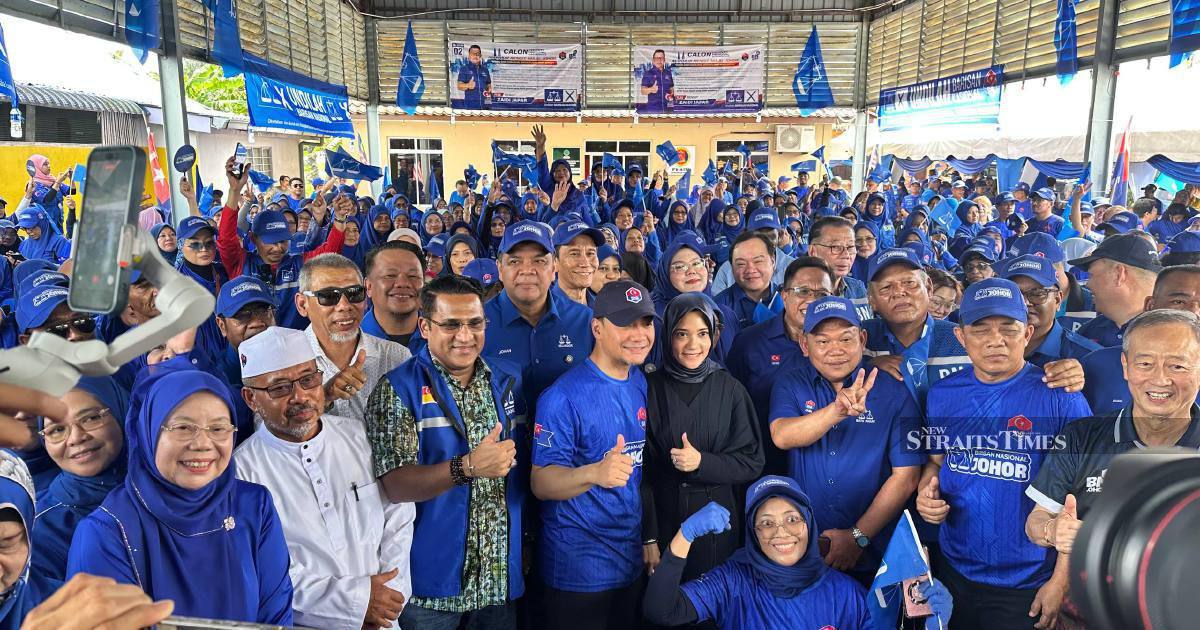
The presence of two Pas division leaders at a Barisan Nasional function in Batu Pahat has surfaced as a noteworthy development in pre-election maneuvering, with observers reading the appearance as evidence of strengthened engagement between Umno and other Malay-majority parties vying for influence in the forthcoming Johor state election scheduled for the coming month.
The attendance underscores the delicate political choreography required to maintain coalition coherence at a moment when electoral competition intensifies across the peninsula. Barisan Nasional, long Malaysia's dominant political force, has historically depended on partnerships across Malay and Muslim-majority constituencies to consolidate electoral dominance. The Johor contest represents a crucial test of whether this traditional alliance structure can withstand contemporary pressures from competing political narratives and rival coalitions.
Pas, the Islamic political party with substantial grassroots networks particularly in rural and semi-urban areas, occupies a pivotal position in Malaysian electoral mathematics. Its willingness or reluctance to coordinate with Umno shapes campaign dynamics significantly, both in Johor and across other states. The party's consistent engagement with Barisan Nasional functions suggests organizational readiness to pursue collaborative electoral strategies, though historical tensions between Umno and Pas over religious authority and community representation frequently complicate such partnerships.
Johor's particular significance stems from its geographic scale and population density. As Malaysia's second-largest state by land area with substantial urban and rural constituencies, outcomes there reverberate across national political calculations. Victory or defeat in Johor carries implications for governing coalitions in Putrajaya, since state-level momentum influences national sentiment and parliamentary dynamics in subsequent contests. The state has historically alternated between periods of Barisan Nasional dominance and opposition-led governance, making its competitive status a bellwether for broader Malaysian political trends.
The coordination emerging before this election cycle reflects lessons absorbed from recent electoral disappointments and victories. Barisan Nasional's performance has deteriorated from its traditional supermajority standards, necessitating tighter internal organization and clearer delineation of candidate deployments across constituencies. By positioning Pas leaders visibly at campaign gatherings, the coalition signals internal unity and shared programmatic commitment, messages intended to reassure supporters that traditional alliances remain functional despite periodic public disputes.
For Pas specifically, alignment with Barisan Nasional's electoral machinery provides access to organizational infrastructure, media platforms, and campaign resources that smaller parties struggle to generate independently. Yet such cooperation carries reputational costs within segments of Pas's support base that harbor ideological reservations about collaboration with secular-oriented Umno figures. The party must carefully calibrate its public engagement to maintain internal cohesion while extracting maximum electoral advantage from the partnership.
The Batu Pahat gathering demonstrates that both Umno and Pas recognize mutual electoral vulnerability without effective coordination. Opposition coalitions, while fragmented, possess demonstrated capacity to mobilize urban voters and educated constituencies skeptical of traditional Barisan Nasional narratives. Malay-majority parties cannot afford factional competition that splinters communal voting blocs, creating openings for opposition advancement in constituencies where coalition discipline determines outcomes.
Regional implications extend beyond Johor itself. Other state elections scheduled subsequently will be influenced by Johor's results and the apparent durability of Umno-Pas cooperation revealed during the campaign. Southeast Asia's broader political context, marked by intensifying competition between incumbents and opposition movements, makes Malaysian elections significant indicators of whether traditional political structures can adapt to contemporary electoral volatility or whether demographic and generational shifts have permanently altered coalition dynamics.
The attendance of Pas division leaders at this Barisan Nasional function also reflects careful attention to symbolic messaging. Division leaders, who occupy intermediate positions within party hierarchies, carry influence over local campaign mobilization without representing the highest party echelons. Their public association with the coalition demonstrates grassroots-level support without requiring controversial positioning of national party leadership figures, a calibration that allows Pas space to maintain measured rhetoric about its political autonomy.
As the Johor election approaches, such coordination signals will accumulate. Campaign rallies, candidate announcements, joint press conferences, and coordinated messaging from allied party figures will indicate whether the Umno-Pas partnership achieves the synchronized operation necessary for electoral success. Conversely, any visible friction or public disagreements between coalition partners would immediately weaken their competitive position relative to opposition coalitions that, despite acknowledged organizational challenges, successfully challenge Barisan Nasional's traditional dominance in multiple recent contests.
Observers monitoring Malaysian politics will interpret the texture of such inter-party cooperation carefully. In systems where electoral margins increasingly narrow and swing constituencies determine outcomes, the operational competence and apparent unity of political alliances becomes paramount. The Batu Pahat event illustrates how these partnerships, maintained through sustained diplomatic engagement and shared electoral incentives, represent the mechanical foundation upon which coalition electoral performance rests across Malaysian politics.

