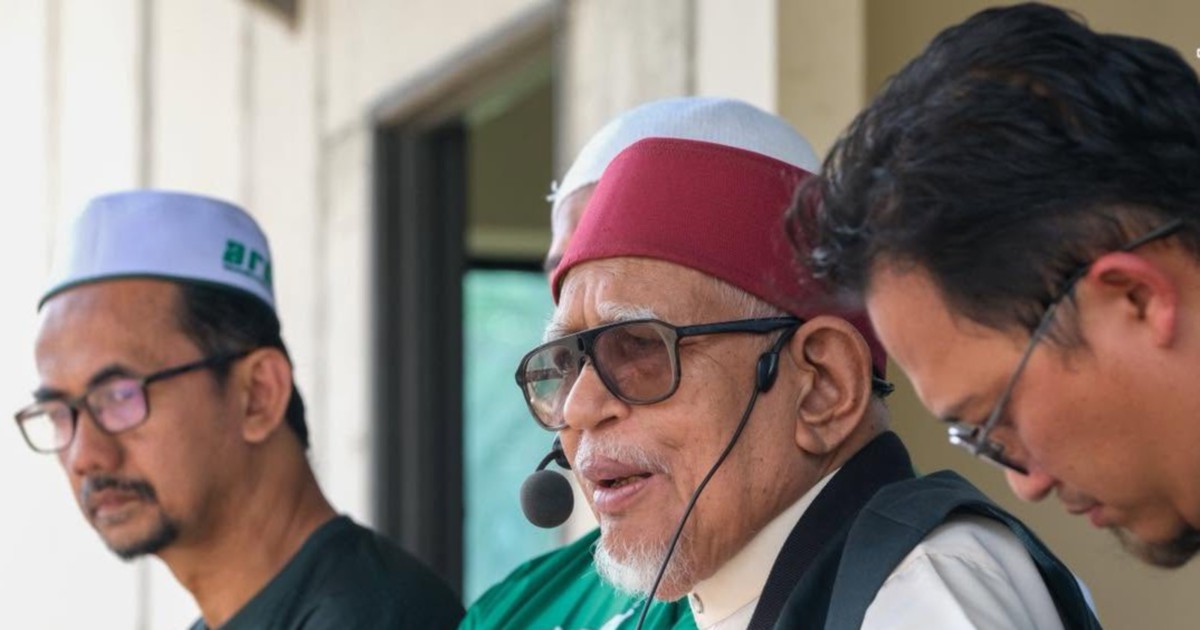
Tan Sri Abdul Hadi Awang, the president of PAS, has outlined a new political vision aimed at broadening coalition support across Malaysia's traditionally divided ethnic and religious communities. His call for unity represents a significant attempt to reshape the nation's political landscape by bringing together Malay-Muslim parties with moderate, non-Muslim political organisations under a single governing framework that he describes as essential to the country's future stability.
Hadi's proposal centres on establishing a cooperative arrangement between PAS, the country's largest Islamic party, UMNO, the dominant Malay party, and what he characterises as "non-extreme" component parties from the non-Muslim communities. His explicit mention of MCA and MIC, the primary political representatives of Malaysia's Chinese and Indian communities respectively, signals an openness to multiracial cooperation that extends beyond traditional PAS positioning. This represents a departure from the party's historical emphasis on Islamic governance and suggests a pragmatic acknowledgement of the need for cross-community consensus in Malaysian politics.
The framing of potential partner parties as "non-extreme" carries particular significance in Malaysia's current political environment. The qualifier suggests Hadi envisions a coalition centred on moderate, mainstream parties rather than those occupying more radical political positions. This language also implicitly contrasts his proposed alliance with other political groupings, positioning his framework as a stabilising force that respects constitutional principles and moderate governance while maintaining strong Islamic and Malay representation. The emphasis on moderation may be designed to appeal to swing voters concerned about polarisation and to reassure non-Muslim communities about religious and constitutional safeguards.
Hadi's broader articulation of the alliance as a movement to "save Malaysia" frames political cooperation as addressing deeper concerns about national direction and cohesion. This rhetoric suggests underlying anxieties about institutional stability, economic challenges, or social fragmentation that the proposed coalition claims to address. The invocation of national salvage language transforms the political formula from a simple electoral pact into a purported rescue mission, raising the perceived stakes of political alignment and encouraging voters to view coalition support as patriotic duty rather than mere partisan choice.
The timing of Hadi's proposal occurs within Malaysia's complex post-election environment, where coalition mathematics require careful navigation of diverse party interests and voter expectations. PAS has sought to position itself simultaneously as a champion of Islamic causes and a responsible partner in governance, a balancing act that becomes more delicate in broader coalitions. His attempt to articulate clear parameters for collaboration, including the "non-extreme" criterion, may reflect ongoing internal discussions within the proposed grouping about acceptable policy boundaries and governing principles.
The inclusion of MCA and MIC in Hadi's vision is noteworthy given these parties' traditional alignment with UMNO and their historical positioning within Malaysia's multiracial political framework. MCA, despite recent electoral challenges affecting its parliamentary representation, remains symbolically important as an inter-communal bridge. MIC has similarly maintained its role as representative of Indian Malaysian interests, though with varying electoral fortunes. Their potential participation in a PAS-anchored coalition would reshape traditional political architectures and require significant agreement on governance approaches.
For Malaysian voters of all backgrounds, this proposal warrants careful examination of practical implications. The relationship between Islamic governance principles, which PAS emphasises, and the secular constitutional framework that MCA and MIC traditionally champion represents a significant area where coalition unity would face real-world testing. Governance arrangements covering sensitive areas including religious law jurisdiction, constitutional interpretation, and communal rights would require substantial negotiation and compromise to function effectively in a tripartite or multiparty arrangement.
The regional dimension of Malaysia's political choices also merits consideration. Neighbouring Southeast Asian nations observe Malaysia's internal political developments with attention to implications for regional stability, democratic governance, and intercommunal relations. The success or failure of Hadi's proposed unity model would offer lessons about coalition-building in diverse democracies and the viability of bridging historically significant political and communal divides through moderate governance frameworks.
International observers and Malaysia's trading partners have expressed ongoing interest in political stability as a foundation for economic policy consistency and investment confidence. A functional coalition combining PAS's Islamic orientation with UMNO's establishment position and multiracial party participation could theoretically provide both ideological balance and broader voter legitimacy. Alternatively, coalition tensions could result in governance instability if underlying disagreements about constitutional principles, religious law application, or communal rights prove irreconcilable during actual administration.
Hadi's proposal ultimately tests whether Malaysian political actors can prioritise shared governance objectives over historical party rivalries and ideological differences. The explicit invitation to MCA and MIC, framed as partnership with "non-extreme" organisations, represents an attempt to construct a centrist coalition that claims to balance Islamic perspectives, Malay interests, and multiracial governance. Whether voters, party structures, and political incentives align to sustain such an arrangement remains subject to the practical demands of coalition governance and the satisfaction of diverse electoral mandates across Malaysia's plural communities.

