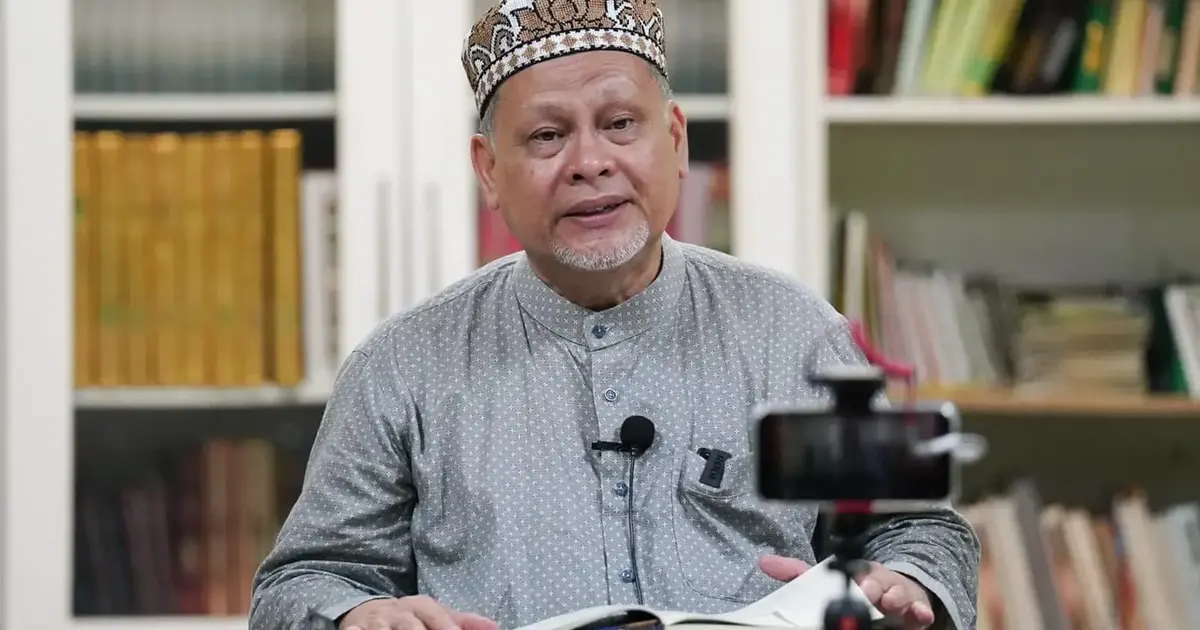
The Pas Islamic party has made clear it will not shy away from direct competition with Bersatu in the forthcoming Negeri Sembilan state elections, should the two Perikatan Nasional component parties find themselves contesting the same seats. Amar Abdullah, the party's deputy chief, delivered this candid statement, signalling that while the coalition partners maintain their electoral pact, neither organisation is willing to cede ground to the other without a fight.
This declaration reveals underlying tensions within the Perikatan Nasional alliance, where both Bersatu and PAS have emerged as significant political forces competing for influence and voter support. Rather than automatically deferring to one another or negotiating exclusive territorial arrangements, the parties appear content to test their respective strengths at the ballot box. Amar Abdullah's comments suggest that pragmatic coalition politics will not prevent internal rivalry from playing out in marginal constituencies where both parties see winning opportunities.
The willingness to contest against an ally reflects the complex dynamics of Malaysian coalition politics, where parties frequently maintain formal partnerships while simultaneously pursuing their own organisational interests. Perikatan Nasional has long been characterised by this delicate balancing act, with member parties working together on larger political objectives whilst remaining fiercely competitive at the electoral level. The Negeri Sembilan state elections thus present a test case for how far this coexistence can stretch without fracturing the broader alliance.
Negeri Sembilan carries particular significance for both PAS and Bersatu as a state where each party harbours ambitions to strengthen its parliamentary representation and state assembly presence. The state, nestled between Selangor and Pahang, has historically been a competitive battleground where marginal seats frequently change hands and no single party commands overwhelming dominance. For PAS, the opportunity to expand its foothold beyond its traditional strongholds represents an important growth avenue, whilst Bersatu views Negeri Sembilan as territory where it can consolidate its position as a significant peninsular political player.
The announcement also carries implications for local and national political observers seeking to gauge the stability of Perikatan Nasional ahead of the next general election. While coalition members have previously managed seat-sharing arrangements through negotiation, explicit public declarations of willingness to contest against partners signal either confidence in their ability to resolve disputes amicably or underlying anxiety about the coalition's durability. Amar Abdullah's statement appears calibrated to reassure PAS members that their party will not be marginalised within the alliance structure and that central leadership takes seriously the grassroots demands for competitive opportunities.
For voters in Negeri Sembilan, the prospect of both PAS and Bersatu fielding candidates in contested seats presents a choice between two ideologically-aligned but organizationally distinct parties. Both organisations operate within the Perikatan Nasional framework and share overlapping policy priorities, yet they maintain separate party structures, membership bases, and leadership hierarchies. This multi-candidate scenario could fragment the opposition vote or alternatively mobilise additional supporters interested in supporting Perikatan Nasional candidates regardless of which component party they represent.
The broader context involves Perikatan Nasional's positioning ahead of the next general election, scheduled for 2025. State-level elections in individual states serve as testing grounds for campaign strategies, grassroots organising capacity, and coalition cohesion. The way PAS and Bersatu manage their competition in Negeri Sembilan will provide crucial data points about whether the alliance can maintain unity while accommodating internal rivalries, or whether such contests will exacerbate existing tensions and potentially weaken collective electoral performance.
From a Malaysian governance perspective, the emergence of multiple strong component parties within coalition frameworks reflects the maturation of the country's political system. Rather than operating as subservient elements within a dominant party structure, organisations like PAS and Bersatu negotiate terms as co-equal partners, sometimes cooperatively and sometimes competitively. This arrangement offers voters more choice and accountability but also introduces complexity into coalition management that party leaders must carefully navigate.
Amar Abdullah's comments should be understood within the context of PAS seeking to maintain its relevance and appeal to supporters who might otherwise question the party's leverage within Perikatan Nasional. By publicly affirming that PAS will not accept systematic disadvantaging in seat allocation, the vice-president signals that negotiations over candidate selection will be genuine rather than predetermined. This posture strengthens PAS's hand in internal coalition discussions and reinforces the party's credibility among activists concerned about organisational independence.
The Negeri Sembilan elections will ultimately demonstrate whether Perikatan Nasional has developed institutional mechanisms sufficiently robust to accommodate both coalition solidarity and component party autonomy. Success in managing this balance while maintaining competitive electoral appeal could position the alliance advantageously for the next general election. Conversely, if internal rivalries escalate into public acrimony or if seat-sharing disputes generate recriminations among coalition partners, voters may increasingly question whether Perikatan Nasional represents a stable alternative government.

