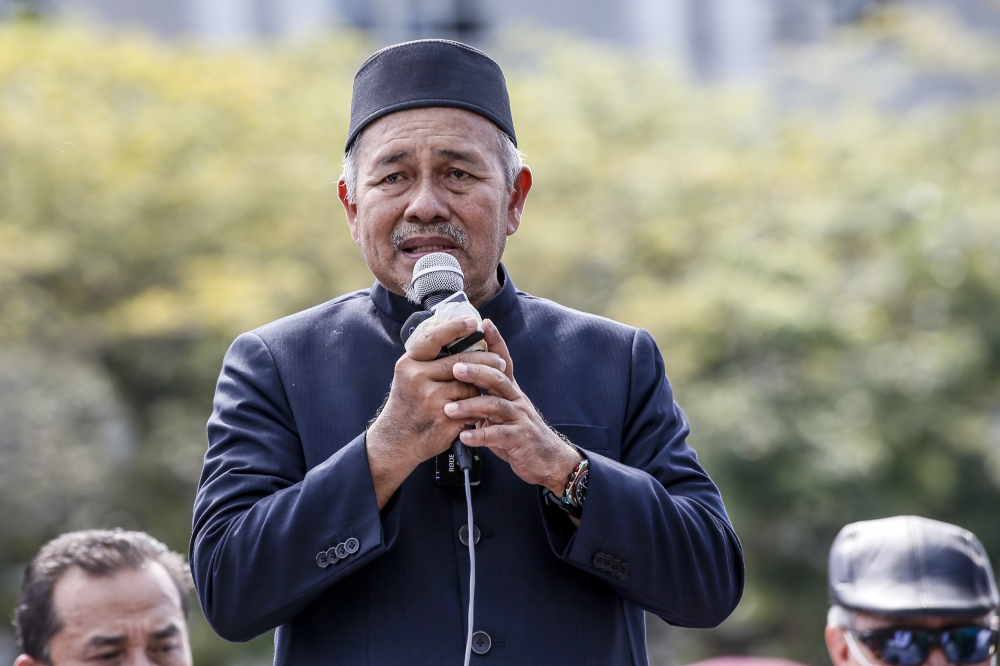
PAS leadership has signalled a readiness to enter into substantive negotiations regarding a possible expansion of the current cooperation arrangement between Barisan Nasional and Perikatan Nasional, potentially extending this political alliance to encompass Melaka state and the federal governance sphere. Party president Tuan Ibrahim made the statement in Kuala Lumpur on August 3, responding to questions about the party's strategic direction following recent political developments in the nation.
The potential broadening of the BN-PN partnership represents a significant development in Malaysia's coalition politics, as both major political blocs have historically competed for dominance at the national level. The current cooperation between these two coalitions, which presently operates on a state or limited basis in certain jurisdictions, would mark a qualitative shift if extended to the federal tier, where power and resources are most concentrated.
Tuan Ibrahim's overture comes at a time of fluid political alignments in Malaysia. The statement suggests that PAS, as a crucial component of PN alongside Bersatu and other coalition members, perceives strategic value in deepening ties with BN components such as UMNO, MCA, and MIC. Such consolidation could reshape the political landscape ahead of potential electoral contests and policy-making at both state and national levels.
Melaka has emerged as a particular focal point for coalition negotiations, given its recent political volatility and the balance of power within its state assembly. The prospect of extending BN-PN cooperation to the state level could influence the stability of the Melaka government and the positioning of both coalitions within this geographically small but politically significant state. The alignment dynamics in Melaka often serve as a bellwether for broader national political trends.
For Malaysian observers, the significance of such an expansion lies in how it might affect governance structures and policy implementation across different levels of administration. A unified BN-PN framework operating at both state and federal levels could facilitate more cohesive legislative agendas and reduce the legislative gridlock that occasionally emerges when competing coalitions control different tiers of government. Conversely, consolidation of power within fewer hands raises questions about political competition and accountability.
The willingness of PAS to engage in these discussions reflects pragmatic political calculation. The party has demonstrated adaptability in its coalition strategies over recent years, having previously worked within different frameworks depending on electoral circumstances and strategic opportunities. This flexibility has contributed to PAS's electoral performance and its leverage within Malaysian politics, allowing it to maintain influence regardless of which broader coalition configuration emerges victorious.
From the perspective of UMNO and other BN members, engagement with PAS through expanded cooperation offers several potential advantages. Such arrangements could consolidate Malay-Muslim representation within a single political framework, potentially consolidating votes among this demographic segment. Additionally, formal cooperation agreements might provide stability and predictability in parliamentary management and state governance that proves difficult to achieve with more fragmented political arrangements.
However, expansion of BN-PN cooperation also carries complications. Historical competition and divergent policy preferences between coalition members remain substantive issues. Questions persist regarding how different parties within such arrangements would resolve conflicts over resource allocation, ministerial portfolios, and policy priorities. The history of coalition governance in Malaysia demonstrates that formal alliances can become strained when competing interests prove difficult to reconcile.
Regional considerations add another layer to these discussions. Southeast Asian observers, particularly from other nations managing multi-party coalitions, follow Malaysian political developments closely. The strength and stability of Malaysia's governing arrangements carry implications for the region's overall political stability and economic policy consistency. Coalition expansion or contraction signals the durability of Malaysia's institutional frameworks and the maturity of its democratic practices.
The dialogue that Tuan Ibrahim indicates PAS is prepared to undertake would necessarily involve extensive negotiations on multiple fronts. Party leaders would need to address questions about the scope of cooperation, mechanisms for resolving internal disputes, representations in various assemblies and cabinet-level positions, and the duration of any formal agreement. These discussions typically occur simultaneously at multiple levels within party structures, involving both senior political leadership and grassroots party organizations.
For voters and civil society observers in Malaysia, the unfolding of these coalition negotiations warrants close attention. The nature and extent of BN-PN cooperation will substantially influence the policy directions pursued by whatever government emerges, the accessibility of political competition for new entrants, and the mechanisms available for accountability and oversight. Understanding these behind-the-scenes discussions provides important context for comprehending how Malaysia's political system actually functions beyond electoral cycles.
The coming weeks and months will likely reveal whether preliminary discussions translate into formal cooperation arrangements. How quickly negotiations proceed, what compromises prove necessary, and whether other political actors attempt to disrupt or influence these talks will shape Malaysia's political trajectory significantly. Tuan Ibrahim's August 3 statement should be understood not as a final commitment but rather as an opening position in what may become prolonged and complex political negotiations affecting the nation's governance.

