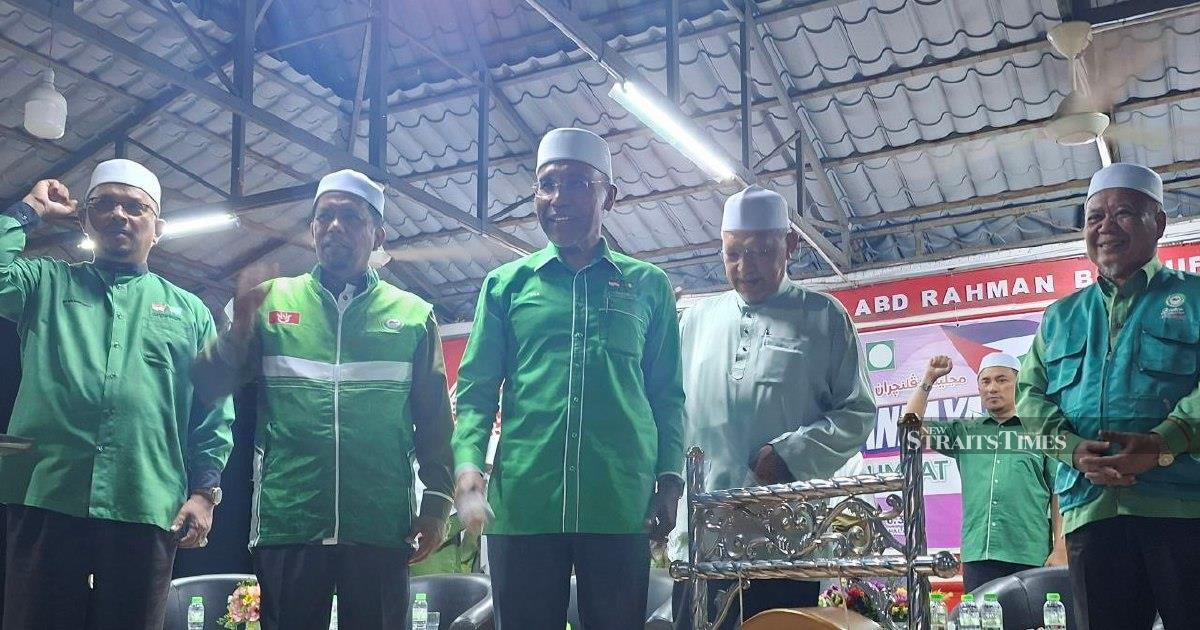
The Islamist party PAS has flagged an imminent risk of a snap general election, with party leadership arguing that accumulated political pressures and institutional deadlines could force a national poll earlier than anticipated. Speaking in Tumpat, party officials outlined how the convergence of state-level political crises and fragile cooperation between major coalitions has created conditions favourable to an early dissolution of Parliament, potentially triggering Malaysia's 16th general election before the customary five-year parliamentary term concludes.
The Melaka state assembly represents a critical flashpoint in this equation. The state legislature's constitutional term is approaching its expiration date, which would mandate fresh elections at the regional level. Rather than simply managing a state-level transition, PAS contends that the political fallout from Melaka could cascade upwards and destabilise the national government. The party's assessment reflects broader anxiety within the political establishment about how deteriorating conditions in one state legislature might metastasize into a constitutional crisis affecting the entire governing architecture.
Relationship strain between Pakatan Harapan and Barisan Nasional has emerged as the second major factor underpinning PAS's election timeline projections. These two coalitions entered an unusual power-sharing arrangement following the 2022 general election, initially forging an uncomfortable alliance to prevent political gridlock. However, tensions have been mounting as competing interests, policy disagreements, and competition for political dominance have eroded the collaborative framework. PAS's comments suggest the Islamic party has calculated that mutual trust between these broad political blocs has deteriorated sufficiently that a separation could occur without warning.
The strategic implications for Malaysian politics are substantial. A premature dissolution would upend campaign preparation across all political parties and potentially disadvantage incumbent administrations that might not have completed their legislative agendas. The uncertainty also complicates long-term policy planning for government agencies and creates volatility in the business and investment sectors, which typically prefer political stability and predictable governance transitions.
PAS occupies a particularly interesting position in this political calculus. As a coalition partner within the broader Perikatan Nasional arrangement, the party has leverage in determining the viability of any government formation. By publicly signalling the fragility of current power-sharing arrangements, PAS may be attempting to bolster its negotiating position ahead of potential coalition reconfiguration or to pressure other parties toward accommodating its policy preferences.
The Melaka electoral situation carries symbolic weight disproportionate to the state's population size. As a coastal state with historical significance to Malaysia's political narrative, developments in Melaka frequently serve as bellwethers for national political trends. Previous state elections in Melaka have generated ripple effects across national politics, and observers are monitoring this region intensely as an indicator of broader coalition stability.
From a Malaysian governance perspective, the prospect of early elections raises important questions about institutional robustness and the sustainability of coalition-based governance models. Unlike Westminster systems with stronger conventions around fixed parliamentary terms, Malaysia's constitutional framework provides flexibility that allows for relatively rapid dissolution and fresh mandates. This institutional feature can facilitate democratic responsiveness but also introduces uncertainty when multiple actors possess dissolution triggers or significant influence over timing.
Regional analysts note that Southeast Asian political stability often depends on predictable institutional transitions. Early elections in Malaysia, a regional economic engine and an influential voice in regional forums, would reverberate across Association of Southeast Asian Nations capitals. Investors and neighbouring governments closely monitor Malaysian political continuity, making PAS's election timeline commentary noteworthy for observers beyond Malaysia's borders.
The party's public articulation of these risk factors also reflects sophisticated understanding of Malaysia's coalition politics. By naming specific triggers—state assembly expiration and coalition friction—PAS demonstrates how contemporary Malaysian governance involves multiple veto points and interdependencies. No single actor commands sufficient authority to govern unilaterally; instead, outcomes emerge from negotiated settlements among multiple coalition partners with competing interests.
Looking forward, the political economy of maintaining the current government hinges on whether Pakatan Harapan and Barisan Nasional can find sufficient common ground to sustain their arrangement through completion of the parliamentary term. PAS's comments inject urgency into this calculation, essentially warning that the window for maintaining stability is narrowing. This kind of public positioning by coalition members often precedes either genuine governance breakdowns or strategic bargaining, making the coming months critical for determining Malaysia's political trajectory.
The broader question underlying PAS's statements concerns whether Malaysia's political system can accommodate coalition governance effectively in an era of fragmented electoral outcomes. The 2022 general election produced no clear majority, necessitating post-election negotiation and power-sharing. Whether this model can function sustainably, or whether it inevitably generates the kind of tensions that PAS now publicly highlighting, remains an open question with significant implications for Malaysian democracy and regional stability.

