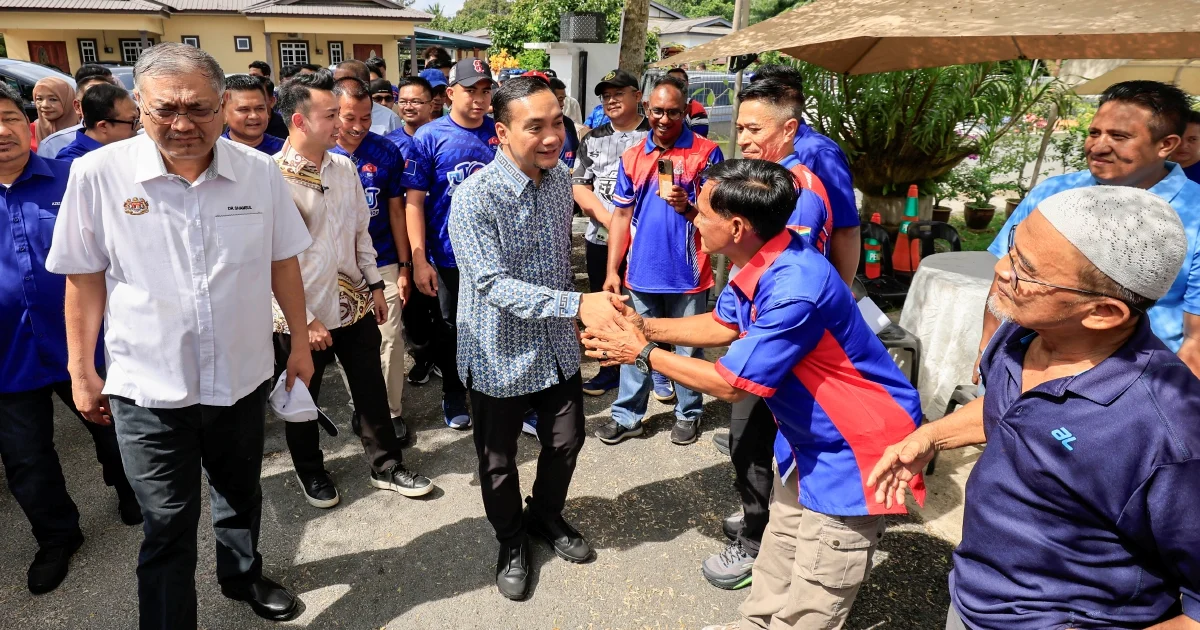
Johor Menteri Besar Onn Hafiz has weighed in on the evolving political landscape surrounding Pas' recent call for party members to support Barisan Nasional candidates in seats not being contested by Perikatan Nasional, framing the move as a legitimate exercise of party autonomy in determining electoral strategies. Speaking at Simpang Renggam, Onn Hafiz emphasised that Malaysian political parties maintain the fundamental right to chart their own course during elections, and that Pas' decision should be understood within this broader context of strategic political decision-making.
The statement comes at a time when Malaysia's political terrain continues to shift following the 2022 general election and its aftermath, with various coalitions recalibrating their positions and alliances. Pas' recent directive represents a significant positioning move, particularly in states where the party holds considerable grassroots support but where Perikatan Nasional has opted not to field candidates. This creates a scenario where Pas members could theoretically support Barisan Nasional despite the two coalitions maintaining distinct organisational identities at the national level.
Onn Hafiz's comments reflect the pragmatic considerations that often characterise Malaysian electoral politics, where bloc voting and strategic seat allocation frequently override rigid ideological boundaries. For Johor in particular, which remains a crucial political battleground with significant parliamentary representation, such inter-coalition dynamics carry particular weight. The state has historically served as a bellwether for national political trends, making statements from its chief minister especially influential in shaping public perception of coalition arrangements.
The Pas directive essentially acknowledges the geographic reality of Malaysian electoral competition, where not all coalitions contest every seat. Rather than leaving those constituencies entirely to opposition forces, Pas has chosen to encourage members to strategically support Barisan Nasional candidates, thereby maximising the combined conservative and Malay-Muslim political vote in those areas. This reflects sophisticated electoral arithmetic rather than ideological abandonment.
For Malaysian voters seeking clarity on political alignments, such manoeuvres underscore the complexity of the country's multi-party, multi-coalition system. Pas occupies a distinctive position as an influential Islamic party that has historically alternated between cooperation and competition with Barisan Nasional over decades. The current approach represents a calculated attempt to exercise influence across multiple coalition frameworks simultaneously.
The implications for Barisan Nasional are particularly noteworthy, as the coalition faces ongoing challenges in rebuilding electoral credibility following the 2022 results. Securing Pas members' tacit support in uncontested seats could provide a meaningful boost to BN candidates' prospects, particularly in rural and semi-urban constituencies where Pas maintains deep organisational roots and community trust. This is especially significant in Peninsular Malaysia, where the party's influence among Malay-Muslim voters remains substantial.
Onn Hafiz's public endorsement of Pas' strategic autonomy also serves a diplomatic function, reassuring both Perikatan Nasional and other coalition partners that shifting electoral tactics need not trigger wider political instability or sudden realignment. By framing Pas' decision as routine party prerogative rather than a dramatic shift, he seeks to normalise what might otherwise appear as coalition tension or confusion to external observers and foreign investors concerned about Malaysia's political stability.
The broader context includes ongoing discussions about potential seat-sharing arrangements, coalition consolidation, and the positioning of various blocs ahead of potential future elections. Perikatan Nasional's decision not to contest certain constituencies reflects its own strategic calculations about resource allocation and competitive viability. Rather than leaving such seats uncontested, Pas has pragmatically determined that encouraging member support for Barisan Nasional candidates serves the interests of the conservative voting bloc more effectively than fragmenting that vote.
For Southeast Asian observers monitoring Malaysian politics, these developments illustrate the region's characteristic approach to coalition building—flexible, negotiated, and often occurring below the formal institutional level. Unlike Westminster-style systems where coalition formation typically occurs through explicit agreements registered with Parliament, Malaysian political arrangements frequently evolve through less formal understandings and mutual accommodation among party leaderships.
The sustainability of such arrangements depends heavily on whether they deliver electoral results satisfactory to all participating parties. If Pas members' grassroots mobilisation effectively contributes to Barisan Nasional victories in targeted constituencies, it could establish a precedent for future cooperation. Conversely, should such efforts prove ineffectual or if members display reluctance in supporting BN candidates, the arrangement's credibility could erode quickly.
Onn Hafiz's intervention also signals Johor's continuing importance as a power base and political anchor within Malaysian politics. As Menteri Besar of a state that remains strategically vital to any ruling coalition's parliamentary majority, his public positioning on such matters carries weight beyond his formal title. His statements help establish the narrative through which Pas' decision is interpreted by media, political observers, and the general public.

