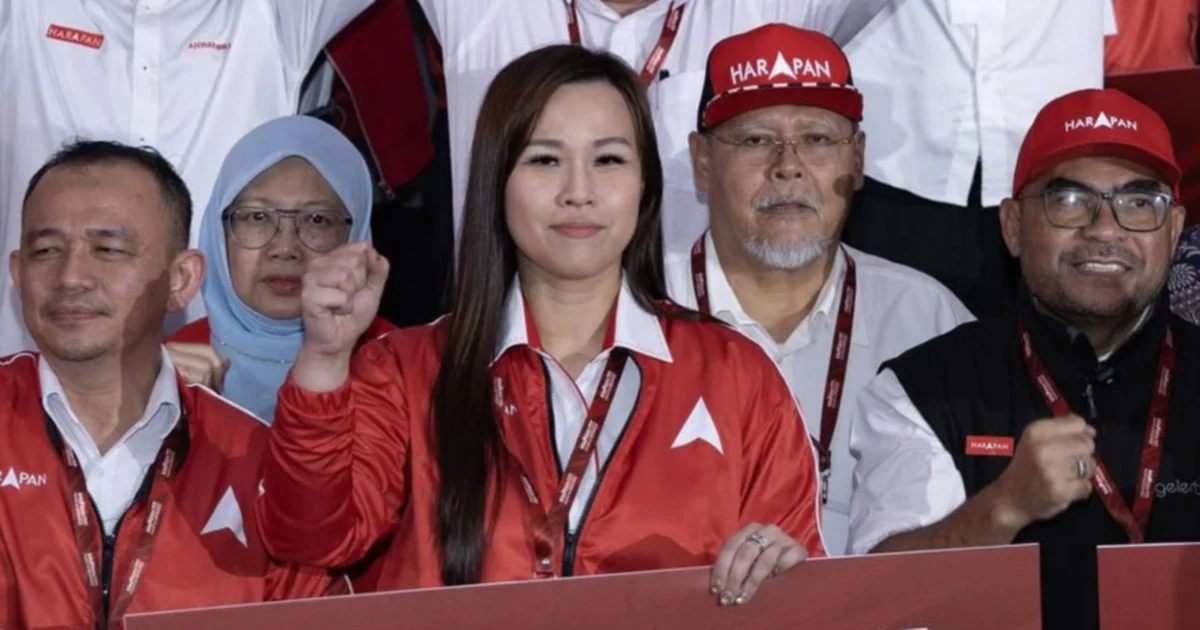
Divisions within Pakatan Harapan's coalition have surfaced ahead of Johor's 16th state election, as the Pasir Gudang division of Amanah party has declared its intention to boycott the campaign for Sharon Teo, the coalition's selected candidate for the Permas state constituency. The faction's decision underscores growing tensions over candidate selection methods within the opposition alliance, particularly regarding appointments of external figures who lack deep community roots or prior grassroots involvement.
The designation of Teo as a 'parachute candidate' reflects a broader pattern of discontent within the party structure. The term, widely used across Malaysian politics, describes individuals parachuted into constituencies without established local credibility or internal party machinery support. In the context of Amanah's Pasir Gudang division, this appointment appears to have bypassed consultation with ground-level party organizers who typically champion locally-rooted candidates with sustained community engagement.
This friction highlights a persistent challenge for Pakatan Harapan as it attempts to rebuild electoral strength in Johor, a state that has become increasingly crucial to federal opposition strategy. The party's reliance on centralized candidate selection, while designed to optimize electoral outcomes through strategic placements, often alienates local party structures invested in promoting internal candidates. Pasir Gudang's boycott stance signals that this optimization approach carries organizational costs that may undermine grassroots mobilization.
Amanah's position within the coalition dynamics adds complexity to this dispute. As the party emphasizing Islamic credentials and values-based governance, Amanah members have historically prioritized internal democratic processes and consultation at divisional levels. The circumvention of these processes in Sharon Teo's candidacy directly contradicts such principles, explaining the principled resistance from the Pasir Gudang chapter. This is not merely a personality conflict but a structural disagreement about how Pakatan should conduct internal governance.
The timing of this boycott announcement, occurring before the 16th state election campaign kicks into full momentum, poses significant strategic challenges for the coalition. Pakatan requires unified organizational machinery across constituencies to effectively challenge Barisan Nasional's entrenched dominance in Johor. When divisional structures withdraw cooperation, even selectively, campaign infrastructure weakens substantially. Volunteer mobilization, voter outreach programmes, and logistical support depend heavily on divisional commitment.
For Sharon Teo specifically, this boycott transforms her candidacy into a test case for parachute placements. Without enthusiastic local party backing, a candidate must rely more heavily on Pakatan's central organization and personal campaigning to establish constituency presence. The additional burden of overcoming local party resistance means Teo must work considerably harder to reach voters and project legitimacy as a representative genuinely invested in Permas constituents' welfare.
Pasir Gudang's decision may also reflect broader factional contests within Amanah itself. Different segments of the party hold varying views on coalition strategy, internal democracy, and the balance between electoral pragmatism and organizational principle. This boycott allows the Pasir Gudang faction to register protest against decisions they perceive as elite-driven while maintaining formal party membership. It is a form of internal dissent that stops short of outright party rebellion.
The wider implications for Pakatan extend beyond Johor. If local divisions feel systematically overridden in candidate selection, such grievances accumulate across states and constituencies. This is particularly relevant in Selangor, Negeri Sembilan, and Pahang, where Amanah maintains significant organizational presence. Should boycott tactics spread to other constituencies, the coalition's electoral infrastructure could face systemic strain precisely when it is attempting to project unity and organizational competence to voters.
From a voter perspective, these internal divisions communicate mixed messages about Pakatan's cohesion and readiness to govern. Electorate reasoning often incorporates assessments of whether coalition partners genuinely trust each other and operate transparently. Public disputes over candidate selection suggest unresolved tensions that voters may interpret as indicative of deeper structural weaknesses. In Johor's intensely competitive political environment, such perceptions can shift marginal voter decisions.
Moving forward, Pakatan leadership faces pressure to address the underlying grievances fueling boycott actions. This may involve renegotiating candidate selection procedures to guarantee meaningful divisional consultation, or establishing clearer criteria for parachute placements that earn broader acceptance. Simply pressing ahead without addressing divisional concerns risks normalizing such boycotts across future elections, gradually eroding coalition effectiveness.
For Malaysian politics more broadly, the Pasir Gudang episode illustrates that opposition coalitions remain fragile constructs dependent on careful management of internal interests and democratic norms. The tension between strategic electoral optimization and organizational legitimacy remains unresolved, and Pakatan's approach to resolving this tension will significantly shape its viability as an alternative government proposition to voters across the peninsula.