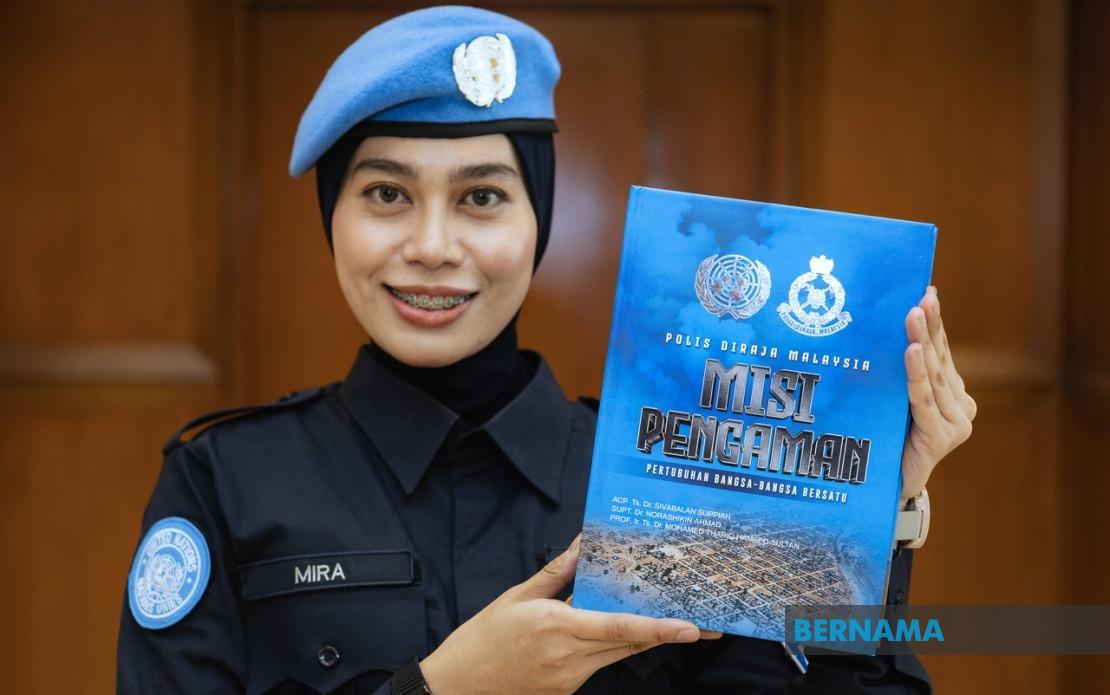
The Royal Malaysia Police marked a significant milestone in its institutional history with the launch of a comprehensive book chronicling its involvement across 13 United Nations peacekeeping operations. Inspector-General of Police Tan Sri Mohd Khaled Ismail positioned the publication as far more than a historical record, describing it instead as an essential case study in crisis management and strategic leadership that underscores Malaysia's evolving role in global security affairs. The timing of the launch reflects growing recognition of how police forces beyond traditional military structures contribute meaningfully to international peace and stability operations.
The 500-page volume traces a remarkable transformation in Malaysia's institutional capabilities and international standing. What began as a domestically focused constabulary has evolved into an internationally recognized professional entity operating under the United Nations mandate. Tan Sri Mohd Khaled emphasized this progression by highlighting how PDRM's doctrine shifted from managing primarily internal security challenges to fulfilling complex international responsibilities. This evolution carries particular significance for Southeast Asian nations seeking to demonstrate professional capacity and soft power influence on the global stage.
Beyond its documentary function, the book serves as a practical repository of operational wisdom derived from on-the-ground experience in volatile environments. Each of the 13 missions featured represents unique circumstances characterized by resource scarcity, cultural complexity, and rapidly shifting conditions that demanded adaptive leadership. The Inspector-General specifically noted that these accounts demonstrate how theoretical frameworks, particularly Malaysia's "Acuan Kepolisian Watan" national policing model, function effectively across diverse geopolitical contexts. Such documentation provides invaluable reference material for security professionals throughout the region grappling with similar deployment challenges.
The publication's emphasis on humanitarian dimensions reflects a broader recalibration in how security contributions are framed within international discourse. Rather than focusing exclusively on tactical security measures, the narrative centers on human dignity, community protection, and the fostering of hope in conflict-affected populations. This approach aligns with Malaysia MADANI's aspirational framework and resonates with contemporary international priorities emphasizing protection of civilians and inclusive peace-building. For Malaysian readers, this framing demonstrates how national security doctrine increasingly intersects with development and humanitarian objectives.
The collaborative structure underlying the book's production merits particular attention, as it exemplifies institutional cooperation patterns increasingly relevant across Southeast Asia. The partnership between PDRM, the Universiti Putra Malaysia Press, Yayasan Generasi Malaysia, and the National Book Development Foundation represents a deliberately integrated approach combining security expertise, academic rigor, and community engagement. This model of knowledge production across sectors offers a template for how governments might better document and disseminate institutional learning in ways accessible to broader audiences beyond specialized security circles.
Malaysia's peacekeeping contributions have garnered international recognition that extends beyond typical diplomatic acknowledgments. ASEAN Records formally recognized PDRM for deploying the largest national police contingent to any host country throughout the entire series of UN missions examined. This distinction positions Malaysia prominently within Southeast Asian contributions to multilateral security frameworks and underscores the region's capacity for sophisticated international engagement. The recognition validates both the quantity and quality of Malaysian personnel committed to these operations.
The book arrives at a moment when international peacekeeping itself faces evolving challenges and scrutiny. Traditional models of UN deployment increasingly confront complex hybrid conflicts, cyber-enabled security threats, and communities where trust in foreign security forces cannot be assumed. PDRM's documented experiences navigating these difficulties across 13 distinct missions provide contemporary perspectives on how professional policing adapts to contemporary conflict environments. The practical action plans highlighted in the publication offer concrete methodologies for cross-cultural cooperation that extend beyond peacekeeping into regular bilateral and multilateral security partnerships.
For Malaysian readers and policymakers, the book's contents illuminate how institutional development serves national interests through international engagement. A police force capable of operating effectively within UN frameworks while maintaining professional standards enhances Malaysia's diplomatic standing and creates opportunities for regional influence. Personnel deployed to peacekeeping missions return with expanded networks, refined expertise, and cross-cultural competencies that strengthen Malaysia's broader security apparatus and foreign relations. This multiplier effect means the investment in UN participation yields benefits extending well beyond the immediate mission context.
The strategic messaging embedded in the launch itself warrants consideration. By framing peacekeeping experience as demonstrating both humanitarian commitment and professional excellence, Malaysian authorities position the nation within a favorable international narrative. This proves particularly valuable as Southeast Asia navigates great power competition and seeks to maintain its strategic autonomy through demonstrated competence and impartial engagement. The book becomes both a record of past contributions and a statement about Malaysia's intended role in future global security arrangements.
Looking forward, the publication may stimulate broader regional interest in documenting peacekeeping contributions. Other Southeast Asian nations with substantial UN deployment histories might recognize value in similar institutional memory projects. Such documentation strengthens the region's collective voice in international forums and provides younger personnel with learning resources grounded in regional experience rather than solely external models. The initiative thus carries implications extending beyond Malaysia's borders into how the entire region positions itself within global security architecture.

