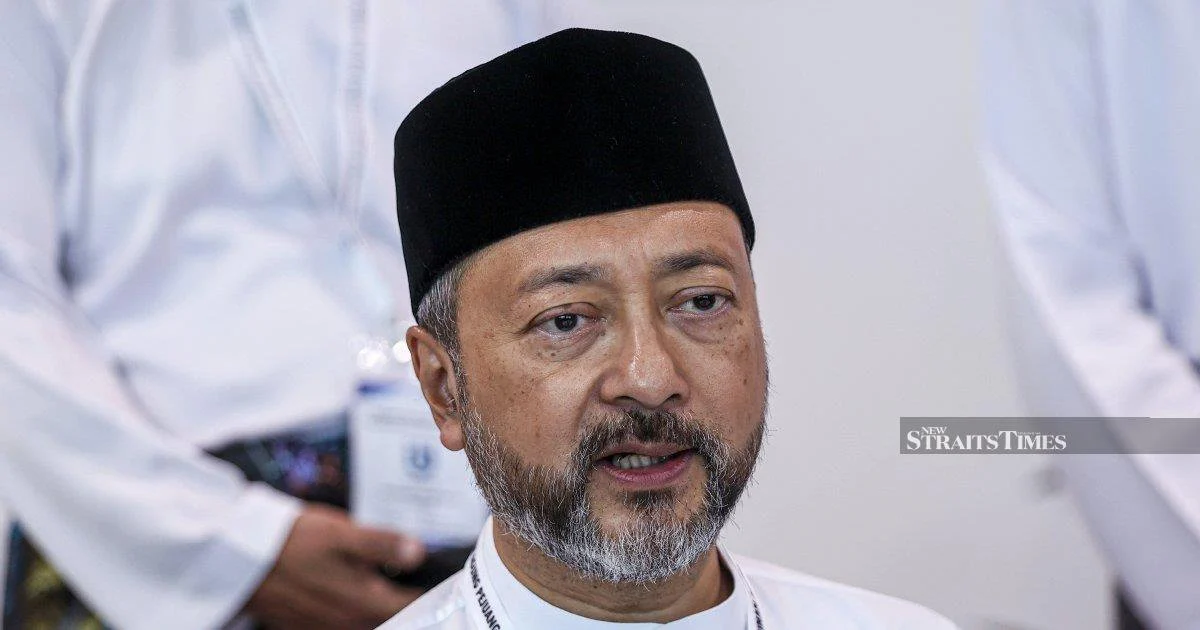
Parti Pejuang Tanah Air (Pejuang) has formally entered the Perikatan Nasional (PN) coalition, a development that party president Datuk Seri Mukhriz Mahathir characterises as marking the beginning of a broader consolidation of political forces aimed at addressing pressing national problems. The move represents a significant shift in Malaysia's fractious political landscape, where parliamentary arithmetic and factional alliances have long shaped governance and policy priorities.
Mukhriz's framing of the merger as a unity initiative underscores a strategic narrative that opposition and alternative coalitions are pivoting toward. Rather than viewing the arrangement as a transactional or tactical manoeuvre, he emphasises that Pejuang's entry into PN reflects a genuine commitment to forge stronger coordination among parties that share common ground on governance and economic concerns. This messaging is particularly important given the scepticism with which Malaysian voters often view political realignments that appear driven by short-term opportunism or personal advancement.
The backdrop to Pejuang's decision involves complex calculations within Malaysia's political ecosystem. Since Pejuang's formation, the party has occupied an ambiguous space—formed by Mukhriz Mahathir and other figures who had previously been close to the Pakatan Harapan coalition, yet increasingly at odds with major components of that alliance. The party's relatively modest parliamentary representation meant that finding a coalition partner was both a practical and strategic necessity, particularly as the government consolidated its legislative majority in recent years.
Perikatan Nasional, which already comprises Perikatan Keadilan Rakyat (PKR), Bersatu, and previously included other minor parties, now gains the symbolic and numerical addition of Pejuang's members. Though neither party commands massive blocs of elected representatives, the merger signals an attempt to consolidate the fragmented opposition and present a more unified front against the ruling administration. In Malaysian politics, where government formation often hinges on fluid coalitions and defections, such realignments can have outsized significance regardless of absolute seat counts.
The broader context of this union involves mounting pressures on Malaysia's economy, security apparatus, and social fabric. Cost of living concerns have intensified across the nation, with particular strain evident among middle and working-class households. Educational institutions face resource constraints, healthcare systems struggle with capacity, and infrastructure development has become a focal point of public debate. By invoking these challenges, Mukhriz appears to position Pejuang's entry into PN as a response to genuine grievances rather than merely another shuffle of political furniture.
For Malaysian observers, the sustainability of such coalitions remains an open question. History demonstrates that opposition alliances have frequently fractured when personal rivalries, ideological disputes, or defections destabilise formal arrangements. The alliance structures that brought about Pakatan Harapan's 2018 electoral victory eventually crumbled due to internal contradictions and leadership conflicts. Understanding whether PN's expanded composition can maintain cohesion requires examining the underlying interests and constraints binding its members together.
Regionally, Malaysia's internal political dynamics carry implications beyond its borders. Southeast Asian neighbours monitor Malaysian developments given the nation's economic weight, its role in regional institutions, and its significance as a Muslim-majority democracy navigating complex governance challenges. A more unified opposition coalition could alter policy directions on matters ranging from foreign relations to regional trade arrangements, depending on which forces eventually hold executive authority.
The timing of Pejuang's move also deserves consideration. Coming at a period when the current government faces mixed approval ratings and faces elections within a foreseeable timeframe, the realignment appears designed to strengthen PN's competitive positioning. Electoral calendars in Malaysia's states and at the federal level create windows during which coalitions attempt to solidify support and present themselves as credible alternatives to voters fatigued by incumbent governance.
Mukhriz's emphasis on addressing national challenges rather than on personal or factional ambitions represents a rhetorical strategy intended to elevate the discourse surrounding the merger. By connecting Pejuang's entry to substantive governance concerns—rather than depicting it as a pragmatic alliance born of parliamentary weakness—he attempts to frame the development as principled rather than opportunistic. Whether this narrative resonates with the Malaysian public will likely depend on the coalition's demonstrated ability to convert rhetoric into coherent policy positions and effective parliamentary performance.
Looking forward, the success of PN's expanded coalition will be tested not merely by internal stability but by whether it can articulate a compelling alternative vision to current governance approaches. Malaysian voters increasingly demand specificity regarding economic management, public service reform, and social policy. Generic appeals to unity and national challenges, while politically necessary, must eventually crystallise into detailed programmes capable of distinguishing a coalition from its rivals and demonstrating genuine capacity to govern differently.