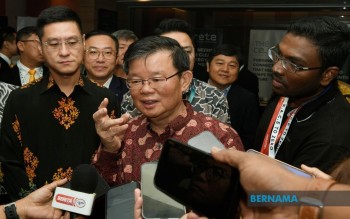
Penang's push to position itself as a hub for sustainable manufacturing has gained momentum, with 25 companies now seeking access to a dedicated climate financing scheme designed to help industrial operators meet increasingly stringent global environmental standards. Five of these applicants have already entered the formal assessment stage for the Penang Climate Mitigation Fund (CM Fund), signalling strong business interest in transitioning to cleaner operations, Chief Minister Chow Kon Yeow announced in George Town on August 13.
The CM Fund represents a strategic partnership between the Penang state government and Alliance Bank, combining environmental ambition with commercial pragmatism. The initiative launched under the Penang Green Industry Programme (PGIP) operates with an immediate capital base of RM20 million—split between RM5 million from state coffers and RM15 million from the banking partner—though authorities are confident this could expand to RM100 million as the programme matures and demonstrates results. This tiered funding structure reflects confidence among financial institutions that climate-adapted manufacturing represents a sound investment opportunity.
For manufacturing firms keen to upgrade their operations, the fund offers tangible incentives that go beyond simple loans. Eligible small and medium enterprises and mid-tier companies can secure preferential financing packages reaching RM500,000, bundled with grant components, sustainability assessments conducted by specialists, and ongoing advisory support. This comprehensive approach acknowledges that many manufacturers require not just capital but also technical guidance to identify where efficiency gains and emissions reductions are most feasible within their specific production environments.
Chow's emphasis during the R.A.C.E To Zero: Penang Edition event highlighted a fundamental shift reshaping how multinational corporations evaluate their supply chain partners. Gone are the days when location decisions hinged solely on labour costs, available talent, transport infrastructure, and logistics efficiency. Increasingly, multinational buyers are scrutinising where their suppliers source electricity and whether those suppliers can demonstrate declining carbon footprints. This environmental due diligence has evolved from a peripheral concern into a core competitiveness factor that directly influences procurement decisions and market access.
The urgency becomes apparent when examining Penang's economic weight within Malaysia's electrical and electronics sector. Last year, the state generated RM436.9 billion in E&E exports, constituting approximately 68 per cent of the nation's total E&E shipments abroad. This concentration means Penang's manufacturing ecosystem wields outsized influence over Malaysia's positioning in global value chains. As major international tech companies and their component suppliers face sharper carbon reduction targets from investors and consumers, Penang's industrial base must adapt or risk losing contracts to competitors operating in jurisdictions with greener energy profiles.
The state government has articulated an ambitious but achievable energy roadmap through the Penang Energy Framework, unveiled in November 2024. The framework commits to reducing energy intensity across the state by 25 per cent and ensuring that renewable energy sources account for at least 10 per cent of the state's total energy mix by 2030. These targets require coordinated action across multiple fronts, from industrial facilities to residential properties and public infrastructure, demonstrating that sustainable energy transitions demand whole-of-society engagement rather than piecemeal interventions.
Given Penang's geographic constraints—the state comprises limited land area spread across the island and mainland districts—authorities have pragmatically zeroed in on rooftop solar installations as the most viable immediate pathway for expanding renewable capacity. New commercial and industrial building guidelines now mandate that proprietors utilise at least 75 per cent of available roof area for photovoltaic panels or meet equivalent renewable energy sourcing requirements calibrated to their Tenaga Nasional Berhad tariff classifications. This regulatory approach transforms what was once an optional sustainability gesture into a standardised operational expectation.
Beyond rooftop solar, Penang is investigating complementary renewable technologies suited to its landscape. The Penang Water Supply Corporation (PBAPP) is conducting feasibility studies on floating solar arrays positioned across its reservoir systems, a solution that minimises land use while leveraging existing water infrastructure. Simultaneously, the Silicon Island development initiative is integrating renewable energy generation from inception, including a dedicated Green Tech Park powered substantially by solar generation. This integrated approach ensures that expansion projects embed sustainability rather than retrofitting it later at higher cost.
Energy efficiency constitutes the second pillar of Penang's transition strategy, working in tandem with renewable energy expansion. The state is establishing standardised energy intensity metrics that enable manufacturers to measure their consumption systematically, benchmark performance against peer operations, and identify concrete improvement opportunities. State government buildings and local authority facilities are undergoing comprehensive audits to assess their renewable energy potential and efficiency deficiencies. For new government and municipal properties, the target mandates that renewable sources supply at least five per cent of total energy consumption, with existing facilities encouraged to pursue equivalent targets progressively.
Penang's policy architecture also reflects careful alignment with federal priorities, particularly the National Energy Efficiency Action Plan (NEEAP) 2.0, which targets an 11.6 per cent reduction in national energy demand by 2035. By coordinating state-level initiatives with national frameworks, Penang avoids creating policy fragmentation that could confuse investors or create conflicting compliance requirements. This vertical policy coherence strengthens the credibility of both federal and state commitments while creating a unified, predictable regulatory environment that multinational corporations value when making long-term manufacturing and supply chain decisions.
The climate mitigation fund represents more than environmental stewardship; it functions as economic insurance for Penang's industrial future. As supply chain standards tighten globally and buyers increasingly factor carbon emissions into procurement decisions, manufacturers operating in Penang must innovate rapidly. By providing accessible financing, technical expertise, and grant support, the state removes financial barriers that might otherwise force smaller or mid-tier producers to lag behind competitors in sustainability transitions. For Malaysia's broader manufacturing aspirations, Penang's approach offers a template for how states can actively facilitate industrial adaptation to global environmental norms rather than passively watching capable producers migrate to greener jurisdictions.

