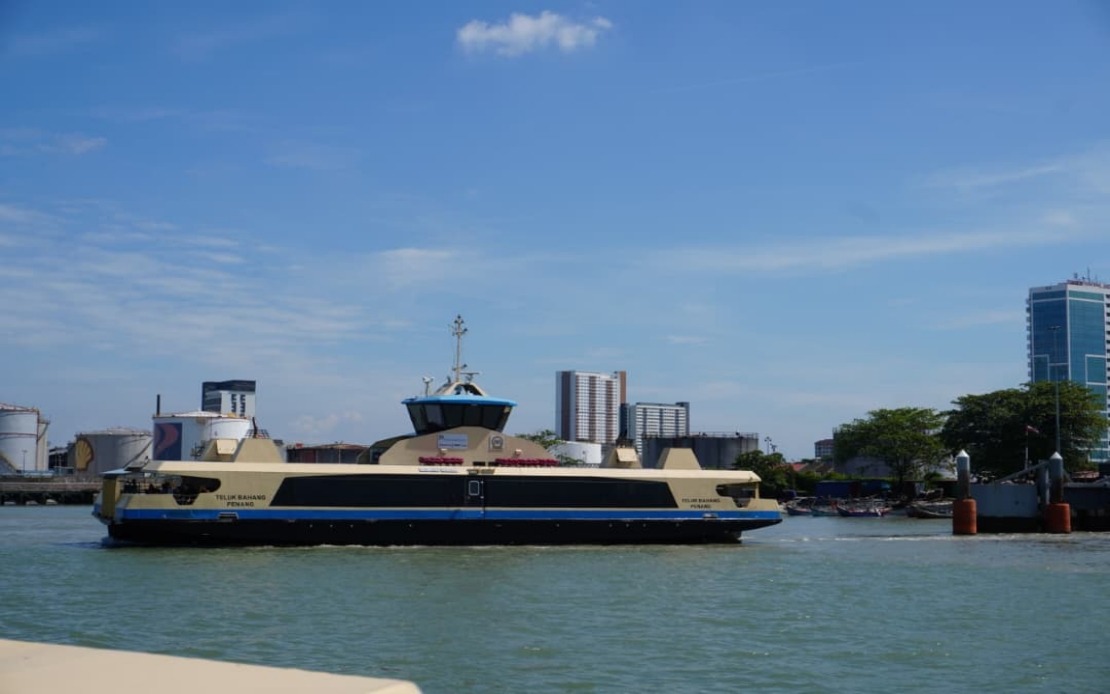
Penang's ferry operators are marking the nation's 69th National Day with a gesture aimed at easing commuter costs and encouraging public transport usage across the Penang Strait. On August 31, the Penang Port Commission (SPPP) and its operating partner Penang Port Sdn Bhd (PPSB) will waive all fares for Malaysian passengers travelling between the state's two main ferry terminals, eliminating what would normally be a RM2 charge for pedestrians and RM2.50 for motorcycle riders on one-way crossings.
The free service initiative represents a coordinated effort between two state entities to boost accessibility during a key national milestone. Datuk Yeoh Soon Hin, chairman of SPPP, framed the move as reflecting the organizations' commitment to making movement across the Penang Strait more affordable and practical for residents and visitors alike. Rather than introducing special schedules or reduced frequencies, the ferry terminals—Sultan Abdul Halim Terminal (PSAH) in Seberang Perai and Raja Tun Uda Terminal (PRTU) in George Town—will maintain their standard operational timetables throughout the day, ensuring predictable service for those planning their travel.
Beyond the headline benefit of free passage, the initiative speaks to a broader strategy concerning Penang's transport infrastructure and congestion management. Traffic congestion across the bridges and causeways connecting Penang Island to the mainland remains a persistent challenge, particularly during peak periods and holidays. By removing financial barriers to ferry usage on this specific occasion, authorities hope to demonstrate the convenience and efficiency of this mode of transport, potentially influencing longer-term commuting patterns. The ferry system, when utilized effectively, offers a viable alternative that bypasses road congestion entirely and supports the state's sustainability objectives through reduced vehicular emissions.
Historical data from SPPP provides insight into potential usage patterns. During last year's National Day celebrations, the ferry service transported 9,185 pedestrians and 1,874 motorcycle riders across the strait during two-way journeys. These figures suggest that eliminating fares could attract additional passengers, particularly those who might otherwise drive across the bridges or delay their travel. Families and individuals making one-off trips specifically for National Day festivities represent a captive audience likely to benefit from and appreciate fare-free access.
The financial savings for regular commuters merit particular attention. An individual making daily round-trip journeys during August 31 would save RM4 on pedestrian fares or RM5 on motorcycle fares. While a single day's concession may seem modest, it serves as both a tangible benefit and a symbolic gesture of goodwill during national celebrations. For lower-income residents of Penang who rely on ferries as part of their daily transport mix, such savings accumulate meaningfully across the year.
Simultaneously, SPPP is leveraging this occasion to mark its own 70th anniversary, rebranding the milestone as a Platinum Jubilee year. This dual celebration—national independence and institutional longevity—allows the port commission to reinforce its role as a public service provider. The anniversary dimension adds narrative weight to the free ferry initiative, positioning it not merely as a one-off promotional gesture but as part of a broader organizational commitment to serving Penang residents.
Complementing the ferry fare waiver is a partnership initiative with the Penang Ferry Museum designed to attract families and younger residents. The 'Kids Go Free Merdeka Special' campaign extends free museum admission to Malaysian children aged 12 and below from August 29 through August 31. This extended-window approach ensures families can visit outside peak hours on National Day itself, spreading visitor demand across three days. For parents seeking educational and cultural activities during the holiday period, the free admission removes a financial consideration and encourages engagement with local maritime heritage.
The Penang Ferry Museum, housed within the ferry infrastructure itself, offers visitors context about the historical significance of cross-strait transport and the evolution of ferry services in Malaysia. By making it freely accessible to children during the National Day period, authorities create an opportunity for younger generations to develop familiarity with public transport infrastructure and appreciate the systems that facilitate regional connectivity. Such early engagement can influence lifelong transport choices and civic awareness.
From a broader Southeast Asian perspective, Penang's approach reflects regional trends toward public transport promotion and congestion management in rapidly urbanizing areas. Cities across the region grapple with similar challenges: rising vehicle ownership, bridge and causeway bottlenecks, and the need to shift commuters toward sustainable options. Periodic fare waivers, when coupled with infrastructure investment and marketing, serve as proven mechanisms for increasing public transport adoption and demonstrating governmental responsiveness to citizen welfare during festive occasions.
The timing of the free ferry service during National Day celebrations carries symbolic significance. Merdeka Day represents shared national identity and collective pride, themes naturally aligned with public goods and shared services. By making ferry transit free on this occasion, SPPP and PPSB position their services as part of the national fabric—essential infrastructure that unites communities across the strait. This framing reinforces the legitimacy of public investment in ferry operations and grounds the service's existence in broader social purposes rather than purely commercial considerations.
Looking forward, the response to the August 31 initiative will likely inform future decisions regarding ferry service promotion and pricing strategy. If ridership numbers exceed expectations or if positive feedback emerges from users, authorities may consider additional free-fare occasions or pilot programmes exploring price elasticity and demand. Conversely, if uptake remains modest, it suggests that factors beyond fares—such as journey time, terminal convenience, or route coverage—constrain ferry utilization.
The initiative also highlights the state government's capacity to coordinate multiple agencies toward aligned objectives. SPPP and PPSB working in concert with the Penang Ferry Museum demonstrates administrative coherence and strategic planning. In a regional context where public sector coordination sometimes proves challenging, Penang's approach offers a modest but tangible example of effective institutional partnership. Such coordination, scaled across multiple transport modes and service providers, could form the basis for more comprehensive public transit strategies addressing the state's medium and long-term urban mobility needs.
Ultimately, the free ferry service on August 31 represents both a practical gesture and a strategic communication tool. It acknowledges the daily financial pressures on transport users while simultaneously projecting the ferry system as a modern, accessible, and valued component of Penang's transport network. Whether this one-day initiative catalyzes sustained behaviour change or serves primarily as a festive goodwill gesture remains to be seen, but it demonstrates that even established public services remain capable of innovation and responsiveness to citizen interests.

