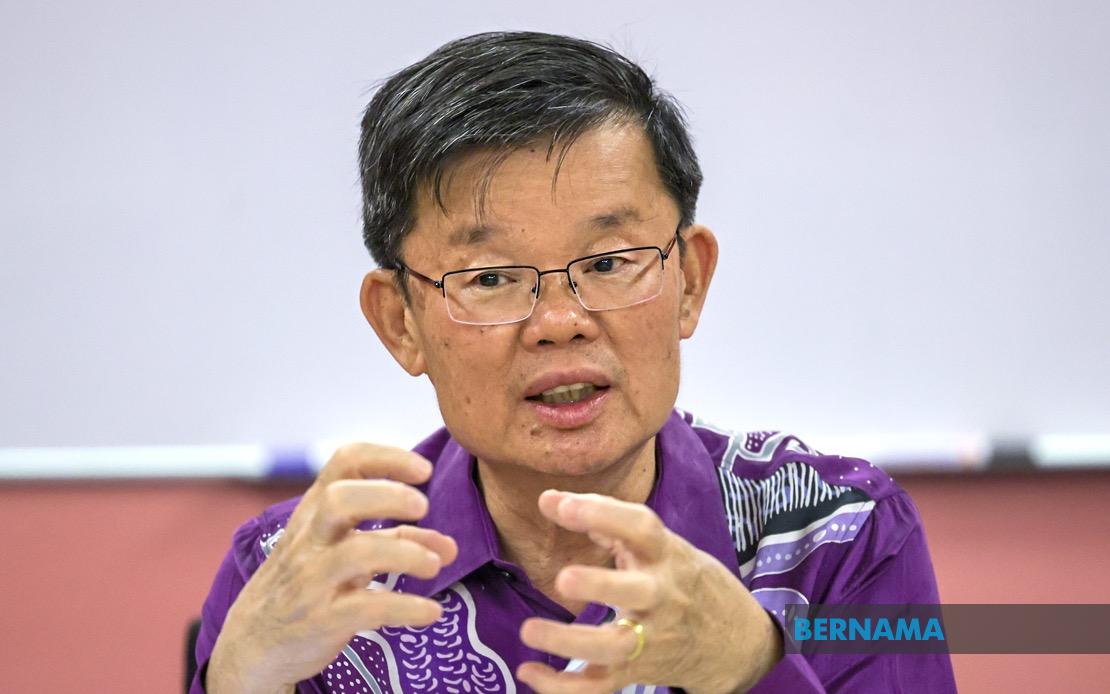
Penang Pakatan Harapan has reaffirmed its commitment to retaining the Barisan Nasional state executive councillor as part of the ruling administration until Malaysia's next general election. The decision, announced by Penang PH chairman and Chief Minister Chow Kon Yeow in George Town, reflects the coalition's intention to maintain the political arrangement that has governed the state since the 2023 elections. The move underscores how power-sharing agreements, once forged during electoral contests, continue to shape governance structures and coalition dynamics long after ballots are cast.
Chow disclosed that Penang PH reached this conclusion during a party meeting held at Wisma DAP, with the decision firmly rooted in the electoral pact that PH and BN negotiated and implemented during the 2023 state election campaign. The retention of the BN representative in the exco reflects a pragmatic approach to coalition management, where both partners see mutual benefit in maintaining the status quo rather than risking instability by seeking to consolidate full control. This arrangement sits within the broader framework of the Unity Government concept, which has become increasingly significant in Malaysian politics following the 2023 general election.
The BN executive councillor in question is Datuk Rashidi Zinol, who chairs the State Rural Development, Agrotechnology and Food Security Committee. His continued presence in the Penang administration provides the Barisan coalition with tangible representation in decision-making processes, even though BN secured only two of the 40 state seats contested in 2023. This disproportionate influence compared to electoral performance demonstrates how coalition bargaining can yield political returns beyond raw vote counts, a consideration that likely influences BN's continued participation in the Penang government.
Chow articulated that the coalition believes sufficient scope remains to deepen cooperation among its member parties and to accelerate the reform programmes that constitute the ideological foundation of Pakatan Harapan's political project. This language suggests that internal coalition discussions have not revealed fundamental fractures that would necessitate severing the BN arrangement. Instead, the framing presents the partnership as a vehicle for advancing shared objectives, even if component parties may disagree on specific issues or future electoral strategy.
The Penang PH leadership has also absorbed lessons from recent state election outcomes, particularly the results in Johor and Negeri Sembilan. These contests, which occurred after the 2023 general election, demonstrated how voter sentiments can shift and how previous electoral patterns do not guarantee future performance. Chow indicated that every state seat would undergo rigorous analysis from multiple angles as Penang prepares for the sixteenth general election, signalling that the coalition is undertaking systematic assessment of its competitive position rather than assuming incumbency advantage will automatically translate to victory.
A significant element of Penang PH's strategy involves strengthening its political messaging by candidly acknowledging weaknesses rather than projecting false confidence. This approach reflects understanding that voter perception is shaped not merely by factual achievements but by how parties present and defend their record. The coalition plans to leverage digital platforms more effectively and to intensify engagement with the Undi18 voter demographic, recognising that younger, first-time voters represent both an opportunity and a demographic cohort with distinct political values and communication preferences.
Despite expressing confidence in the coalition's foundational strength—citing administrative stability, integrity, economic growth initiatives, investment attraction and job creation efforts—Chow warned against complacency. He acknowledged the sobering reality that public opinion frequently shifts more rapidly than the actual facts underlying governance performance. This candid assessment reflects an awareness that even strong administrative records do not immunise governments against electoral punishment if voters perceive poor communication, disconnection from public concerns, or misalignment with emerging priorities.
The 2023 Penang election result that established the current arrangement saw PH and BN together secure 29 of 40 seats. Within that coalition, DAP won all 19 seats it contested, positioning it as the dominant force; PKR claimed seven seats, Amanah one, and BN the two that now entitle it to exco representation. This composition means that PH controls substantially more legislative weight, yet has chosen to implement power-sharing provisions rather than govern unilaterally—a decision rooted in the broader Unity Government framework adopted nationwide after the 2023 general election.
For Malaysian observers and regional analysts, Penang's decision holds broader significance for understanding how the Unity Government model functions at state level. The arrangement demonstrates that power-sharing commitments made during election campaigns are being honoured and institutionalised, even when the governing coalition possesses sufficient parliamentary numbers to govern alone. This suggests a genuine shift in Malaysian political culture toward coalition governance, though questions persist about whether such arrangements represent stable new equilibriums or temporary expedients pending more decisive electoral verdicts.
The timing of this announcement, made well ahead of the next general election, signals that Penang PH views the BN partnership as sufficiently stable to be declared openly rather than negotiated quietly. This public endorsement of the power-sharing arrangement may also serve a strategic purpose, potentially dampening speculation about coalition instability or impending reconfiguration that might undermine investor confidence or administrative efficiency. By settling the question of BN's continued participation now, Chow and his party signal to the electorate, business community and federal government that Penang's administration can focus on policy implementation rather than managing coalition tensions.
The decision also has implications for BN's positioning nationally. Maintaining representation in the Penang exco provides Barisan with a visible presence in one of Malaysia's major economic hubs, offering the coalition credibility in its claims to remain a relevant political force despite electoral setbacks. For BN, this continued role in state administration provides organisational infrastructure and media platforms that would be unavailable if the party operated purely in opposition. Conversely, for PH, retaining BN as a junior partner may complicate messaging about reform and represent compromise that some within the coalition view less favourably than exclusive governance.
Looking forward, the Penang situation encapsulates broader questions about Malaysia's evolving political landscape. Whether Unity Government arrangements prove durable or fragmentary will significantly influence the tenor of the sixteenth general election and the shape of government formation that follows it. The Penang decision suggests that at least some PH-led state administrations have concluded that coalition governance, despite its complications, offers advantages in stability and cross-partisan legitimacy that warrant continuation. As Malaysia moves toward its next electoral contest, observers should monitor whether other PH-governed states reach similar conclusions or whether Penang's approach proves distinctive to local circumstances.

