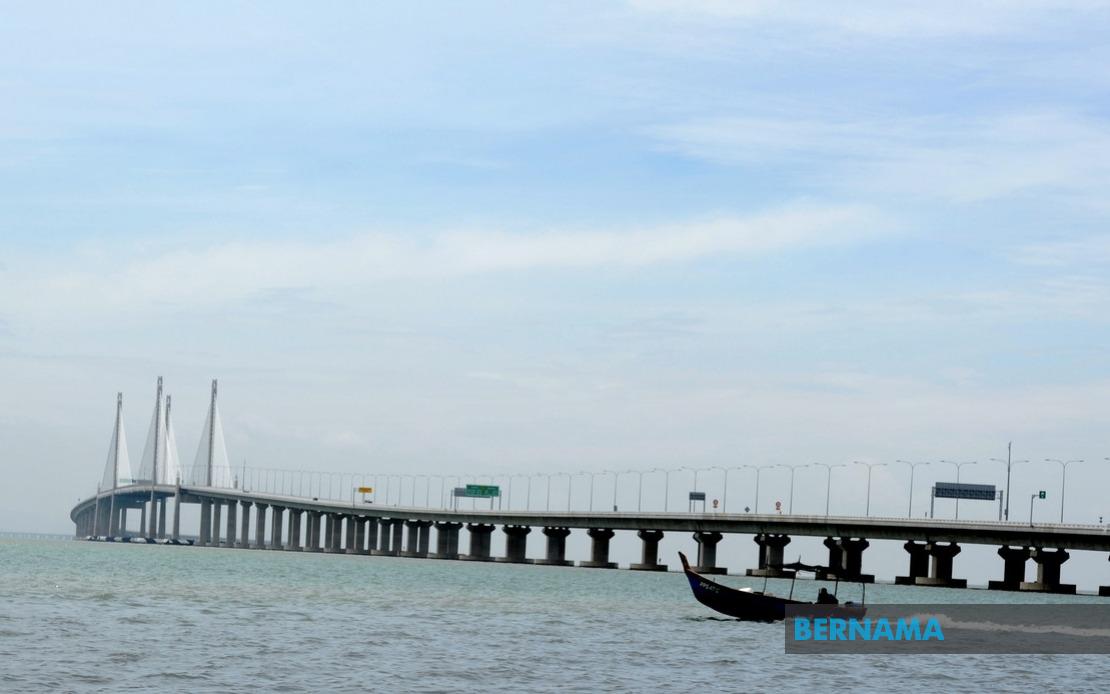
The Sultan Abdul Halim Mu'adzam Shah Bridge, commonly known as Penang's Second Bridge, will experience a significant traffic disruption next month when its eastbound carriageway closes to facilitate a major sporting event. Jambatan Kedua Sdn Bhd announced that the crossing from Batu Maung towards Batu Kawan will be inaccessible to traffic from 8 pm on August 8 through 3 am on August 9, marking a seven-hour window during which vehicle movement in that direction will be completely halted.
The temporary closure exists to enable the staging of the Cultural Night Run 2026, an event that organisers expect will draw significant participation and require exclusive use of the bridge infrastructure. This type of intervention reflects how major public gatherings in the northern states increasingly depend on strategic road closures to ensure participant safety and logistical efficiency. The bridge, which has become a critical artery connecting Penang island to the mainland, occasionally accepts such interruptions when cultural and sporting initiatives of sufficient regional importance demand it.
Motorists planning their journeys during this window will find that the westbound direction—from Batu Kawan back towards Batu Maung—remains fully functional, meaning those returning from the mainland to the island will encounter no impediments. Additionally, alternative access routes maintain their normal operations, including pathways from the Bandar Cassia area and connections from the Batu Kawan Industrial Park that feed onto the North-South Expressway network. This layered approach to maintaining peripheral accessibility helps distribute congestion and prevents the closure from creating a complete bottleneck.
For those requiring movement between Penang island and the mainland during the affected hours, the operator has explicitly recommended utilising the Penang Bridge as a substitute crossing. This suggestion acknowledges the reality that the older, first bridge remains the primary alternative when the Second Bridge experiences disruptions. Traffic diversion to the Penang Bridge, while potentially adding journey time, represents a manageable solution for most travellers, particularly since the closure occurs during overnight hours when general traffic volumes decline from daytime peaks.
The seven-hour window was deliberately chosen to minimise disruption to regular commuting patterns. By scheduling the event during late-night and early-morning hours, organisers and authorities have attempted to balance the requirements of the Cultural Night Run with the operational demands of one of Penang's most heavily utilised transport corridors. This timing strategy has become standard practice for major events throughout Malaysia, where infrastructure closures are coordinated around predicted traffic patterns to reduce economic and logistical impact.
The announcement from Jambatan Kedua Sdn Bhd emphasised the importance of highway user compliance with traffic management directives throughout the closure period. Properly marked signage and official instructions will guide motorists towards alternative routes and highlight the temporary nature of the restrictions. This emphasis on compliance reflects broader concerns about ensuring safety during high-participation events, where large numbers of runners or walkers utilise road infrastructure normally reserved for vehicular traffic.
For the broader Penang business and logistics community, such periodic disruptions represent a necessary trade-off between community development and continuous transport accessibility. The Batu Kawan area, which includes the industrial park and emerging commercial zones, depends heavily on reliable bridge connectivity for supply chains and worker movements. The overnight timing helps mitigate potential impacts on manufacturing operations and distribution networks that might otherwise face significant complications from daytime closures.
The Cultural Night Run 2026 positioning as worthy of infrastructure investment reflects the regional importance Penang places on establishing itself as a hub for diverse sporting and cultural events. Beyond the immediate inconvenience, such initiatives contribute to the state's reputation as an active, vibrant destination that can host events attracting participants across national and potentially international boundaries. The community engagement generated by such events often translates into broader economic benefits through tourism and promotional value.
Mototorists should note the specific timing carefully when planning journeys on August 8 and 9, ensuring they either complete crossings well before 8 pm or postpone until after 3 am the following morning. Those with flexible schedules might also consider the preceding day or proceeding day entirely to avoid any potential secondary congestion effects. Real-time traffic updates from local authorities and the bridge operator should be monitored for any changes to the announced schedule, though such modifications remain relatively uncommon once closures are formally declared.
The closure exemplifies how Malaysian infrastructure increasingly accommodates multiple uses beyond traditional transportation purposes. Modern bridge management now routinely incorporates special event access as part of long-term operational planning, recognising that community activities contribute to quality of life and economic development alongside conventional traffic functions. As Penang continues expanding its event calendar, similar temporary disruptions will likely become more frequent, requiring commuters to remain informed and adaptive in their travel behaviour.

