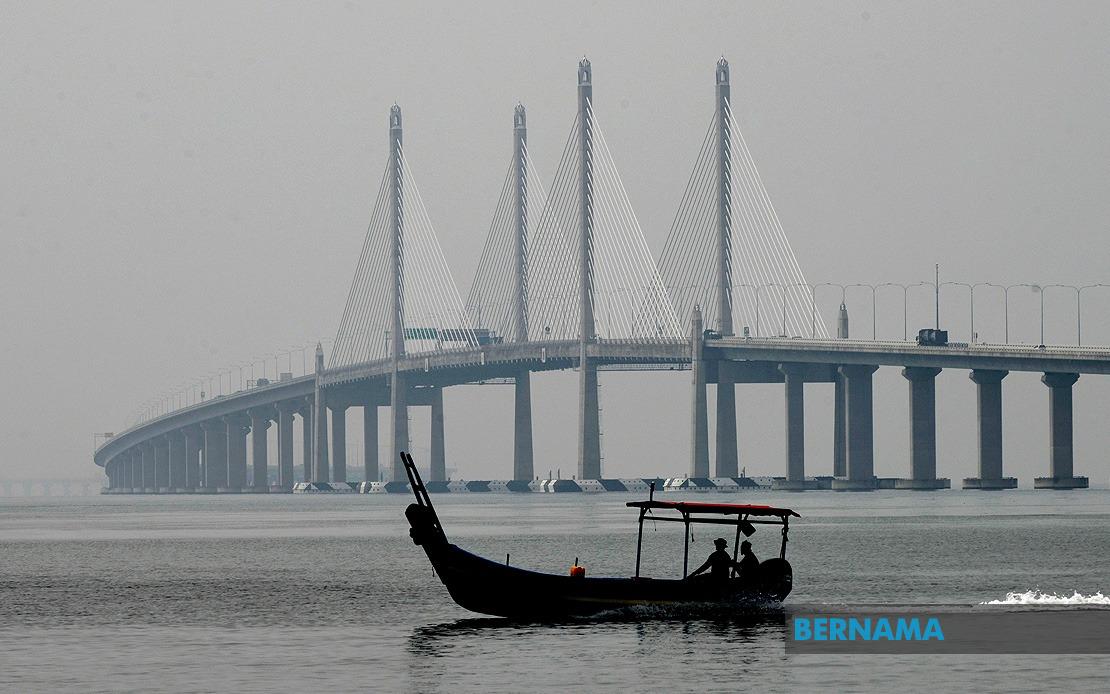
Penang's government will convene meetings with relevant stakeholders next week to explore a more nuanced approach to the fishing ban enforced under the Penang Bridge and the Sultan Abdul Halim Mu'adzam Shah Bridge, aiming to address mounting concerns from the maritime industry while maintaining critical safety and security protocols. Datuk Rashidi Zinol, chairman of the Penang Rural Development, Agro-technology and Food Security and Entrepreneurship Committee, acknowledged that the restrictions have created genuine hardship within fishing and tourism sectors, prompting a reassessment of how the ban is being administered.
The fishing prohibition was originally implemented because both bridge corridors have been formally gazetted as restricted areas and prohibited places under the Protected Areas and Protected Places Act 1959, with both structures designated as National Key Points requiring heightened security measures. This legal framework reflects legitimate national security concerns around critical infrastructure, particularly given Malaysia's strategic maritime location and the importance of these bridges to regional connectivity. Yet the blanket enforcement has generated significant friction with boat operators who argue that the regulations, while justified in principle, have been applied without sufficient consideration for the economic realities of those dependent on fishing activities in these waters.
Fishing boat and tourist boat operators have raised formal concerns about the direct revenue impact of the ban, pointing out that restricted access to traditional fishing grounds under both bridges has substantially reduced catch volumes and diminished demand for maritime services. The constraint on fishing operations translates into lower utilisation of boats, fewer trips, and reduced income for captains and crew members whose livelihoods depend on predictable seasonal fishing patterns. Tourism boat operators face parallel difficulties, as the restrictions limit the experiences they can offer visitors interested in observing local fishing practices or accessing certain scenic areas, ultimately affecting their competitive positioning and customer satisfaction.
The economic ripple effects extend far beyond the immediate boat-operating community. Rashidi's assessment highlights how supply chain businesses reliant on fishing activity have similarly suffered, including equipment and tackle suppliers, ice manufacturers, food processing operations, and numerous small retail enterprises that depend on the regular flow of fish through local markets. This interconnection illustrates how restrictions on a single economic activity can destabilise an entire ecosystem of dependent businesses, many of which are family-run operations with limited capacity to absorb sudden revenue losses or adapt to alternative income streams.
The challenge facing Penang administrators is fundamentally one of policy design—how to maintain the security integrity of critical national infrastructure while acknowledging legitimate economic hardships experienced by communities whose activities predate security designations. A purely inflexible approach risks creating resentment, pushing economic activity into less-regulated areas, or forcing people out of traditional occupations without viable alternatives. Conversely, relaxing restrictions without proper safeguards could compromise the security objectives that justified the designation in the first place.
Rashidi's stated commitment to a "balanced approach" suggests Penang officials recognise the need for graduated solutions rather than binary choices. This could encompass several possibilities, from designated fishing windows with heightened monitoring, designated zones within the restricted areas, expedited permit systems for established operators, or enhanced communication protocols between maritime authorities and boat operators. The most viable solutions will likely require coordination with federal agencies responsible for security and infrastructure protection, as local authorities cannot unilaterally override national key point designations.
The timing of this reassessment is significant for Malaysia's broader development agenda. With growing emphasis on blue economy initiatives and maritime sector development throughout Southeast Asia, Penang has positioned itself as a hub for fishing-related tourism and sustainable marine resource management. A solution that demonstrates how security needs and economic development can coexist would send positive signals to investors and communities considering maritime ventures in the state. Conversely, persistent economic restrictions without transparent dialogue and problem-solving could undermine confidence in government responsiveness to legitimate stakeholder concerns.
For Malaysian policymakers more broadly, the Penang case exemplifies tensions inherent in modern governance—the necessity of protecting critical infrastructure against genuine security threats must be balanced against the practical needs of citizens whose economic activities intersect with protected zones. This tension appears across multiple sectors and jurisdictions, from port security to airport operations to power generation facilities. Developing principled frameworks for managing these tensions, rather than applying one-size-fits-all prohibitions, represents an important governance challenge.
The upcoming stakeholder consultations will be crucial in determining whether Penang can establish a workable framework. Success will depend on several factors: genuine engagement with boat operators' concerns rather than dismissive bureaucratic processes, willingness to explore creative alternatives beyond outright prohibition, coordination with relevant federal security agencies, and transparent communication about what flexibility exists within national security requirements. Failure to find compromise could leave underlying tensions unresolved, potentially creating long-term grievances that undermine community trust in government decision-making processes.
As Penang moves forward with these discussions, the state has an opportunity to model how communities can participate meaningfully in policy implementation affecting their livelihoods. The outcome will likely influence how other Malaysian jurisdictions address similar conflicts between security imperatives and economic needs, making this resolution a matter of broader governance significance for the region.

