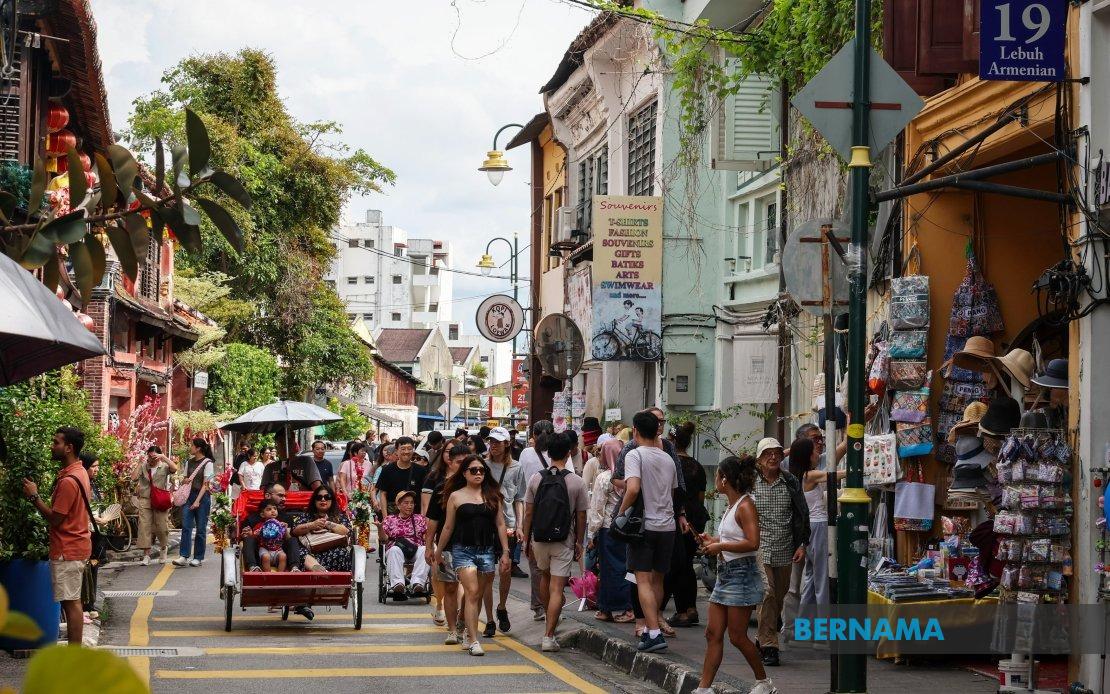
Penang's state government has committed to a comprehensive structural safety review of all heritage buildings throughout the state following a dangerous collapse incident on Armenian Street in George Town yesterday that left two Sri Lankan tourists injured. The incident, which saw wooden beams and concrete debris fall from a heritage shophouse onto pedestrians below, has triggered urgent discussions about balancing conservation with public protection across one of Malaysia's most significant heritage zones.
State Local Government and Town and Country Planning Committee chairman Jason H'ng Mooi Lye outlined plans for the government to work alongside the National Heritage Department to engage an independent engineer. This specialist will conduct a thorough study identifying heritage structures that are currently unsafe or face imminent risk of structural failure. The findings will provide the basis for a targeted intervention programme across the state, ensuring that buildings are prioritised for remedial work based on the severity of their condition and potential risk to public safety.
Following completion of the engineering study, the Penang Island City Council (MBPP) is expected to issue formal notices to owners of heritage buildings deemed to require immediate attention. These notices would compel property owners to undertake necessary restoration and stabilisation work to bring their buildings into a safe and secure state. This regulatory approach reflects the state's determination to enforce compliance while working within the heritage conservation framework that has defined George Town's status as a UNESCO World Heritage Site since 2008.
The incident itself involved significant injury to the two tourists, identified as Mohamad Ammtar, 66, and Fatimah, 55, both from Sri Lanka. Preliminary structural inspections determined that termite infestation had severely compromised the integrity of the wooden structural elements supporting the upper portion of the building, ultimately leading to failure of critical bearing members. Both victims received emergency treatment at the scene before being transported to Penang Hospital for more comprehensive medical evaluation and care.
Updates on the victims' conditions suggest mixed outcomes from the incident. The male victim, Mohamad Ammtar, was discharged from hospital following successful treatment, indicating recovery from his injuries sustained in the collapse. His wife, Fatimah, has required more extended hospitalisation and will undergo detailed computerised tomography scanning to fully assess the nature and extent of her injuries, suggesting she sustained more serious trauma in the incident.
H'ng's remarks emphasised a critical tension in heritage preservation work: the imperative to maintain authentic historical character and original structural systems must never take precedence over the immediate safety needs of residents and visitors. This philosophy suggests that Penang will pursue a pragmatic approach to conservation, one that recognises when original materials have reached the end of their functional life and require replacement with modern alternatives that can provide equivalent aesthetic results while offering substantially better durability and safety performance.
The potential use of alternative materials in restoration work represents a significant departure from strict heritage conservation orthodoxy, which traditionally mandates the use of original materials and construction techniques. H'ng's suggestion that more durable and safer materials could be considered when original substances like timber have deteriorated suggests the state is prepared to adopt a more flexible conservation philosophy, particularly where public safety concerns are paramount. This approach would need careful consultation with heritage experts to ensure that replacements maintain visual and structural authenticity while genuinely improving long-term building safety.
State Tourism and Creative Economy Committee chairman Wong Hon Wai has simultaneously ordered George Town World Heritage Incorporated and the Penang Island City Council to issue formal advisories to all heritage building owners across the state. These communications are intended to alert property owners to the ongoing assessment programme and to encourage proactive measures to identify and address potential structural vulnerabilities before they lead to dangerous failures. The advisory process represents an important communication channel between government and the private property owners who maintain much of George Town's heritage building stock.
The Armenian Street incident carries particular significance for Malaysia's heritage sector at a time when several historic cities are grappling with the challenge of maintaining aging building stock in densely populated urban environments. The collapse demonstrates how natural degradation processes such as termite damage can rapidly compromise structural safety, particularly in tropical climates where biological attack on timber is endemic. For other Malaysian heritage cities such as Malacca and Kuala Lumpur, which contain substantial numbers of similarly aged buildings, the incident serves as a cautionary reminder of the risks associated with deferred maintenance and the costs of allowing structural problems to accumulate unchecked.
The state's commitment to engage an independent engineer rather than relying solely on in-house government expertise reflects good governance practice and strengthens public confidence that assessments will be objective and technically rigorous. Independent engineering oversight also provides clearer liability clarity should future incidents occur, as third-party findings can more easily withstand legal or technical challenges from affected property owners. This approach also aligns with international best practice in heritage conservation, where independent technical review is considered essential for maintaining standards and accountability.
For the tourism sector in Penang, where heritage tourism forms a crucial component of the visitor experience and economic activity, the incident raises concerns about destination safety perception. However, the government's swift and comprehensive response should help reassure international visitors that authorities take safety seriously and are implementing systematic measures to prevent recurrence. Clear communication about the assessment programme and resulting remediation efforts will be important in maintaining visitor confidence while work proceeds.

