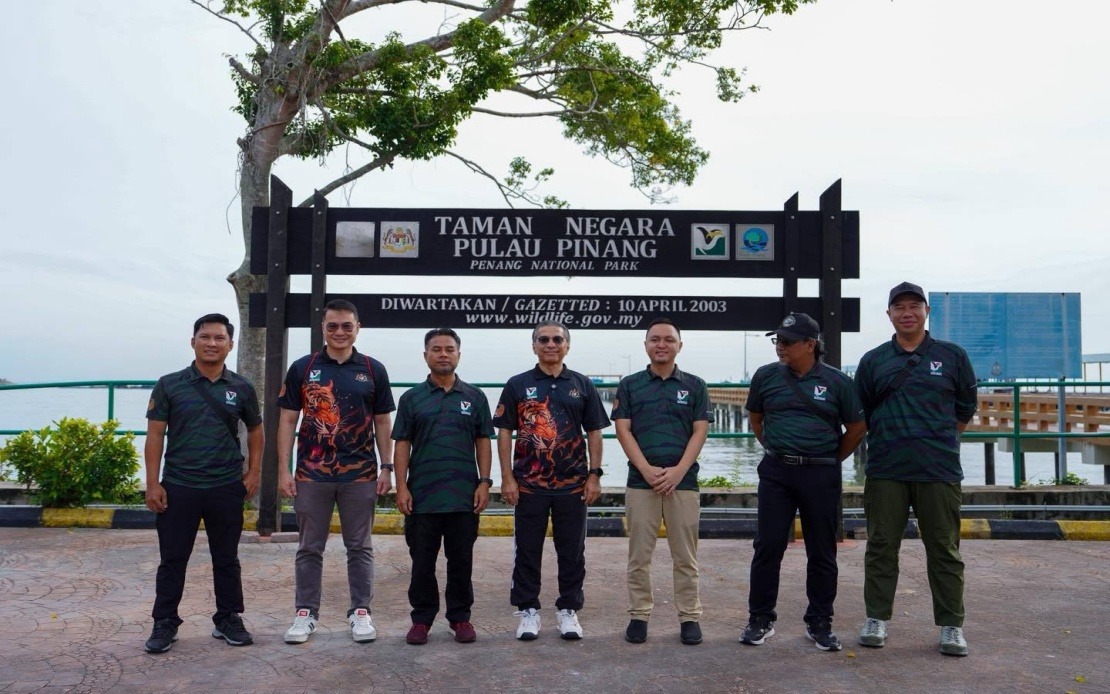
Penang National Park stands as a microcosm of Malaysia's biodiversity challenges and opportunities, presenting a compelling case study for how state authorities are attempting to balance environmental protection with public involvement. During an inspection of the Teluk Bahang reserve this week, Deputy Minister Syed Ibrahim Syed Noh articulated a vision for conservation that extends beyond the traditional model of cordoning off nature and hoping communities respect the boundaries. Instead, he underscored the imperative for stakeholders to embed local populations within the preservation narrative, recognising that long-term ecosystem health depends on securing genuine buy-in from those living nearest to these areas.
The park's ecological richness presents both its greatest asset and most pressing vulnerability. Within its boundaries exist forests, coastal zones, wildlife sanctuaries and the Meromictic Lake—a rare body of water stratified by salinity that showcases the intricate layering of natural systems. This diversity demands sophisticated management approaches that account for the interconnectedness of habitats; disruption in one zone inevitably reverberates through others. Syed Ibrahim's field itinerary deliberately traversed these varied environments, signalling that effective stewardship requires understanding each component's relationship to the whole, rather than treating conservation as isolated interventions at disparate locations.
The turtle conservation initiatives at Kerachut Beach represent perhaps the most visible and emotionally resonant element of Penang National Park's protection regime. The Turtle Conservation Centre, operated by the Department of Fisheries Malaysia, focuses particularly on Green Turtles and Olive Ridley Turtles, species whose dwindling populations reflect broader marine ecosystem degradation across Southeast Asia. These animals are not merely charismatic megafauna for tourism branding; their presence and reproductive success serve as indicators of coastal health. The centre's work demonstrates how targeted species protection can function as an entry point for educating communities about broader environmental principles and interdependencies.
Educational programming has emerged as central to Penang's conservation strategy, reflecting a recognition that awareness must precede behavioural change. The Entopia Penang facility exemplifies this approach by offering interactive experiences designed to demystify biodiversity and transform abstract conservation concepts into tangible understanding. For younger Malaysians particularly, such direct engagement with nature can prove transformative, establishing lifelong environmental consciousness during formative years. Syed Ibrahim stressed this dimension explicitly, indicating that the Ministry views education not as peripheral to conservation but as foundational to its long-term success.
Ecotourism occupies an increasingly central—and contentious—role in conservation discourse across Southeast Asia, and Penang's experience reflects this tension. Responsibly managed visitor engagement can generate economic incentives for preservation by demonstrating that living ecosystems possess greater financial value than converted land. When communities witness tangible economic benefits flowing from conservation, support becomes less dependent on moral persuasion alone. Yet ecotourism simultaneously poses risks: increased foot traffic, habitat disturbance, and inadequate waste management can compromise the very environments tourism claims to celebrate. Syed Ibrahim's framing suggests the Ministry understands this double-edged character, advocating for ecotourism as a bridge only when properly regulated and monitored.
The Deputy Minister's emphasis on intergenerational responsibility carries particular weight in the Malaysian context, where rapid development pressures and competing economic claims frequently override environmental considerations. His statement that preserved natural treasures constitute a legacy for future generations reframes conservation from a present-day luxury into a moral obligation transcending current political cycles. This framing becomes especially important given Malaysia's position as a megadiverse nation whose biological wealth increasingly attracts international attention and resources; how authorities manage this heritage will influence regional conservation standards and Malaysia's environmental reputation globally.
The involvement of multiple agencies—PERHILITAN, the Department of Fisheries, and private operators like Entopia—reveals the institutional complexity required for effective conservation in contemporary Malaysia. Siloed management approaches invariably prove inadequate when ecosystems respect no bureaucratic boundaries. Syed Ibrahim's field visit implicitly acknowledged this reality by engaging with diverse stakeholders and examining their specific contributions. Coordination challenges inevitably arise when agencies operate under different mandates and funding mechanisms, yet the Penang model suggests these tensions can be managed through high-level political attention and clearly articulated conservation objectives.
The Meromictic Lake deserves particular attention as a flagship ecosystem feature because its existence challenges conventional assumptions about Malaysian geography and ecology. Meromictic conditions—permanent stratification preventing full water column mixing—are relatively rare globally and require precise environmental conditions. The lake's preservation speaks to Penang's potential as a research destination and educational resource, yet such unique features also attract scientific interest that must be carefully managed to prevent degradation through excessive sampling or disturbance. Its prominence in Syed Ibrahim's itinerary suggests the Ministry recognises its symbolic and substantive value as a focal point for demonstrating ecosystem complexity.
Community engagement in conservation contexts often remains rhetorical rather than substantive in Malaysian governance, with decision-making remaining centralised and participatory mechanisms limited to consultation rather than genuine power-sharing. The Penang National Park experience will ultimately demonstrate whether the articulated commitment to community involvement translates into meaningful institutional change. This requires mechanisms for local residents to influence management decisions, mechanisms for benefit-sharing from ecotourism revenues, and capacity-building that enables communities to assume greater stewardship roles. The rhetoric is encouraging, but implementation fidelity will determine whether this represents genuine paradigm shift or merely contemporary greenwashing.
For Malaysian environmental advocates and international observers, Penang's conservation trajectory carries implications extending far beyond the state's boundaries. As a relatively wealthy and politically stable jurisdiction, Penang possesses resources and governance capacity that exceed many regional counterparts, yet it simultaneously confronts development pressures and population densities that constrain conservation options. How successfully authorities balance these competing demands will influence whether Malaysia's larger biodiversity conservation ambitions—articulated in international commitments and national policy—achieve meaningful realisation or remain aspirational statements unmatched by institutional capacity and political will.
The Deputy Minister's assertion that effective conservation must be grounded in ground-level realities suggests official recognition that top-down approaches have frequently foundered in the Malaysian context. This represents meaningful evolution from earlier conservation eras dominated by fortress-style protected areas that excluded local communities and generated resentment. Whether this rhetorical shift produces substantive institutional change—manifested through budget allocations, staffing decisions, and governance structures—will determine whether Penang National Park becomes a replicable model for Malaysian conservation or another well-intentioned initiative constrained by implementation gaps and competing priorities.

