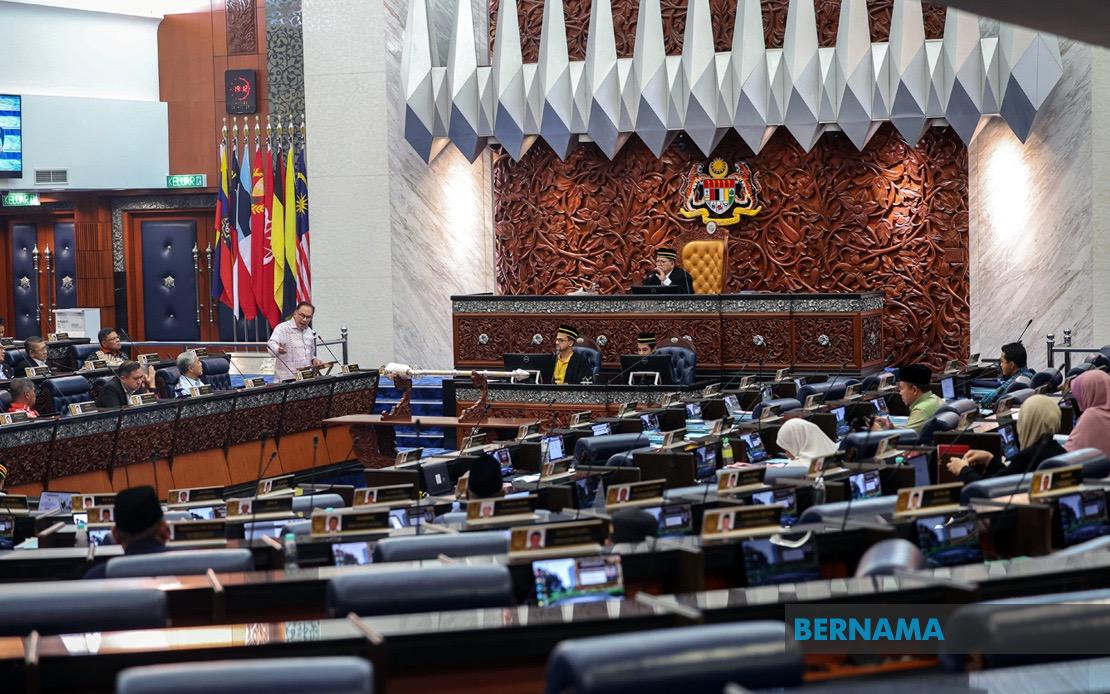
Malaysia's People's Income Initiative (IPR) has delivered tangible results for nearly 7,800 households since its launch almost three years ago, the Economy Ministry confirmed in a parliamentary response, underscoring the government's commitment to complementing existing poverty reduction schemes with targeted income-support interventions.
The initiative was designed to tackle interconnected challenges facing vulnerable Malaysians—food insecurity, unemployment, and the mounting pressure of rising living costs. By funnelling support directly to households rather than relying solely on traditional welfare mechanisms, the programme represents a shift toward more dynamic, employment-centred poverty alleviation. The 7,787 beneficiaries registered so far demonstrate that the scheme has gained traction among its intended audience, though the numbers also suggest considerable untapped potential within Malaysia's lower-income populations.
A particularly encouraging development is the ministry's disclosure that numerous participants have successfully crossed the RM2,000 monthly income threshold, a figure that, while modest by Malaysian standards, represents a meaningful escape from severe poverty for families previously trapped in subsistence-level earning patterns. This outcome indicates that the programme's focus on creating genuine employment pathways rather than merely providing cash transfers is generating sustainable income improvements. For households previously dependent on irregular informal work or government assistance, achieving consistent monthly earnings above RM2,000 can be transformative, enabling investment in children's education and improved living conditions.
The programme's multifaceted approach addresses not merely immediate financial hardship but also underlying structural vulnerabilities. By simultaneously tackling food security—a persistent concern in pockets of Malaysian society despite the nation's overall development—while generating employment opportunities and reducing cost-of-living pressures, the IPR recognises that poverty is rarely a single-dimensional problem. This holistic strategy aligns with contemporary development thinking that emphasises dignity and economic participation over passive welfare dependency.
The ministry's response came in answer to a parliamentary question from Wan Ahmad Fayhsal Wan Ahmad Kamal, the representative for Machang under Perikatan Nasional, who sought comprehensive data on the programme's effectiveness and its integration with Malaysia's digital infrastructure initiatives. The query reflects broader parliamentary scrutiny of government programmes and their measurable outcomes—a positive sign that legislators across party lines are demanding evidence-based reporting on social interventions.
Beyond the IPR's direct results, the Economy Ministry revealed parallel progress in implementing the Main Data Base (PADU), the centralised platform designed to consolidate citizen information for more efficient policy targeting. So far, 204 government agencies have established continuous data-sharing arrangements with PADU, representing substantial integration across Malaysia's bureaucratic landscape. This infrastructure development is crucial for ensuring that future iterations of income-support programmes can identify and reach eligible households more accurately, reducing administrative delays and leakage to ineligible recipients.
As of June 2026, the ministry noted that twenty-seven data-sharing applications from various government departments have received formal approval for programme and policy implementation. These approved applications span initiatives intended to enhance public service delivery quality, advance digital innovation in government administration, and support academic and governmental research into poverty dynamics. The gradual expansion of PADU's operational footprint suggests that Malaysia is building institutional capacity for smarter, data-driven social policy—a capability that will become increasingly vital as the nation confronts demographic and economic shifts.
For Malaysian policymakers, the IPR's performance validates the investment in complementary poverty-reduction approaches. While the 7,787 households represent a successful cohort, the broader challenge remains substantial. Malaysia's official poverty rate, while declining, still encompasses hundreds of thousands of households, particularly in rural areas and among urban informal-sector workers. The IPR's demonstrated ability to lift families above RM2,000 monthly income suggests the model's scalability, though expansion would require proportional increases in budget allocation and administrative capacity.
The initiative also carries important implications for the region. Other Southeast Asian nations grappling with similar poverty challenges—rising inequality, precarious employment, and inadequate social protection—have shown interest in Malaysian social policy developments. If the IPR continues to deliver measurable improvements and maintains political support across electoral cycles, it could serve as a reference point for peer nations designing their own targeted income programmes.
Looking forward, the integration of PADU with poverty-alleviation initiatives suggests Malaysia is positioning itself to deploy increasingly sophisticated, digitally-enabled social protection. The move toward data-driven beneficiary identification, while raising legitimate privacy concerns that require vigilant oversight, promises more efficient targeting of scarce resources. The 7,787 households currently benefitting from the IPR represent proof of concept; the challenge ahead lies in scaling this model while maintaining programme quality and ensuring that expanded reach does not dilute the individual-level support that has generated RM2,000-plus monthly incomes for participants.
Parliamentary accountability mechanisms, as evidenced by Wan Ahmad Fayhsal's question, remain essential for ensuring that such programmes remain responsive to actual beneficiary needs rather than becoming unwieldy bureaucratic instruments divorced from lived realities. Sustained monitoring, periodic impact evaluations, and openness to programme refinement will determine whether the IPR evolves into a cornerstone of Malaysia's poverty-reduction architecture or remains a promising but limited intervention.

