The Perak state government has committed RM500,000 towards reconstructing a concrete bridge in Kampung Ulu Geruntum, Gopeng, marking the next phase of recovery efforts after the settlement's primary crossing failed catastrophically during a water surge on June 19. The allocation represents the state's long-term infrastructure response to a disaster that left dozens of residents stranded and forced evacuation of more than 50 people to temporary shelters.
Sandrea Ng Shy Ching, the state Housing and Local Government Committee chairman and Teja assemblyman, announced the funding commitment while acknowledging the coordinated response of multiple agencies and personnel engaged in rescue and recovery operations. She indicated that construction work will proceed once the immediate remedial efforts currently underway have been completed, underscoring the sequential approach being taken to restore normalcy to the isolated community.
Beyond the principal bridge allocation, the state government has mobilized additional resources to address immediate community needs. Sandrea approved RM45,000 from her constituency development fund specifically to repair water pipelines and restore supply services that were disrupted by the catastrophic water event. This dual-track financial approach demonstrates recognition that infrastructure recovery extends beyond road access to encompassing essential utilities that residents depend upon daily.
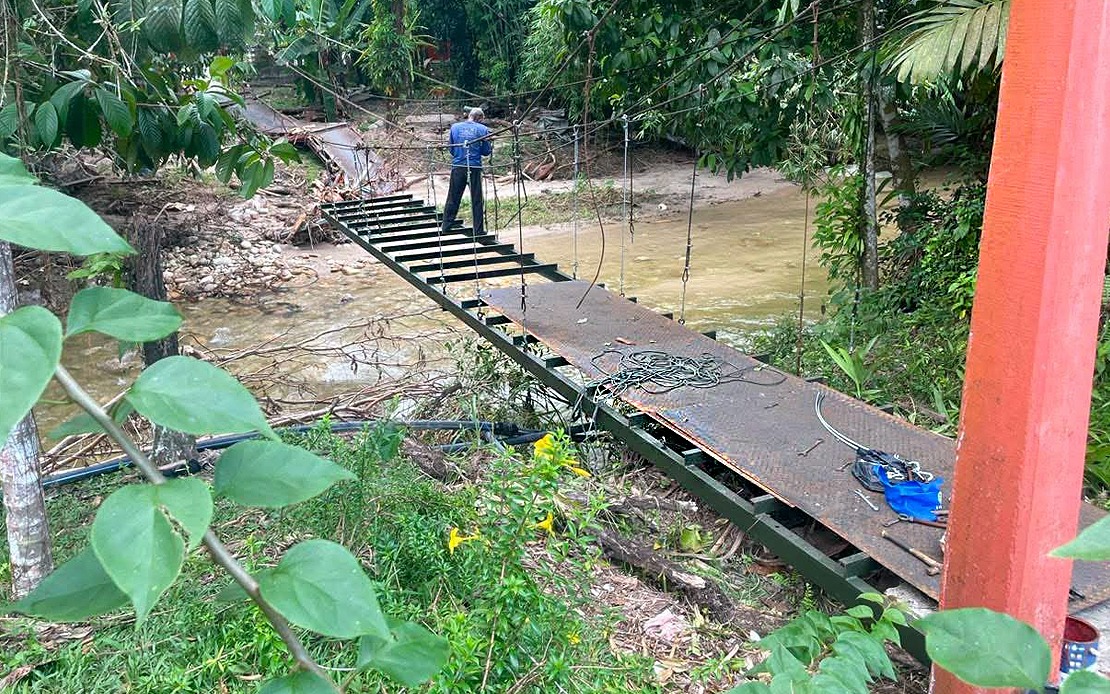
An interim solution has already been set in motion to reconnect the cut-off village before the permanent structure becomes operational. The state government approved an emergency allocation of RM150,000 for construction of a temporary suspension bridge, which was under active development and scheduled for completion by mid-July. This phased approach ensures residents regain basic access and mobility within weeks rather than waiting for the lengthier concrete bridge construction process to unfold.
The June 19 incident demonstrated the vulnerability of rural communities to sudden hydrological events. Strong currents from the water surge delivered destructive force sufficient to completely destroy the main bridge linking Kampung Ulu Geruntum to surrounding areas. The collapse severed the sole vehicle access route, rendering the settlement effectively isolated and prompting authorities to establish an emergency relief centre at Gopeng Town Hall where evacuated residents sheltered.
For Malaysian and Southeast Asian contexts, the Perak response illustrates the infrastructure challenges facing smaller communities in regions prone to seasonal flooding and water events. Many rural settlements across the region depend on single-route access, creating vulnerability when that crossing fails. The allocation of RM500,000 for permanent reconstruction signals Perak's commitment to building resilience into critical infrastructure rather than accepting temporary solutions as permanent arrangements.
The timeline for construction remains contingent on completion of current remedial work, which officials expressed confidence could be accelerated. The emphasis placed by Sandrea on expediting these efforts reflects awareness that prolonged isolation imposes economic and social costs on residents, from limiting market access for agricultural products to disrupting children's school attendance and patient access to medical services in larger towns.
This incident also underscores the importance of infrastructure maintenance and flood preparedness planning in rural Perak. The destroyed bridge presumably served the community for many years before the June 19 event, raising questions about assessment protocols for critical rural infrastructure vulnerabilities. The new concrete design presumably incorporates lessons learned from the collapse, whether through elevated construction, improved drainage, or reinforced structures designed to withstand higher water flows.
The financial commitment of RM500,000, while substantial at the local level, reflects realistic budgeting for concrete bridge construction in Malaysia. Combined with the RM150,000 temporary bridge allocation and RM45,000 utility repairs, Perak has committed approximately RM695,000 to restore and reconnect Kampung Ulu Geruntum. This comprehensive approach addresses immediate access needs through the suspension bridge while building toward permanent infrastructure that should serve the community for decades.
Stakeholder coordination evident in the government response—involving state committees, constituency representatives, and multiple implementing agencies—suggests a framework that can be replicated for similar rural infrastructure emergencies across Malaysia. The acknowledgment of personnel working on recovery efforts reflects recognition that disaster response extends beyond budget allocations to operational effectiveness in execution.
For residents of Kampung Ulu Geruntum, the announcement provides concrete hope for restoration after the traumatic disruption of their settlement. The mid-July timeline for the temporary suspension bridge offers a relatively near-term pathway to reconnection, while the permanent concrete bridge project ensures long-term infrastructure stability. The parallel investment in water supply restoration indicates understanding that community recovery encompasses restoring normal daily functions beyond physical access.
The incident and response cycle will likely inform discussions within Perak and other state governments about rural infrastructure risk assessment and budgeting for contingencies. Communities served by single-route access point may warrant priority consideration in resilience planning, particularly in areas with histories of hydrological instability. The successful mobilization of resources for Kampung Ulu Geruntum demonstrates that targeted state investment can effectively address rural infrastructure gaps when political will and allocated funds align toward community restoration.

