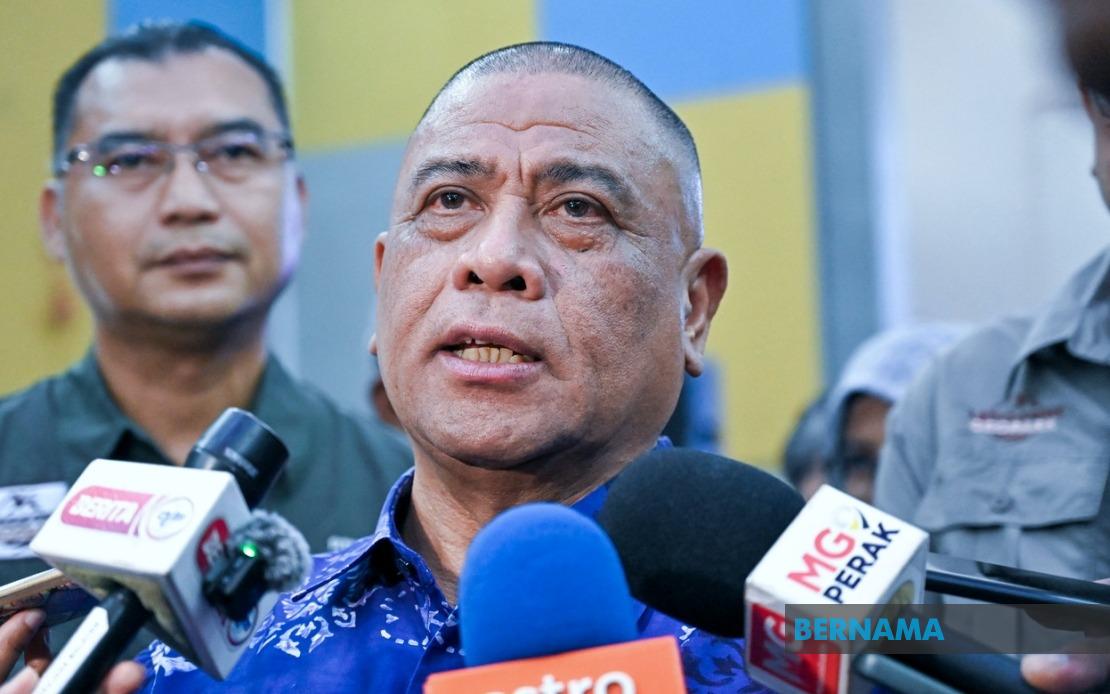
Perak's state government insists it has the situation under control regarding the proliferation of unorthodox Islamic teachings, even as authorities across Malaysia grapple with the challenge of containing such doctrines through digital channels and across international boundaries. Menteri Besar Datuk Seri Saarani Mohamad provided this assessment following briefings to the Sultan of Perak, Sultan Nazrin Shah, signalling that religious matters remain a priority for the state's leadership structure and the palace itself.
The governance framework overseeing religious orthodoxy in Perak operates through multiple layers of institutional oversight. Saarani, who chairs the State Security Committee, receives regular intelligence from the Perak Islamic Religious Department (JAIPk) and the Perak Mufti Department. This arrangement ensures the Menteri Besar maintains current awareness of emerging threats to Islamic doctrine within the state. The involvement of the Sultan's office—particularly through briefings to the Deputy Mufti Datuk Zamri Hashim and JAIPk Director Datuk Harith Fadzilah Abdul Halim—reflects the constitutional role of Perak's monarch as the supreme religious authority within the state's jurisdiction.
Investigative procedures for addressing suspected doctrinal aberrations follow established protocols before any enforcement measures are deployed. Citizens who identify teachings or practices they believe contradict mainstream Islamic principles can lodge complaints, triggering formal inquiries by JAIPk and the Mufti's office. This complaint-driven mechanism aims to distinguish between legitimate religious diversity and genuinely problematic theological positions that threaten Islamic orthodoxy. The emphasis on procedural compliance suggests authorities remain mindful of the need to avoid overreach while maintaining doctrinal boundaries.
At the federal level, the challenge of containing deviant teachings has evolved substantially in recent years. Minister in the Prime Minister's Department (Religious Affairs) Senator Datuk Zulkifli Hasan characterised the government's response as a comprehensive, inter-agency initiative orchestrated through the Department of Islamic Development Malaysia (JAKIM) and coordinated with state-level Islamic departments. This whole-of-government approach reflects recognition that religious security requires sustained coordination across jurisdictions and institutional mandates.
The transformation in how unorthodox teachings spread presents authorities with mounting operational difficulties. Where such movements once relied on clandestine physical gatherings, dissemination now occurs primarily through social media platforms and encrypted messaging applications. This shift fundamentally alters enforcement strategies, as digital communication transcends physical borders and occurs in real-time across vast audiences. Tracing the origins, financial backing, and leadership structures of online religious movements proves considerably more complex than identifying traditional cell-based organisations.
Problematically, some groups obscure heterodox teachings beneath seemingly innocuous cover activities. Self-improvement programmes, charitable initiatives, wellness therapies, and informal religious study circles provide plausible fronts for spreading unconventional doctrine. This camouflage strategy complicates the identification of truly deviant movements from legitimate but unconventional religious expression. Authorities must navigate this ambiguity carefully, distinguishing genuine threats to Islamic orthodoxy from minority theological positions that remain within acceptable bounds.
The cross-border dimension of contemporary doctrinal dissemination adds a dimension that domestic enforcement alone cannot address. International networks coordinating the spread of unorthodox teachings require intelligence-sharing, extradition arrangements, and diplomatic cooperation mechanisms that extend beyond Malaysia's borders. The federal government's emphasis on strengthening inter-agency coordination implicitly acknowledges that some of the theological material circulating within Malaysia originates from external sources and spreads through transnational digital networks.
For Malaysian readers, this situation carries implications beyond religious doctrine itself. The emergence of heterodox Islamic movements—particularly those employing digital platforms and cross-border networks—intersects with national security, social cohesion, and the institutional legitimacy of recognised religious authorities. States like Perak that successfully manage these emerging challenges strengthen public confidence in governance institutions and religious oversight bodies. Conversely, perceived failures in containing doctrinal drift can fuel public concern about institutional effectiveness and social stability.
The regulatory approach favoured by Malaysian authorities differs notably from some international models. Rather than permitting theological pluralism within Islam as some Muslim-majority democracies do, Malaysia's framework maintains that the state and palace possess authority to define and enforce Islamic orthodoxy. This centralised approach reflects Malaysia's constitutional settlement, where state sultans hold constitutional authority over Islamic matters. The effectiveness of this model increasingly depends on institutional adaptation to digital-age realities, where information control proves far more difficult than in pre-internet contexts.
For Southeast Asian observers, Perak's situation illuminates broader regional challenges. Islamic religious authorities across Muslim-majority and Muslim-minority nations confront similar pressures as digital platforms democratise access to theological discourse. The region's experience suggests that purely prohibitive enforcement approaches may prove insufficient without parallel efforts to promote mainstream Islamic teaching through digital media and engage communities proactively in counter-messaging.
Moving forward, Perak and federal authorities face the challenge of demonstrating that institutional oversight mechanisms remain credible and effective in the digital age. Public confidence in religious governance depends not merely on proclamations of control, but on tangible evidence that authorities can identify, investigate, and contain doctrinal movements that genuinely threaten Islamic orthodoxy. The coming months will test whether existing institutional arrangements can adequately respond to this evolving landscape, particularly as online dissemination techniques become increasingly sophisticated and decentralised.

