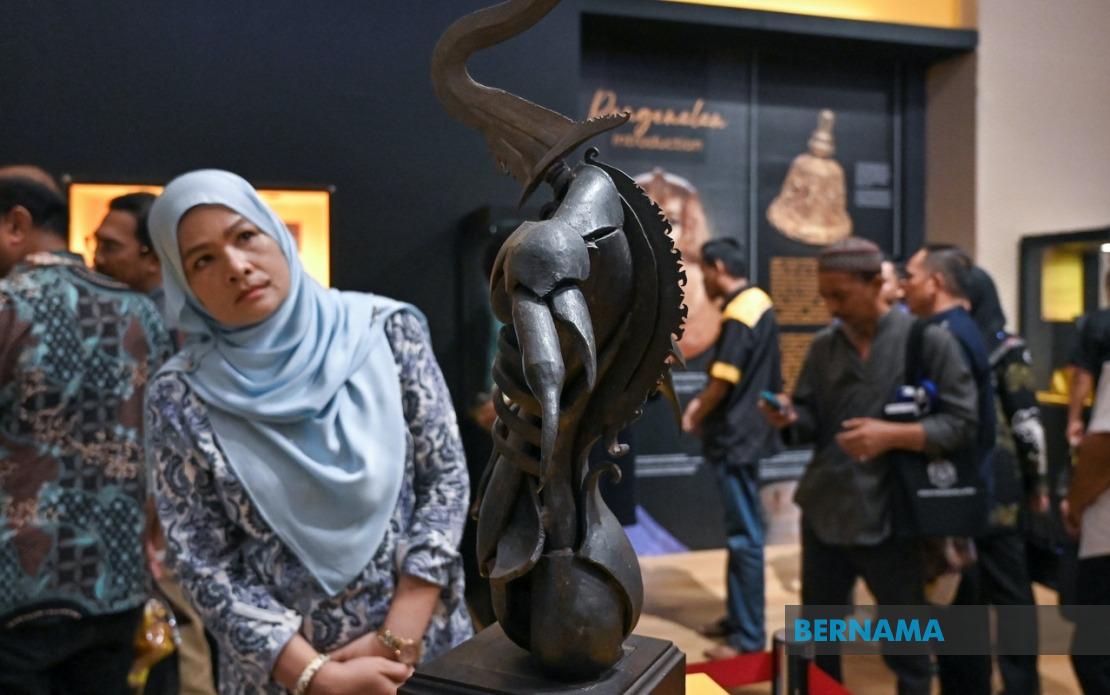
Taiping's Perak Museum has opened an ambitious exhibition that brings together 140 metal artefacts of considerable historical and cultural importance, marking a significant moment for heritage preservation in Malaysia's museum sector. The 'Magic and Metal: Spirit, Power and Art' exhibition, running through December 31, represents the first comprehensive gathering of the museum's early metal-based collections, offering visitors an opportunity to examine how metalwork functioned as a medium imbued with spiritual and symbolic meaning across the Malay world. The ambitious scope of the display underscores growing recognition among Malaysian cultural institutions of the need to contextualize material heritage within broader frameworks of belief and worldview.
Museum director Mohd Nasrulamiazam Mohd Nasir explained that the exhibition is organised around three interconnected themes: spirit, power and art. This curatorial approach moves beyond treating metal objects as purely functional items or aesthetic artefacts, instead positioning them as vessels of meaning within Malay intellectual and spiritual traditions. By foregrounding these dimensions, the museum invites visitors to understand metalwork not simply as craft but as a complex cultural practice embedded in cosmology, social hierarchy and artistic expression. This thematic structure reflects contemporary trends in museum studies that favour interpretive frameworks over purely chronological or typological arrangements.
The exhibition has benefited from strategic partnerships that have substantially expanded its scope beyond the museum's own holdings. Collections have been drawn from several notable sources, including sculpture pieces contributed by Raja Syahriman Raja Aziddin, silver ornaments provided by Yayasan Al-Amin, and a substantial weaponry collection belonging to Nor Azahar Ibrahim. These collaborations represent the kind of institutional cooperation increasingly necessary for Malaysian museums to mount exhibitions of genuine scholarly depth and public interest, particularly when resources for acquisition and conservation remain limited. The collaborative model also ensures that important private collections receive appropriate scholarly attention and public exposure.
Among the exhibition's most significant pieces are objects with documented royal provenance. A 19th-century Malay traditional weapon featuring an ornate snail-shell hilt once belonged to Sultan Abdullah Muhammad Shah II, the 26th Sultan of Perak, making it a rare artefact that directly connects material culture to the palace. Similarly, an 18th-century suit of Bugis warrior armour demonstrates the exhibition's geographical and temporal range, extending the narrative of metalwork across the broader Malay archipelago and multiple centuries. A spoon and fork set that belonged to Raja Laut Ibni Sultan Muhammad Shah, the second son of Selangor's third Sultan, illustrates how metal artefacts illuminate relationships between elite families and aesthetic consumption. These pieces serve as anchors around which broader narratives of craft, trade and cultural exchange can unfold.
The museum has set an ambitious visitor target of 100,000 for the exhibition's six-month run, a figure reflecting confidence in both the quality of the collection and public appetite for Malaysian heritage programming. As of the official opening, nearly 20,000 visitors had already been recorded, a pace that suggests the institution may well reach its goal. This level of public engagement carries implications beyond immediate attendance figures, indicating that Malaysians remain deeply interested in understanding their own material heritage when it is presented thoughtfully and accessibly. Such visitor numbers also provide museums with data to justify funding allocations and curatorial decisions to government agencies and funding bodies.
The exhibition's inauguration by Datuk Kamarul Baharin A. Kasim, director-general of the Department of Museums Malaysia, signals official recognition of the event's significance within the broader national cultural landscape. The Department of Museums Malaysia has positioned museums as institutions dedicated to strengthening roles as centres of knowledge, research and heritage preservation, moving beyond earlier conceptions of museums as primarily entertainment venues or displays of curiosities. This curatorial philosophy emphasises that exhibitions should facilitate deeper public understanding of the historical and cultural values embedded within collections, a commitment evident in the 'Magic and Metal' exhibition's interpretive approach.
For Malaysian audiences, the exhibition offers several layers of relevance. At the most immediate level, it provides an opportunity to encounter objects of genuine rarity and significance, some of which have never been publicly displayed before. At a deeper level, the exhibition invites reflection on how material culture expresses worldview and values, questions that remain pertinent as Malaysia navigates rapid modernization while seeking to maintain connection with cultural heritage. The focus on metal as a medium charged with spiritual significance also resonates with contemporary interest in pre-Islamic and early Islamic Malay intellectual traditions, a scholarly conversation that has gained prominence in recent years.
The location in Taiping, a historic town with significant colonial-era heritage, creates additional contextual resonance. Visitors engaging with 19th-century royal weaponry and ceremonial objects within Perak Museum will simultaneously be in proximity to architectural and institutional remnants of the colonial period itself, creating opportunities for visitors to reflect on how power, aesthetics and cultural identity have been negotiated across different historical moments. This geographical dimension adds a subtle layer of meaning to the exhibition's thematic focus on power and spirit.
The 'Magic and Metal: Spirit, Power and Art' exhibition represents a maturing approach to museum practice in Malaysia, one that takes seriously the intellectual content of collections and the potential for exhibitions to contribute to public understanding of Malaysian history and culture. The curatorial decision to highlight the spiritual and symbolic dimensions of metalwork rather than treating objects as isolated aesthetic achievements reflects scholarship emerging from universities and research institutions across Southeast Asia. As Malaysian museums continue to develop their capacities for sophisticated interpretation and public engagement, exhibitions of this calibre will become increasingly important as forums where citizens can encounter and contemplate their own heritage.

