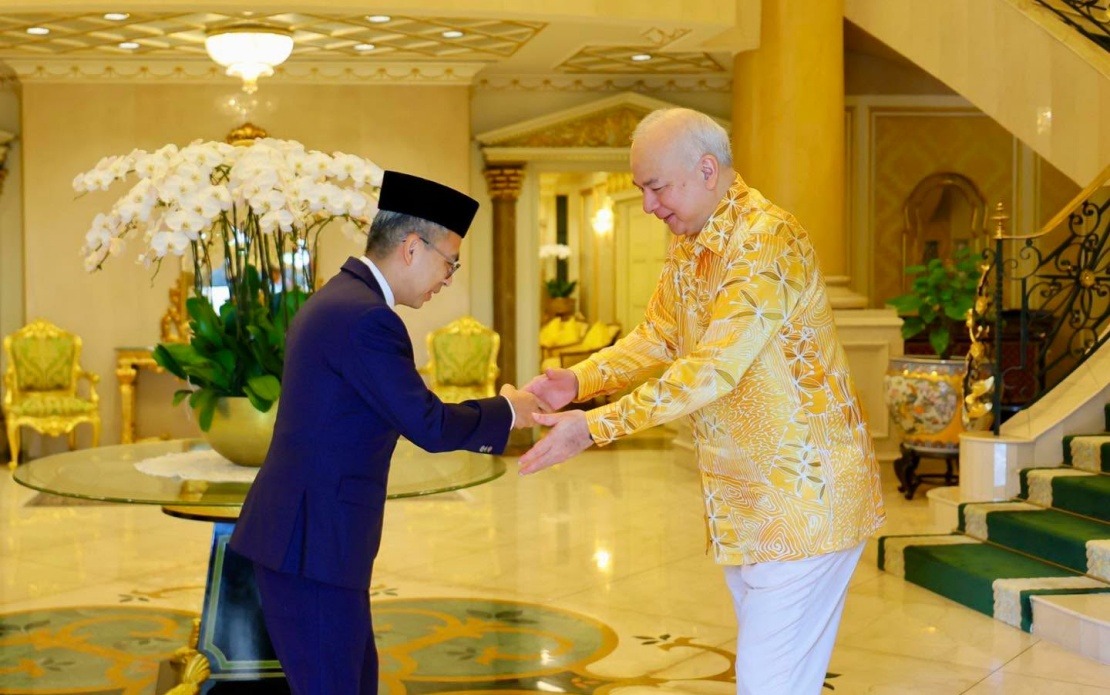
Sultan Nazrin Shah, the Ruler of Perak, received a comprehensive briefing from Communications Minister Datuk Fahmi Fadzil on the federal government's strategic agenda to enhance communication infrastructure development and broaden service accessibility throughout the state. The audience, which took place recently in Kuala Lumpur, underscored the administration's commitment to addressing connectivity challenges in one of Malaysia's largest states by land area.
During the formal meeting, Fahmi detailed ongoing initiatives aimed at fortifying telecommunications networks across Perak, a state that encompasses both developed urban centres and extensive rural areas with historically limited digital connectivity. The minister's presentation highlighted the government's recognition that bridging the digital divide remains essential for economic development and social inclusion in peripheral regions, where infrastructure gaps have long constrained business opportunities and access to essential services.
Beyond the primary focus on physical infrastructure expansion, the discussion notably extended to encompass online safety considerations—a dimension that reflects growing governmental awareness of the dual nature of digital advancement. As connectivity reaches previously underserved communities, the need to simultaneously educate users about cybersecurity threats, data protection, and responsible digital citizenship has become increasingly critical. Sultan Nazrin's attention to this aspect suggests the royal institution's understanding that technological progress must be accompanied by protective frameworks.
The briefing represents part of broader efforts by the Communications Ministry to ensure equitable distribution of digital resources across Malaysia's diverse geography. Perak, with its mix of industrial zones, agricultural areas, and emerging service sectors, stands to benefit significantly from enhanced communication networks that would facilitate business transactions, enable remote work opportunities, and improve delivery of government services. Infrastructure improvements in the state also carry implications for regional connectivity within the northern corridor of Peninsular Malaysia.
Fahmi's decision to personally conduct this briefing and subsequently share details through public communication channels demonstrates the ministry's intention to maintain transparency regarding infrastructure development plans. This approach helps build public awareness about ongoing projects while signalling that telecommunications expansion is treated as a matter of sufficient importance to warrant direct royal engagement. Such high-level attention can accelerate policy implementation and resource allocation at state levels.
The emphasis on infrastructure strengthening aligns with Malaysia's broader digital economy aspirations, particularly as the nation positions itself within competitive regional and global technology landscapes. States like Perak, which possess manufacturing capabilities and agricultural sectors, require robust digital foundations to participate effectively in supply chain networks that increasingly depend on real-time data exchange and digital transactions. Improved connectivity directly supports productivity gains and cost reductions across multiple economic sectors.
Online safety considerations, as highlighted during the audience, encompass multiple dimensions from consumer protection against fraud and cybercrime to safeguarding vulnerable populations from harmful content. Rural communities, often less digitally sophisticated due to limited prior exposure to technology, require targeted education and support systems as they gain internet access. Government initiatives must therefore pair infrastructure investment with complementary programmes addressing awareness, digital literacy, and protective mechanisms.
Perak's unique position as both an industrial and agricultural hub makes its telecommunications development particularly significant for national economic objectives. Enhanced networks would benefit manufacturing clusters that increasingly require sophisticated digital integration, while simultaneously enabling agricultural producers to access e-commerce platforms, precision farming technologies, and market information systems that improve competitiveness and profitability.
The royal institution's engagement with telecommunications policy demonstrates how state-level authorities remain integral to governance discussions despite the federal nature of infrastructure development. Sultan Nazrin's attention to these matters reflects the traditional advisory and consultative role of Malaysian rulers, who often provide valued perspective on matters affecting their subjects' welfare and economic prospects. This institutional involvement can facilitate smoother policy implementation at state administration levels.
Looking forward, the briefing appears to signal sustained governmental commitment to telecommunications modernisation as a priority development area. For Malaysian readers and businesses in Perak specifically, this suggests that infrastructure projects likely remain on track despite competing budgetary priorities. Enterprises and residents seeking to understand the timeline and scope of connectivity improvements in their areas would benefit from monitoring official announcements from the Communications Ministry and state authorities regarding specific implementation schedules and investment allocations.
%22%2F%3E%3C%2Fpattern%3E%3C%2Fdefs%3E%3Crect%20width%3D%22100%25%22%20height%3D%22100%25%22%20fill%3D%22url(%23ph5sogmg)%22%2F%3E%3Crect%20width%3D%22100%25%22%20height%3D%22100%25%22%20fill%3D%22url(%23ph5sogmp)%22%2F%3E%3Ctext%20x%3D%2250%25%22%20y%3D%2250%25%22%20text-anchor%3D%22middle%22%20dominant-baseline%3D%22central%22%20fill%3D%22rgba(255%2C255%2C255%2C0.95)%22%20font-family%3D%22Georgia%2C%20'Times%20New%20Roman'%2C%20serif%22%20font-weight%3D%22700%22%20font-size%3D%22320%22%20letter-spacing%3D%22-0.02em%22%3EUS%3C%2Ftext%3E%3C%2Fsvg%3E)
%22%2F%3E%3C%2Fpattern%3E%3C%2Fdefs%3E%3Crect%20width%3D%22100%25%22%20height%3D%22100%25%22%20fill%3D%22url(%23ph1yj1qg)%22%2F%3E%3Crect%20width%3D%22100%25%22%20height%3D%22100%25%22%20fill%3D%22url(%23ph1yj1qp)%22%2F%3E%3Ctext%20x%3D%2250%25%22%20y%3D%2250%25%22%20text-anchor%3D%22middle%22%20dominant-baseline%3D%22central%22%20fill%3D%22rgba(255%2C255%2C255%2C0.95)%22%20font-family%3D%22Georgia%2C%20'Times%20New%20Roman'%2C%20serif%22%20font-weight%3D%22700%22%20font-size%3D%22320%22%20letter-spacing%3D%22-0.02em%22%3EPAS%3C%2Ftext%3E%3C%2Fsvg%3E)
%22%2F%3E%3C%2Fpattern%3E%3C%2Fdefs%3E%3Crect%20width%3D%22100%25%22%20height%3D%22100%25%22%20fill%3D%22url(%23ph3uy27g)%22%2F%3E%3Crect%20width%3D%22100%25%22%20height%3D%22100%25%22%20fill%3D%22url(%23ph3uy27p)%22%2F%3E%3Ctext%20x%3D%2250%25%22%20y%3D%2250%25%22%20text-anchor%3D%22middle%22%20dominant-baseline%3D%22central%22%20fill%3D%22rgba(255%2C255%2C255%2C0.95)%22%20font-family%3D%22Georgia%2C%20'Times%20New%20Roman'%2C%20serif%22%20font-weight%3D%22700%22%20font-size%3D%22151%22%20letter-spacing%3D%22-0.02em%22%3EPerikatan%3C%2Ftext%3E%3C%2Fsvg%3E)