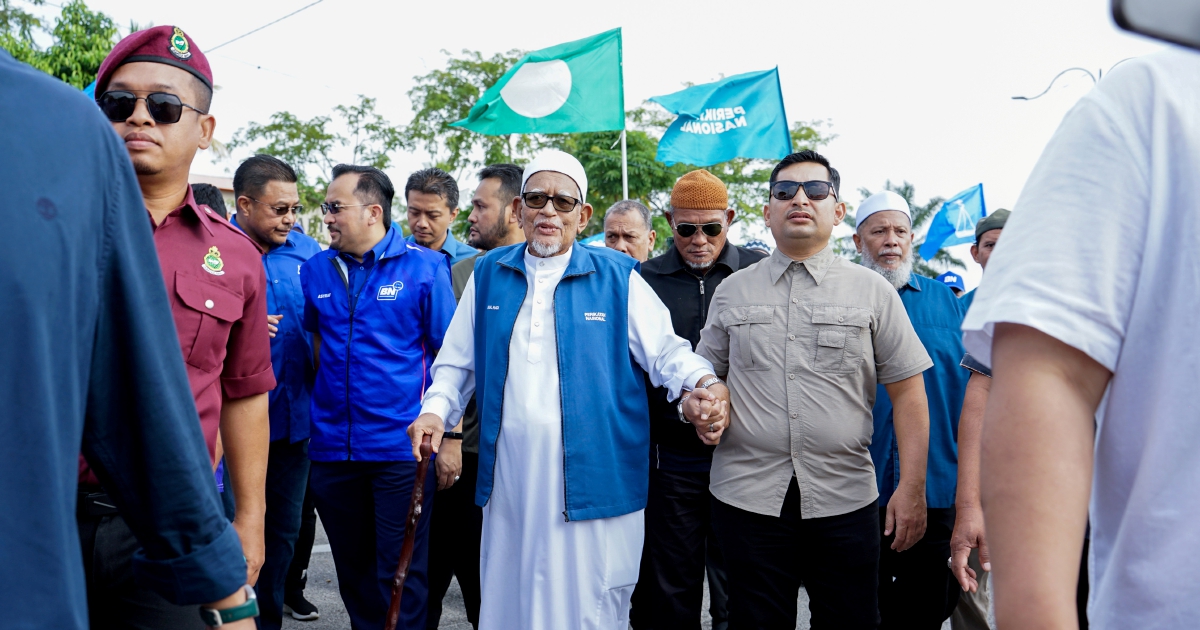
The political landscape in Melaka is moving toward clarity as coalition partners Perikatan Nasional and Barisan Nasional work through the mechanics of their electoral partnership. Speaking in Marang, Perikatan Nasional's chief steward, Tan Sri Abdul Hadi Awang, confirmed that substantive discussions are underway between the two major coalitions regarding how parliamentary and state assembly seats will be distributed in the forthcoming Melaka state election.
This seat-sharing negotiation marks a critical phase in Malaysian electoral politics, where the mechanics of coalition governance must translate into concrete arrangements on the ground. The allocation of constituencies is never a straightforward technical exercise; it represents the delicate balance of power-sharing agreements and reflects the relative strengths and electoral viability of each party within the coalition structure. For both coalitions, getting the mathematics right is essential to maximizing their combined vote share while ensuring that neither partner feels marginalized.
Melaka has emerged as a significant political battleground in recent Malaysian electoral cycles. The state's relatively compact size, with clear urban-rural demographics and a relatively fixed electorate, makes it ideal for detailed strategic planning. Unlike larger states where seat negotiations can drag on, Melaka's manageable scale typically allows for faster resolution once the major players reach consensus on fundamental principles of distribution.
For Barisan Nasional, which historically dominated Melaka politics before recent upsets, the 2023 Melaka state election saw significant shifts in voter sentiment. The coalition has been working to rebuild its position in the state, and the involvement of Perikatan Nasional as a partner rather than competitor could prove instrumental in shifting electoral outcomes. This partnership approach differs markedly from the confrontational dynamics that characterized earlier electoral cycles, suggesting a maturation of coalition-based governance in Malaysian politics.
Pesan Nasional, which includes PAS as its dominant component, has gradually expanded its footprint across Malaysian states through electoral coordination and strategic positioning. The Melaka negotiation fits within a broader pattern of Perikatan attempting to consolidate positions in states where it has built momentum. For PAS specifically, securing advantageous seat arrangements in Melaka could strengthen its hand in future state-level negotiations across the peninsula.
The absence of detailed specifics about which constituencies are under discussion suggests that the negotiations remain in an early to mid-stage of development. Coalition partners typically keep such discussions confidential until major stumbling blocks are resolved, at which point announcements become more frequent and detailed. The fact that Tan Sri Abdul Hadi chose to confirm negotiations are ongoing, rather than remaining silent or deflecting, indicates sufficient progress to justify public acknowledgment.
For Malaysian voters in Melaka, the implications of these negotiations extend beyond mere seat distribution. The composition of constituencies and which parties contest which seats directly influence voter choice and engagement. A well-coordinated coalition campaign, supported by clear seat-sharing arrangements, typically translates to more efficient resource deployment and stronger ground-level organization. Conversely, contested allocations or unhappy partners tend to dampen campaign enthusiasm and occasionally lead to electoral mishaps.
Regionally, the Melaka negotiations reflect broader Southeast Asian trends in coalition politics. Like their counterparts across the region, Malaysian political parties have increasingly recognized that electoral success requires disciplined coalition management and strategic coordination. The willingness of Perikatan Nasional and Barisan Nasional to negotiate publicly signals confidence in their partnership, which could influence how other state-level coalitions approach similar arrangements elsewhere.
Historically, Melaka's electoral contests have served as bellwethers for broader Malaysian political trends. The state's voter base, representative of peninsular Malaysia's demographic mix, provides parties with early indicators of campaign messaging resonance and emerging electoral shifts. The Perikatan-Barisan coordination in Melaka, therefore, carries significance beyond the state itself, potentially previewing coalition dynamics for future national electoral contests.
Timeline considerations loom over these negotiations. State elections must be held within strict constitutional timeframes, and the longer seat-sharing discussions remain unresolved, the tighter campaign preparation windows become. Both coalitions have incentives to finalize arrangements with sufficient lead time to allow proper candidate selection, vetting, and constituency-level organization. Any lingering disagreements could translate into rushed decision-making that undermines electoral performance.
The role of Tan Sri Abdul Hadi Awang in these negotiations underscores PAS's significance within the Perikatan Nasional framework. As party president and Perikatan's principal negotiator for state-level matters, Hadi's confirmation carries weight and suggests he retains confidence in the process's direction. His willingness to discuss negotiations publicly also serves a party-management function, signaling to PAS members and supporters that the leadership is securing favorable terms.
Looking ahead, the completion of seat-sharing talks will initiate the next phase of Melaka election preparations. Once seat allocations are finalized and announced, the real campaign machinery can accelerate. Candidate nominations, campaign messaging coordination, and resource pooling between coalition partners will follow, building toward polling day. The Perikatan-Barisan arrangement, if executed smoothly, could serve as a model for coalition governance that other state political leaders monitor closely.

