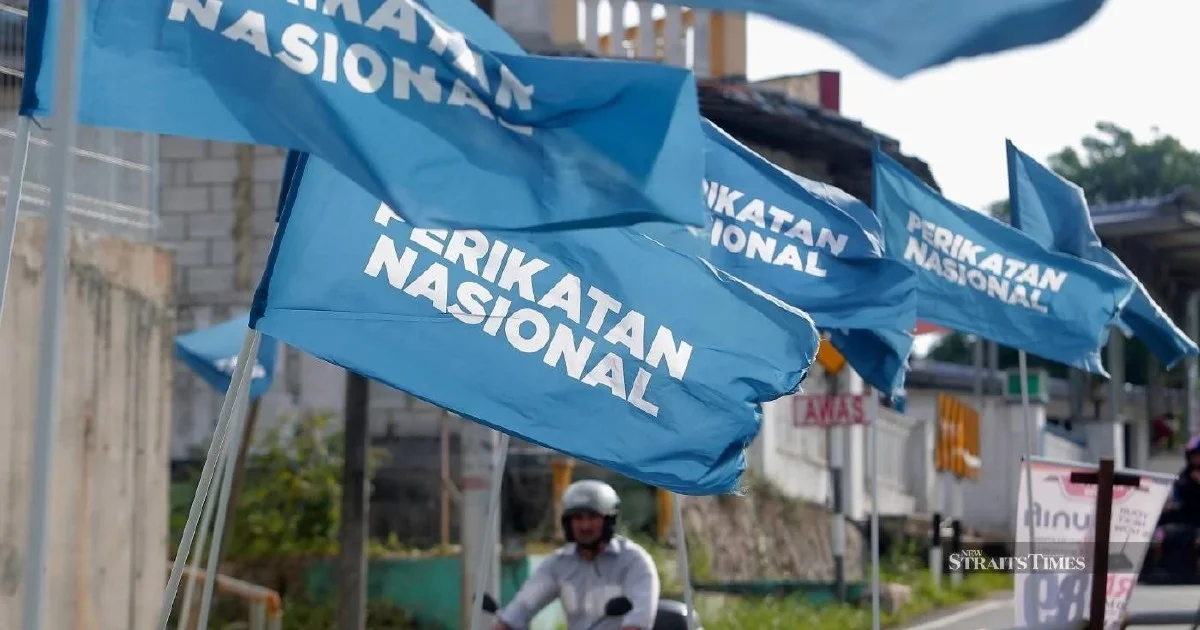
Perikatan Nasional has forcefully pushed back against misleading claims spreading across social media suggesting the opposition coalition plans to withdraw from the impending Johor state election. Deputy chairman P. Punithan moved swiftly to counter the narrative, describing the allegation as pure fiction designed to sow confusion and doubt within the political landscape.
The emergence of such claims reflects the increasingly volatile nature of electoral politics in Malaysia, where misinformation travels rapidly through digital channels before fact-checkers can intervene. The viral statement attributed responsibility to PN without substantiation, presenting a false account of the coalition's electoral strategy. By issuing a direct denial, PN sought to prevent the narrative from gaining traction among voters and party supporters who might otherwise question the coalition's commitment to contesting the state election.
For political observers and analysts tracking PN's trajectory, such clarifications underscore the coalition's determination to establish itself as a serious contender across multiple state contests. Since its emergence as a significant political force, PN has sought to position itself as a viable alternative to both Barisan Nasional and Pakatan Harapan. A withdrawal from any state election would fundamentally contradict this positioning and signal organisational weakness or strategic miscalculation.
Johor holds particular significance within Malaysia's political architecture as the country's second-largest state by population and economic output. Any major coalition's absence from contesting the state would constitute a substantial strategic retreat. The Johor electorate wields considerable influence in shaping national political trends, making the state a crucial battleground where coalitions must demonstrate their electoral viability. PN's denial underscores the importance the coalition attaches to participating fully in the contest.
The circulation of fabricated statements targeting political organisations has become increasingly common as election cycles approach, reflecting broader challenges around digital misinformation. Such rumours, whether originating from rival political camps or generated independently, complicate the political discourse and force coalitions to expend resources addressing false narratives rather than advancing substantive policy arguments. PN's swift response demonstrates heightened awareness among major political players regarding the necessity of rapidly countering misleading claims.
Punithan's intervention also signals PN's institutional capacity to respond coherently to coordinated disinformation campaigns. By deploying a senior party figure to publicly dismiss the allegations, PN sought to reassure party members, potential allies, and voters that the coalition remains unified and focused on electoral objectives. The choice of a deputy chairman—a prominent but not the most senior position—reflects a calibrated response proportionate to the seriousness of the allegation without suggesting the matter had escalated to the highest levels of party leadership.
From a strategic perspective, PN's participation in the Johor election directly influences its broader political calculus across the federation. Success or credible performance in Johor could enhance PN's negotiating position in other state contests and potentially in federal politics. Conversely, absence from the election would eliminate any opportunity to gain seats, accumulate political capital, or demonstrate electoral strength to potential coalition partners. Such considerations make withdrawal strategically indefensible regardless of other circumstances.
The timing of such misinformation also merits scrutiny. As electoral calendars become clearer and campaign periods approach, political tensions intensify and rival camps employ increasingly sophisticated tactics to undermine opponents. False attributions and fabricated statements represent one dimension of this broader information warfare. PN's clarification serves both as a defensive measure and as an assertion of the coalition's agency in controlling its own narrative, preventing others from defining its electoral intentions.
Moving forward, the incident highlights growing challenges facing Malaysian political discourse and electoral integrity. As digital platforms facilitate instantaneous dissemination of unverified claims, voters face heightened difficulty distinguishing authoritative party positions from deliberate distortions. Political coalitions must therefore invest in clear, accessible communication channels to establish official positions and counter misinformation promptly. PN's response, while necessary, represents only one incident within a broader pattern of post-truth politics affecting Malaysian electoral processes.